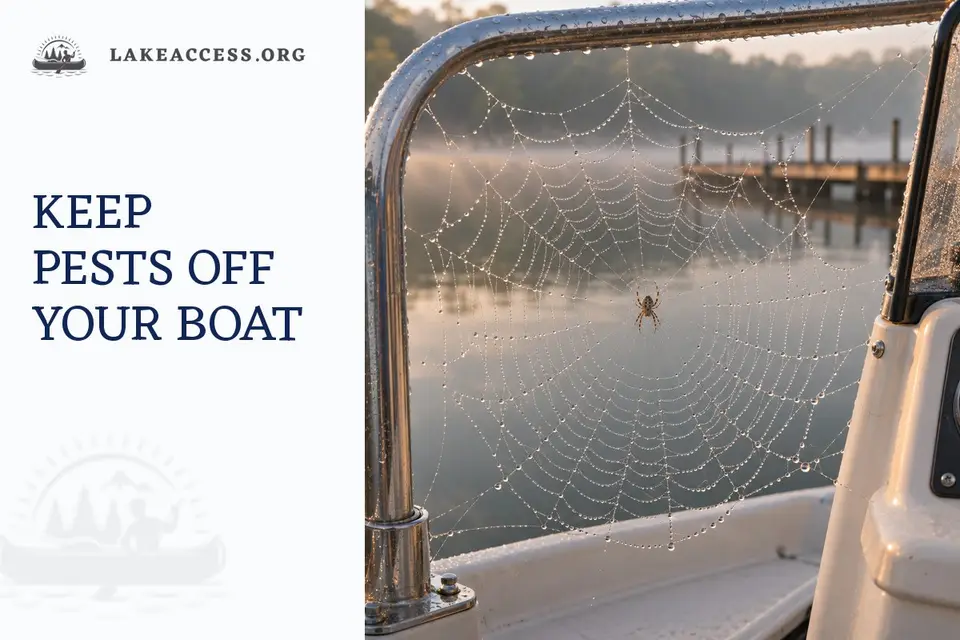
Keep Pests Off Your Boat: Spiders, Mice and Wasps
Spiders, mice and mud daubers all find boats. Here is what extension services, Mercury Marine and BoatUS say about cleaning, covers, inspections and bites.
On this page
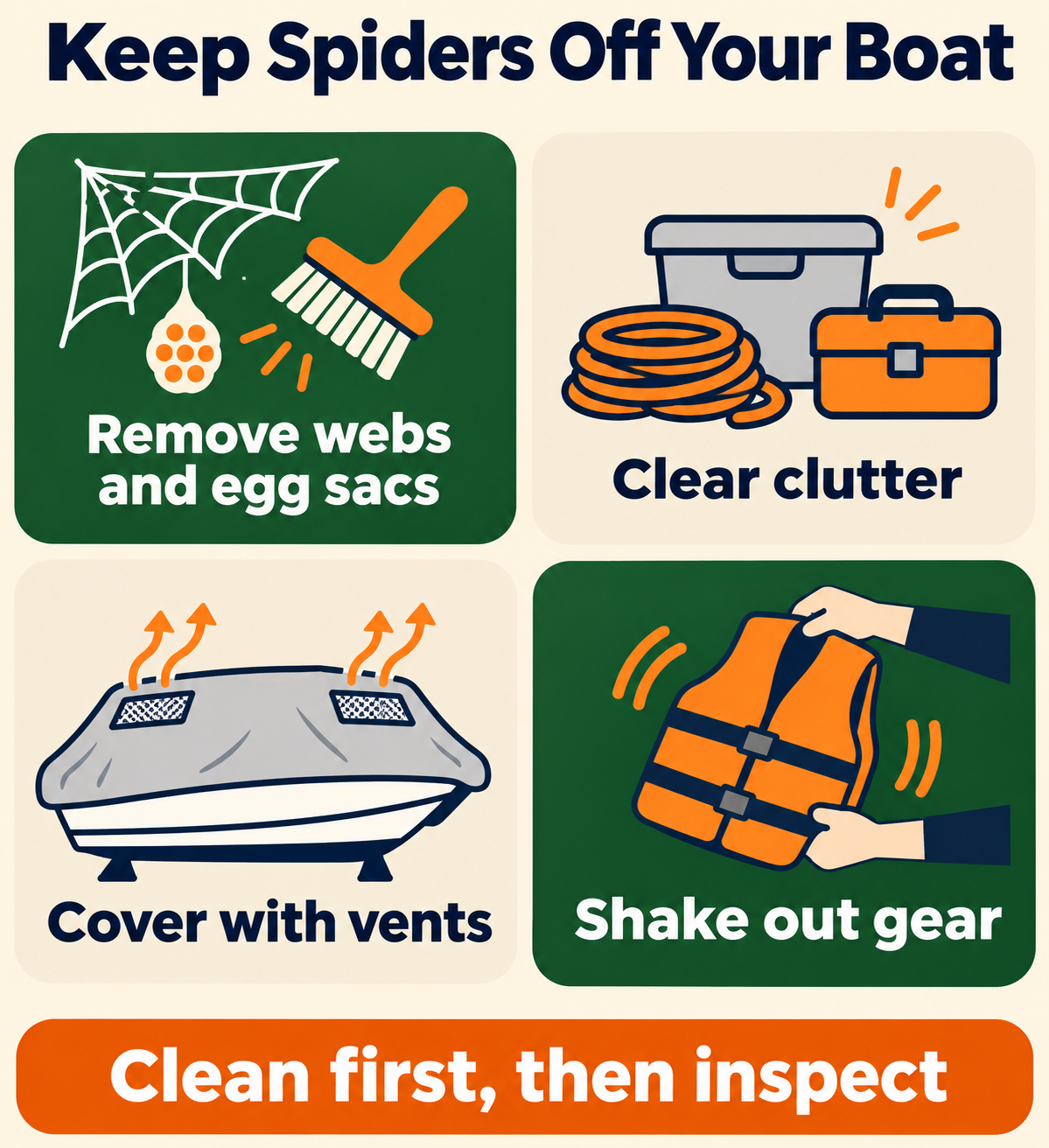
Quick answer: Clean first, then remove webs and egg sacs, clear clutter, let a covered boat breathe, and inspect before every launch. University of Minnesota Extension and UF/IFAS put sanitation ahead of sprays for spiders, and Mercury Marine, Boating Magazine and BoatUS cover the mice, wasps and mud daubers that spiders get all the attention over.
Why pests like boats#
- Insects draw spiders. Minnesota Extension says properties near rivers, lakes or fields are more likely to have large numbers of spiders because insects are numerous there, and that spiders are beneficial, generally not aggressive, and rarely bite.
- Lights draw insects. The same page recommends reducing outside lighting, using yellow lights where practical, and aiming security lights away from the building. That helps with a boat stored at home, less so at a marina.
- Protected, cluttered spots draw widows. UF/IFAS says complaints about brown widows in cars and RVs show the spider will make a home in such sites, and that vehicles have probably helped spread it. We found no boat-specific study, so applying that to a cockpit locker is our inference.
Spiders: the order that works#
- Clean routinely. UF/IFAS says sanitation is the most important strategy for widow spiders and that routine cleaning is the best way to eliminate spiders and discourage their return.
- Remove webs and egg sacs. Both UF/IFAS and Minnesota Extension recommend it, and UF/IFAS suggests vacuuming them, sealing openings and inspecting after you clean.
- Clear clutter. Minnesota Extension lists removing clutter along with eliminating insects.
- Close gaps. For houses, Minnesota Extension recommends replacing damaged screens and sealing cracks around doors and windows. On a boat, the equivalent is repairing torn vent screens and gaps in cabin doors, which is our adaptation of that advice.
- Shake out gear. CDC/NIOSH says to inspect or shake out clothing, shoes, towels and equipment before use, and to store apparel and outdoor equipment in tightly closed plastic bags.
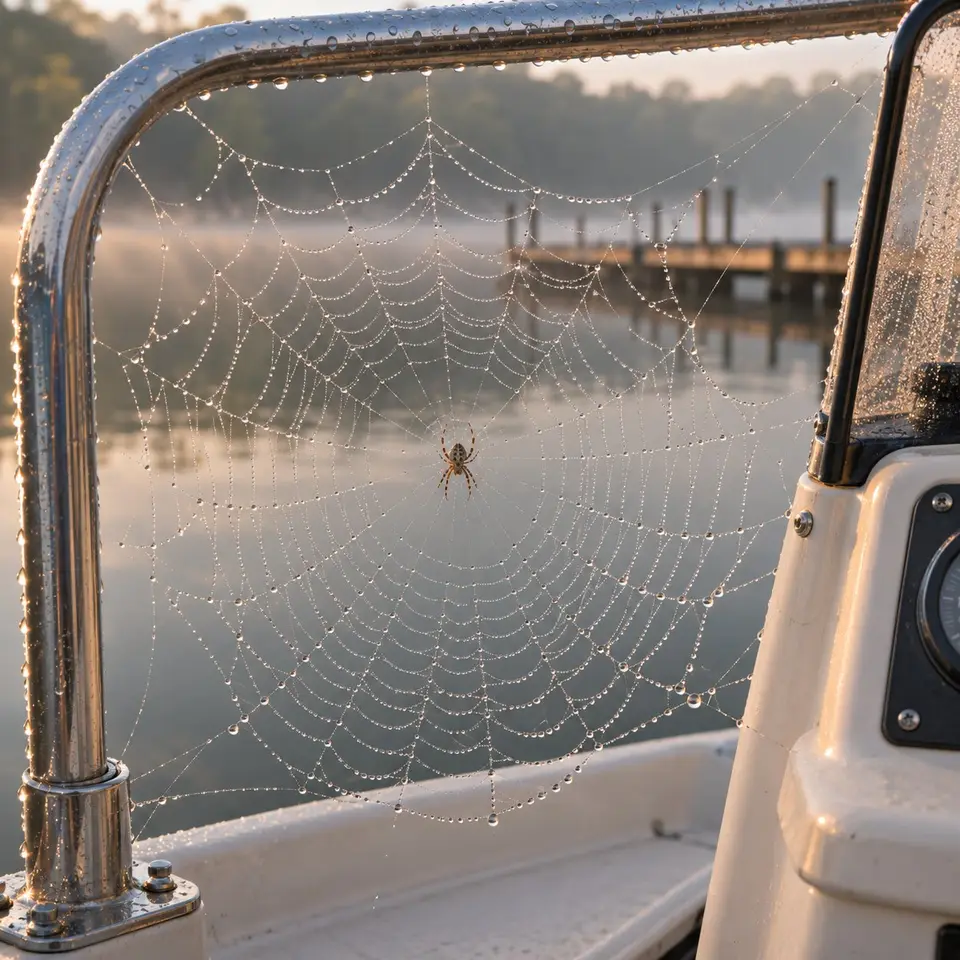
Which spiders you may find#
- Orb weavers: Minnesota Extension says that despite their large size and bright colors, they are not dangerous.
- Cellar spiders: they favor dark, secluded places. Penn State Extension says they are not known to bite people and are not medically important.
- Brown widows: UF/IFAS says bites usually happen when a spider is accidentally pressed against skin while putting on clothes or reaching into recessed areas or dark corners.
- Brown recluses: Penn State Extension says they are established in 16 states, with isolated reported occurrences in Arizona, and prefer warm, dry nesting sites. A bite usually happens when the spider is trapped against skin, such as in a shoe left out overnight.
Identify what you have before you treat it. For more removal options, read our longer guide on how to keep spiders off your boat.
Rodents#
Mercury Marine says rodents can damage cushions, carpet, wiring insulation and hidden spaces. Its practical tips:
- Bait a mousetrap or two near the trailer tires. They catch some rodents and tell you a pest problem exists, so you check the boat more often.
- Steel wool can be a temporary barrier, but only if the boat is completely dry, because it rusts quickly, and every trace must be removed before you operate the boat.
- Mothballs in open bags and dryer sheets are “said to be” a deterrent. That wording is not proof they work, and Mercury warns to keep them out of the bilge, where they could interfere with the pump.
Boating Magazine also lists rodent droppings, moldy seats and carpet among the things to check before launch.
Wasps and mud daubers#
Boating Magazine says to take a second look for bees’ or wasps’ nests, because they sometimes build almost undetectable nests in near-impossible locations. Mud-dauber nests can affect an outboard’s overboard telltale water indicator, the water intakes or the fuel-tank vent outlet. Its advice is to clear any you find completely before going boating.
We did not find a boating source on safely removing an active wasp nest. If you find one, take care, and follow the label on any product you use.
Covers and storage#
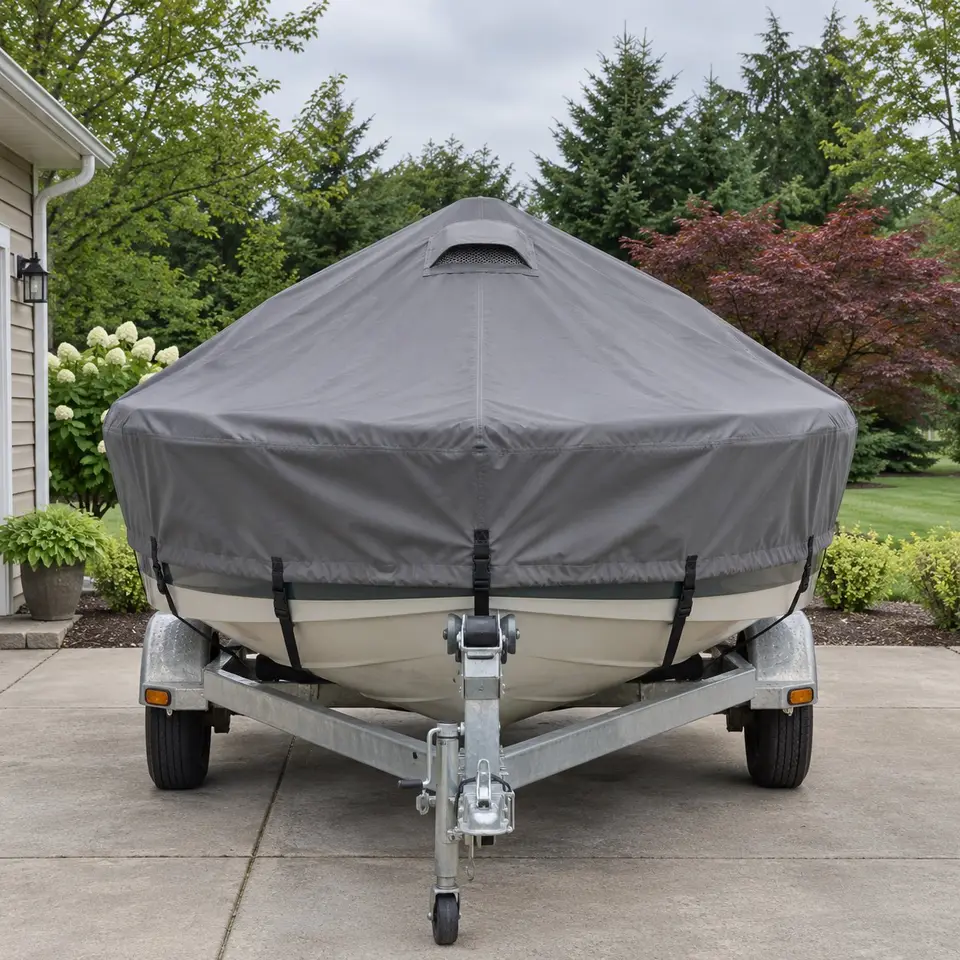
- Let it breathe. BoatUS says boats need to breathe while covered to avoid mildew, and asks whether a tight cover has vents.
- Support the cover. BoatUS found the supports that came with covers were not robust enough in almost every case, and it added strapping to reduce pooling and poles to tent the fabric in the stern.
- Check it. Look at the boat at least once a month and after snow or heavy rain, and get rid of pooling water.
- Do not tie to jackstands. BoatUS warns that wind or rain and snow tension can pull the supports out from under the boat.
- Drain it. Boating Magazine says a boat stored ashore should be level side to side and trimmed up at the bow enough that the cockpit and deck drain.
- Pick the color. BoatUS says silver covers are reflective and keep boats cooler.
More ideas are in our pontoon boat storage ideas and inboard winterizing guide.
What to clean with, and what to avoid#
Cleaning is the first step, but the wrong product can do damage. What the makers say:
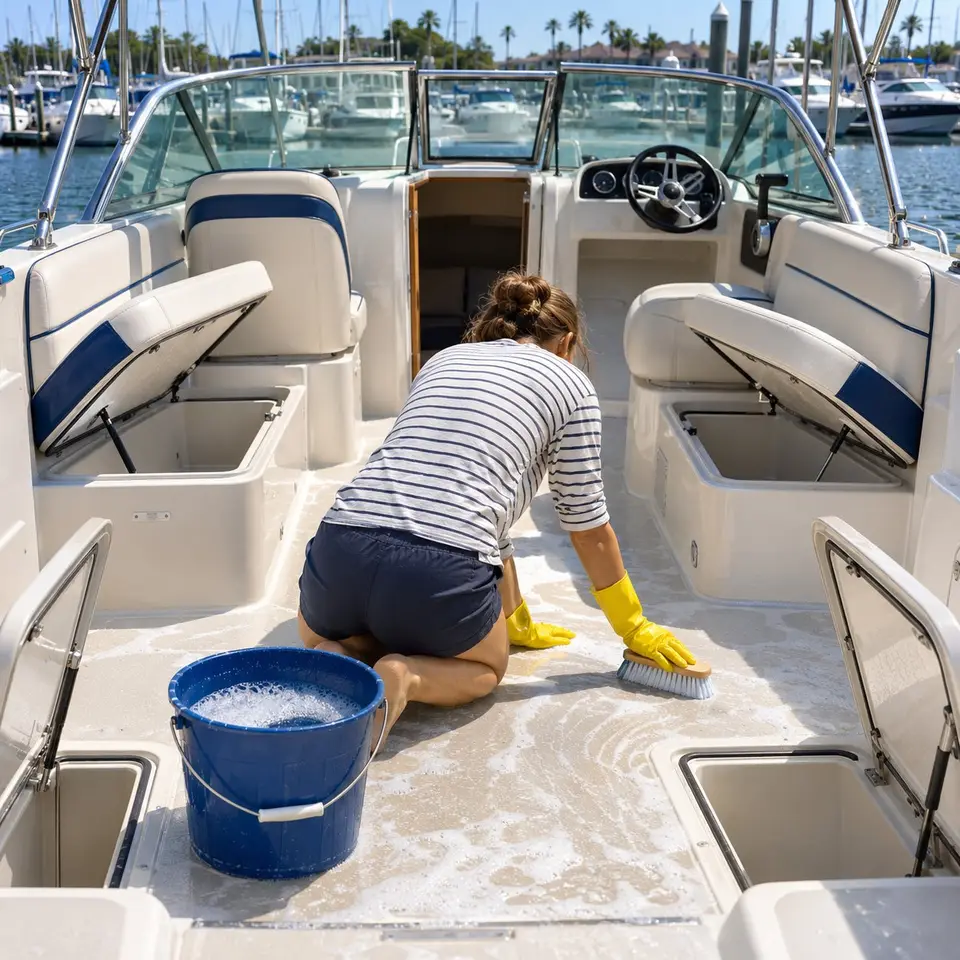
- Canvas: Sunbrella says to brush off dirt, hose down, wash with mild soap, rinse thoroughly and air dry. Its fabric does not promote mildew, but mildew can grow on dirt that is left on it.
- Vinyl: Mercury Marine says gentle soapy water and a soft rag after each use is the best practice, and that bleach is the harshest option and a last resort. Sea Ray says to rinse off salt after each outing and dry vinyl thoroughly, because moisture can get trapped near piping and stitching.
- Gelcoat: Shurhold says household bleach is extremely harsh and will dull gelcoat in only a few applications, fade paint, change vinyl color and corrode fittings.
- Vinegar: we found no source recommending vinegar as a spider repellent. Sunbrella permits a diluted mix of dish soap and white vinegar for bird droppings, urine and vomit on its fabric, and Mercury describes a 50/50 vinegar-and-water treatment for removable cushion foam. Those are specific uses, not a blanket instruction for gelcoat, vinyl or canvas.
- Sprays and repellents: the EPA says pesticide labels are legally enforceable and the label controls lawful use. It also says products with no toxicants that exclude pests only by a physical barrier are not treated as pesticides, while repellent claims can make a product one. Read the label and use it only as directed.
We did not find authoritative testing of essential oils or ultrasonic repellers on boats, so we do not rank them.
For hull and deck cleaning, see how to clean a pontoon boat and how to clean pontoon boat carpet.
If you get bitten#
We are not a medical source, so use these as pointers to the ones that are:
- CDC/NIOSH: wash the bite with soap and water, apply a cloth dampened with cold water or filled with ice, elevate the area if possible, and do not try to remove venom.
- Mayo Clinic: clean the wound with mild soap and water and hold a cool cloth over it for 15 minutes each hour. Get medical care right away if you were bitten by a dangerous spider, have severe pain or stomach cramping, a wound that is getting bigger, or trouble breathing or swallowing.
- Poison Control: cold water or ice on the bite for 10 to 20 minutes, and for itching a nonprescription antihistamine, 0.5 to 1% hydrocortisone cream, calamine lotion or baking soda paste.
Pre-launch checklist#
- Walk the boat and lift cushions, lockers and the engine cover. Look for webs, egg sacs, droppings and nests.
- Check the telltale, water intakes and fuel-tank vent for mud-dauber nests.
- Shake out life jackets, towels and anything stored in the boat.
- Remove any steel wool, mothballs or dryer sheets before you operate the boat.
- Wash and dry the seats, then run through our boat ramp checklist and boating safety guide.
Sources#
Checked on November 7, 2026: Minnesota Extension, Penn State brown recluse, Penn State cellar spider, UF/IFAS, Mercury Marine rodents, Boating Magazine tips, Boating Magazine storage, BoatUS covers, Sunbrella marine canvas, Sunbrella cleaning guide, Mercury Marine vinyl, Sea Ray vinyl, Shurhold, EPA pesticide labels, EPA labeling questions, CDC/NIOSH, Mayo Clinic, Poison Control.
Frequently asked questions#
What attracts spiders to a boat?
Insects, mostly. The University of Minnesota Extension says properties near rivers, lakes or fields are more likely to have many spiders because insects are numerous there, and it recommends reducing outside lighting that attracts insects. University of Florida/IFAS adds that brown widows will make a home in protected man-made sites such as cars and RVs. We found no boat-specific study, so that last point is our inference for boat storage spaces.
What is the best way to get spiders off a boat?
Clean and remove, in that order. UF/IFAS calls sanitation the most important strategy and routine cleaning the best way to discourage a return, and recommends vacuuming webs and egg sacs, sealing openings and inspecting after cleaning. Minnesota Extension also says to eliminate insects, remove clutter and take away webs and egg sacs. See our guide to keeping spiders off your boat for more methods.
Do mothballs or dryer sheets keep mice out of a boat?
Mercury Marine says their smell is “said to be” a deterrent, which is not proof that they work. Mercury also warns not to let bags or sheets end up in the bilge, where they could interfere with the bilge pump. Its firmer advice is to set baited mousetraps near trailer tires, which both catch rodents and warn you of a problem.
Can I use bleach on boat seats, covers or gelcoat?
Check the maker first. Mercury Marine calls bleach the harshest cleaner for marine vinyl and a last resort, and Shurhold says it will dull gelcoat in only a few applications and can fade paint, change vinyl color and corrode fittings. Sunbrella gives a diluted bleach-and-soap mix for stubborn mildew on its fabric, but advises against using bleach if you are surrounded by a body of water.
What should I do after a spider bite on a boat?
CDC/NIOSH says to wash the bite with soap and water, apply a cold cloth or ice, elevate the area if possible, and not try to remove venom. Mayo Clinic says to get medical care right away if you were bitten by a dangerous spider such as a black widow or brown recluse, or you have severe pain or stomach cramping, a wound that is getting bigger, or trouble breathing or swallowing.
Written by
We started this blog as a place to go to when we had questions about buying our first home on the lake. There was a lot of information on the internet, but we always spent hours...