Lake Boating With Pets: What to Consider Before You Launch
A dog life jacket, shade, fresh water, clean water to swim in and the lake's own pet rules. What veterinarians, the CDC, BoatUS and park agencies say about taking a pet boating.
On this page
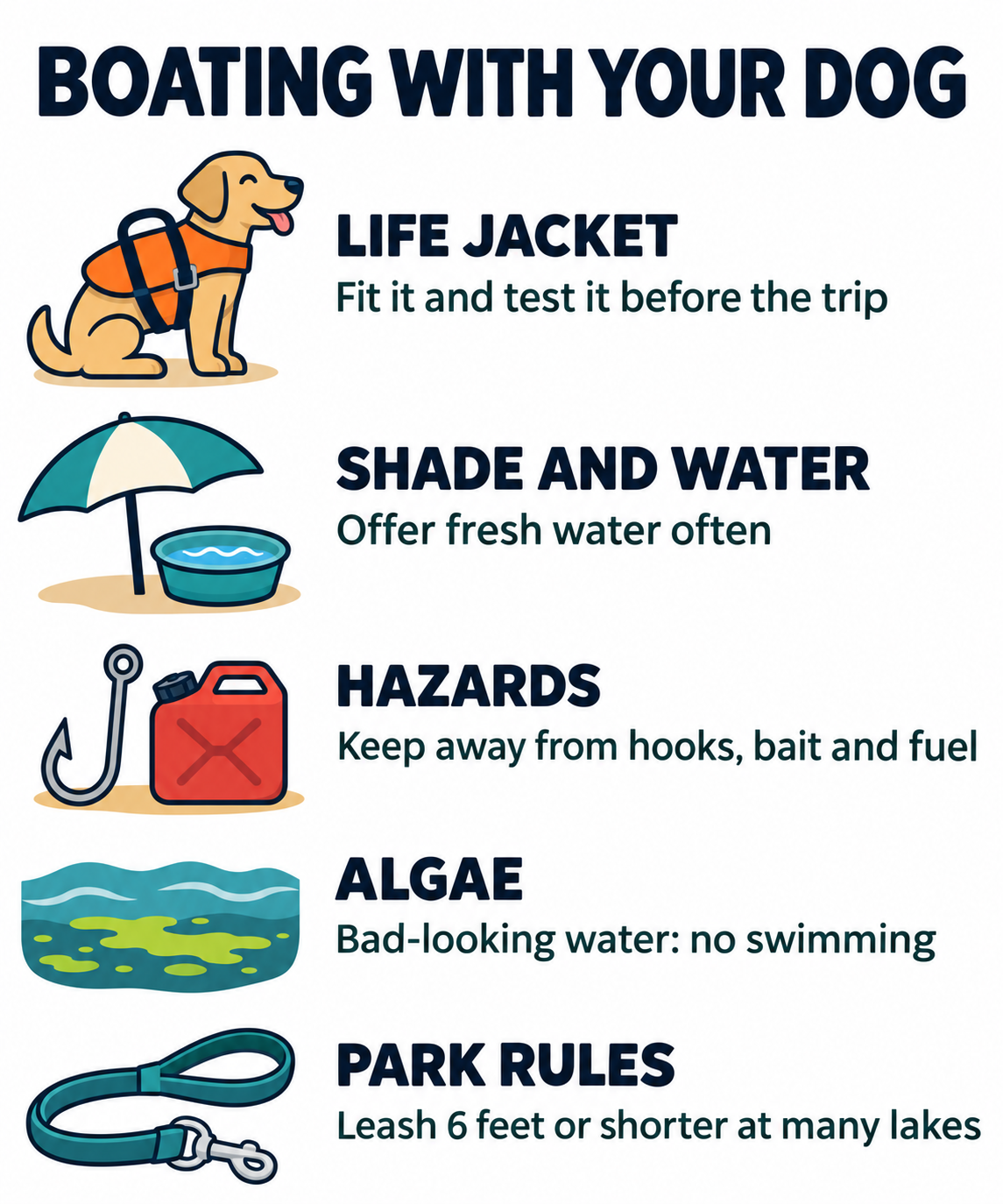
Quick answer: Put your dog in a well-fitted life jacket you have tested before the trip, give it shade and fresh water from home, keep it away from hooks, bait and fuel, skip any water that looks or smells bad, and read the pet rules for the exact lake and launch. Veterinarians, the CDC, BoatUS and park agencies agree on those points. None of them promise that every dog will enjoy a boat, so start short and watch yours.
What changed in this guide#
An earlier version of this page said federal law has no rules that touch boating with pets and that every pet must, by law, wear a life jacket with a lifting handle. We could not source either claim, so both are gone. It also listed benefits such as exercise and bonding that we could not verify. What follows uses only what veterinary groups, the CDC, the Coast Guard, BoatUS and park agencies publish.
Life jackets: recommended for dogs, required for people#
Two separate things get mixed up here.
- People. The Coast Guard boating FAQ says federal law requires a Coast Guard-approved, wearable life jacket in good condition and of the right size for each person on board. Boats greater than 16 feet must also carry a throwable device, and children under 13 must wear a jacket while the boat is underway unless they are below deck or in an enclosed cabin. The same page says that, where the cause of death was known in 2024, 76% of fatal boating incident victims drowned.
- Dogs. BoatUS says there are no design standards for dog life jackets and the Coast Guard does not certify them, so it is up to the owner to find one that suits the dog. A dog jacket never counts toward the jackets your passengers need.
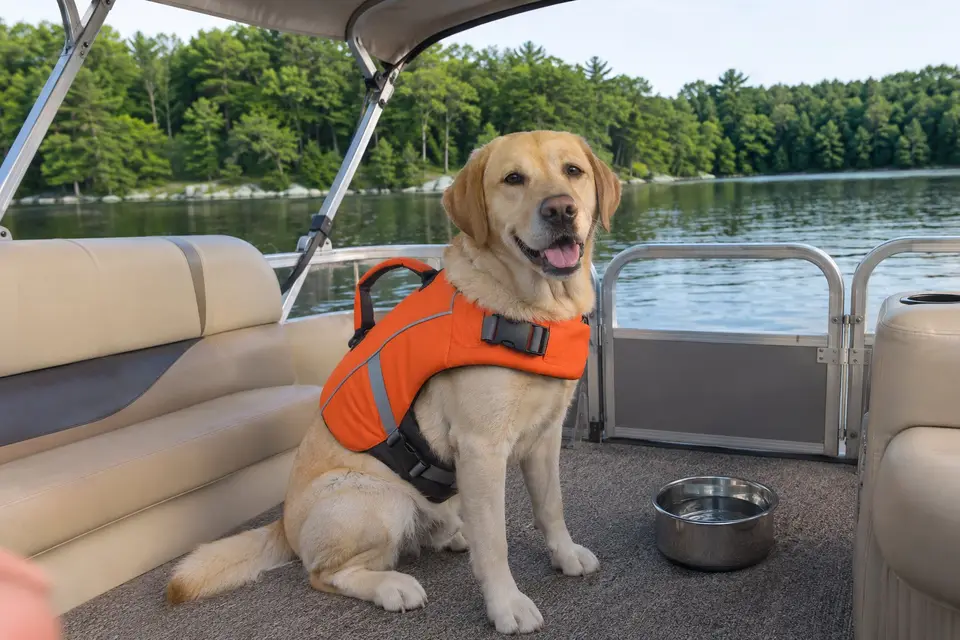
Veterinarians still recommend one. The American Animal Hospital Association (AAHA) says to have your pet wear a properly fitted life jacket on or near boats, and notes that bulldogs and pugs may struggle in the water because of their body structure. BoatUS says some breeds, especially smaller ones, tire quickly, and that even the strongest dogs it watched got tired, which puts them at risk if recovering them after a fall overboard takes a while. A good swimmer is not an exemption: AAHA says even experienced swimmers can become tired or run into trouble.
Fitting one#
- Measure first. BoatUS lists neck, chest girth behind the front legs, length from the back of the collar to the top of the tail, and weight.
- Use the fit guide for the exact model. BoatUS found sizes are not consistent across makers.
- Test the handle. Make sure your hands fit in the grab strap and you can actually lift your dog by it.
- Pick color and fit. AAHA suggests bright or reflective material and a handle on the back, snug but not restricting movement.
- Try it at home. None of our sources tests a jacket on your particular dog, so put it on and let the dog walk, sit and swim in it before the first trip.
BoatUS also suggests thinking about use: a dog that wears its jacket aboard all day as a precaution may be better off in something minimal and comfortable. Its own testing group was small, and it said so, so treat its product favorites as opinions rather than a ranking.
Before you leave the dock#
Check the swimming. AAHA says swimming ability varies a lot, and suggests testing it in shallow, controlled water first, raising the depth slowly. Pack floating toys only: AAHA warns that toys which sink or get waterlogged can pose a drowning risk.
Pack for the dog. AAHA’s boat list is short: a pet first aid kit with gauze, bandage material, antiseptic wipes, tweezers and any medications, plus knowing where the nearest emergency veterinary hospital is. Add drinking water and a bowl from home.
Plan for the ID tag. BoatUS opens its life jacket report with a dog found paddling far offshore after it went overboard unnoticed. It wore a collar with tags, which is how the people who found it got it home to owners searching almost 15 miles away.
Check the loading plan. A dog is part of the load. Our guide on how to avoid overloading your boat covers the capacity side, and the boat ramp checklist covers keeping pets in a safe spot while the trailer moves.
On the water: heat, sun and hazards#
- Shade and water. AAHA says to give a pet on a boat a shaded place to rest and offer fresh water often. The AVMA says pets outside in warm weather need unlimited fresh water and access to shade.
- Hot surfaces. The AVMA warns that hot surfaces such as asphalt can burn paws. It does not mention boat decks specifically, so applying that to a sun-baked deck or metal step is our inference. Feel the surface yourself.
- Timing and breaks. The AVMA says not to exercise a dog during the hottest parts of the day or on particularly warm days, and to take frequent breaks. On a boat that can mean a morning run and a shaded anchorage at midday.
- Boat hazards. AAHA names fishing hooks, bait and fuel. Keep tackle boxes closed and bait out of reach.
- Wildlife. AAHA says to keep pets leashed or under close control so they do not chase or harass wildlife. If you boat in the South, read dogs near alligator lakes before you go.
Signs of heat trouble#
The AVMA says to seek emergency veterinary care for anxiousness, excessive panting, restlessness, excessive drooling, unsteadiness, abnormal gum and tongue color, or collapse. It adds that overweight pets and short-nosed breeds have a higher risk with warm-weather exercise. In the water, AAHA says labored breathing or excessive panting means getting the pet out immediately, and that uncoordinated movements can signal fatigue or panic. On a boat, the emergency vet you looked up before leaving is the number to call.
Swimming off the boat: water quality comes first#
The CDC says harmful algal blooms can be deadly for pets, and that pets can get very sick and die within hours to days after swallowing cyanobacterial toxins. Blooms can change the color of the water or look like foam, scum, mats or paint on the surface. If you think there is a bloom, the CDC says:
- Do not let your dog drink the water, swim or play in it.
- Do not let it eat dead fish washed up on shore.
- If it does go in, wash it off right away with clean water so it does not lick its fur.
- Call a veterinarian if it shows signs such as loss of energy, vomiting, stumbling, drooling, diarrhea or seizures.
The CDC page lists the ASPCA Animal Poison Control Center (1-888-426-4435) and the Pet Poison Helpline (1-855-764-7661), and notes there is a fee for those calls. AAHA adds a simple step: check local blue-green algae advisories before your dog swims. The AVMA notes that cyanobacterial poisoning has been documented in companion animals. More on what blooms look like is in our blue-green algae guide.
None of these sources give a safe waiting period after exposure, so we do not either.
After the trip#
- Rinse and dry. AAHA says to rinse your pet with fresh water after swimming and dry it well, especially the paws and skin folds.
- Watch for delayed problems. AAHA lists vomiting, diarrhea, coughing, lethargy, skin irritation, ear discomfort and changes in breathing as reasons to call your vet.
- Look after the jacket. BoatUS says to rinse it in cool fresh water after every use, hang it to dry, never put it in a dryer, and replace it if it gets chewed or torn.
Park and lake rules#
There is no single national pet rule for lakes. Who manages the water decides. Rules checked November 2026:
- Army Corps of Engineers lakes. Under 36 CFR 327.11, pets in developed recreation areas or adjacent waters must be penned, caged, on a leash under six feet, or otherwise restrained. Pets are banned from swimming beaches, playgrounds and sanitary facilities, and owners must pick up waste.
- Michigan state parks. The Michigan DNR welcomes pets at state parks, state-managed harbors and boating access sites, except designated swim beaches and other posted areas. Pets must be on a 6-foot leash and under immediate control.
- Lake Mead National Recreation Area. The Park Service says leashes must be 6 feet or shorter, summer temperatures often pass 100F, and leaving pets in a car is prohibited.
Those are examples, not a nationwide policy. If you are heading west, our list of dog-friendly beaches at Lake Tahoe shows how much rules change from one shore to the next. For camp nights, see lake camping for pet owners.
What the sources do not cover#
We found no official guidance on seasickness in dogs, on cats aboard small boats, or on a safe outing length or temperature cutoff. The veterinary pages point to supervision and your own vet instead of a universal number. For the human side of the trip, start with our lake boating safety guide.
Sources#
Checked November 2026: Coast Guard boating FAQ, BoatUS doggie life jacket tests, AAHA water safety, AVMA warm weather safety, AVMA harmful algal blooms, CDC pets and algal blooms, 36 CFR 327.11, Michigan DNR, Lake Mead pets.
Frequently asked questions#
Does my dog legally need a life jacket on a boat?
The federal rule the Coast Guard describes is about people: a Coast Guard-approved wearable life jacket of the right size for each person on board. BoatUS says there are no design standards for dog life jackets and the Coast Guard does not certify them. So a dog jacket is a safety recommendation from veterinarians, not a federal carriage requirement, and it never counts toward the jackets your human crew needs. We did not check every state or local rule.
My dog swims well. Does it still need a life jacket?
AAHA, the American Animal Hospital Association, says to have your pet wear a properly fitted life jacket on or near boats, and to watch it closely in the water because even experienced swimmers can tire. BoatUS says even the strongest dogs it watched in testing got tired, which matters if recovering a dog after a fall overboard takes a while.
How do I choose a dog life jacket?
BoatUS suggests having your dog’s neck, chest, length and weight measurements, following each maker’s own fit guide because sizes are not consistent, and checking that your hands fit in the grab strap and you can lift the dog with it. AAHA adds bright or reflective colors, a handle on the back, and a snug fit that still lets the dog move. Our dog ramps for pontoon boats guide covers getting a dog back aboard.
Can my dog drink lake water?
Bring your own. AAHA says to offer fresh water often on a boat, and the AVMA says to bring enough water for both you and your pet. AAHA also says to make sure natural water is free from harmful bacteria and algae. If a cyanobacterial bloom is possible, CDC says not to let animals drink the water at all.
What should I do if my dog swam in algae-covered water?
Wash it off right away with clean water so it does not lick the algae off its fur, CDC says. Call a veterinarian if you see signs such as loss of energy, vomiting, stumbling, drooling, diarrhea or seizures. CDC warns pets can get very sick and die within hours to days after swallowing these toxins. See our page on blue-green algae in lakes.
Are dogs allowed at boat launches and lake beaches?
It depends on who runs the lake. At US Army Corps of Engineers projects, federal rules require pets in developed recreation areas and adjacent waters to be restrained, for example on a leash under six feet, and ban them from swimming beaches. Michigan state parks welcome pets at boating access sites but not on designated swim beaches. Check the page for your exact lake before you go.
Written by
We started this blog as a place to go to when we had questions about buying our first home on the lake. There was a lot of information on the internet, but we always spent hours...