How Do Fish Get to Inland Lakes? What the Evidence Shows
Stocking, connected waters and floods are documented ways fish reach lakes. Birds carrying eggs in their guts has one lab test behind it, and tunnels and deer droppings have none.
On this page
Quick answer: Four routes are documented: people stock fish on purpose, anglers and others move them by accident, fish swim through connected water, and floods can briefly join watersheds. Birds carrying eggs inside their guts has now been shown in one lab experiment, but very few eggs survived, and nobody has shown how often it starts a population in the wild.
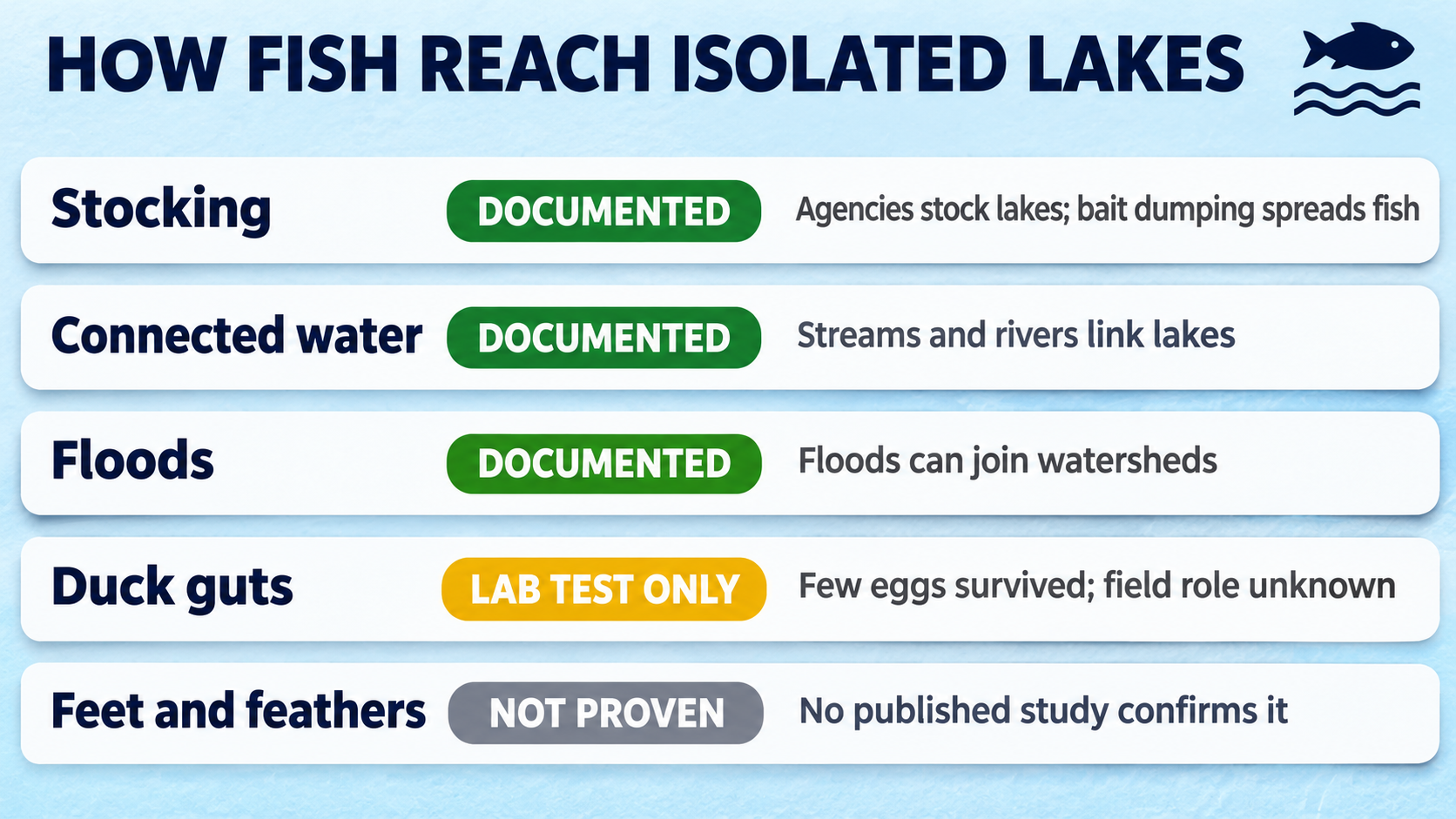
Stocking: the best-documented route#
State agencies put fish into lakes on purpose. Wisconsin’s DNR says the vast majority of its lakes and streams have self-sustaining fish populations, but that stocking remains an important management tool for some waters. It lists five purposes: rehabilitation, research or evaluation, remediation, recreation and introductions. An introduction means putting a species into a waterbody where it was not previously present. The stated aim of recreational stocking is to create or maintain a fishery that did not previously exist and is not self-sustaining.
The scale is large. In a May 2024 news release, Wisconsin reported that over 6 million fish were stocked in 2023. The inland-water list alone includes 1,964,192 walleye, 324,422 brown trout, 251,508 rainbow trout and 204,467 brook trout. The summary leaves out newly hatched fry and fish stocked by private fish farms, the U.S. Fish and Wildlife Service and tribal partners, so it is not a full count.
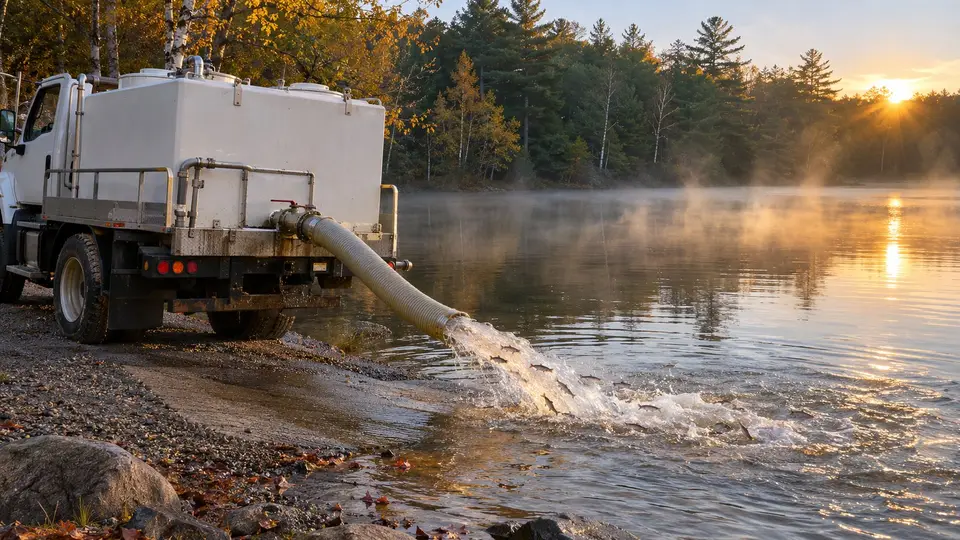
Wisconsin is one state, and we did not collect figures or rules for the others. Checked November 15, 2026, Wisconsin’s page says a private pond needs a Pond Stocking General Permit. It also says it is illegal to collect fish for your pond by angling, because VHS rules, which aim to prevent the spread of viral hemorrhagic septicemia, do not allow moving live fish away from any state waterbody.
Small ponds follow much the same logic, which we cover in how fish end up in ponds. Man-made lakes raise the same question, and how man-made lakes are made explains how they are built. Whether fish arrive afterwards depends on the routes below.
Accidental moves: bait, aquariums and boats#
USGS lists the common methods of introduction as intentional and accidental stocking, release of bait fish, release of unwanted aquarium fish, escape from aquaculture facilities and discharge of ballast water. Its example is the inland silverside, illegally introduced into Clear Lake, California, which has displaced several native fish species there, including the now extinct Clear Lake splittail. The page lists competition, predation, disease or parasites and habitat alteration as potential impacts of introduced fish.
Missouri’s Department of Conservation says most of these introductions are not intentional. In a 2007 Missouri Conservationist article, biologists call “bait bucket introductions” one of the most common means of spreading aquatic invaders, and some of the state’s most severe problems come from species moved only a few miles, for example from one stream to another. The same article says zebra mussels hitchhike on boats, motors, trailers and aquatic plants, and that their larvae can survive in bilge water, live wells, engine cooling systems and bait buckets.
An older version of this article called human transport the “most common way” fish reach isolated waters. The pages we saved support human transport as a real route, but none of them ranks the routes, so we do not either. Missouri’s wording is about invaders, not about every fish in every lake.
Connected water and floods#
Many lakes are linked to other water by streams, and fish can swim between them. We did not save a page that measures how often that happens, so we make no claim about it. The hard cases are the ones the University of Basel describes: many small lakes in remote, often mountainous areas have no inflow or outflow, yet most of them hold fish.
Floods are one documented way to bridge a gap. A USGS tracker for nonindigenous aquatic species says storm surge and floods can assist spread through connection of adjacent watersheds, backflow of water upstream of impoundments, increased downstream flow or freshwater bridges along coastal regions. USGS treats this as a potential pathway and says its map is not a map of flood inundation.
A USGS study of the 1993 upper Mississippi flood shows fish using flooded ground. The main channel is normally cut off from about 82% of its floodplain by levees. During the flood, researchers captured 42 species of adult and young-of-the-year fish on the floodplain, native and non-native. Some abundant species peaked in catch rates one to three years later, which suggests flooded land may have served for spawning, feeding or both. That study is about floodplain use, not about fish colonizing a lake, so treat it as background.
Two Ocean Pass: a documented crossing#
The clearest natural example is in Wyoming. USGS says the high alpine meadow at Two Ocean Pass, in the Bridger-Teton National Forest, is so low that when it floods in spring in a wet year, a fish can swim from the Pacific watershed into the Atlantic watershed.
USGS says this is how Yellowstone cutthroat trout are believed to have colonized Yellowstone Lake after the Pinedale glaciation ended about 14,000 years ago. As the ice receded, fish could not swim up the Yellowstone River to the lake because of Lower Falls, so the trout likely crossed the pass instead.
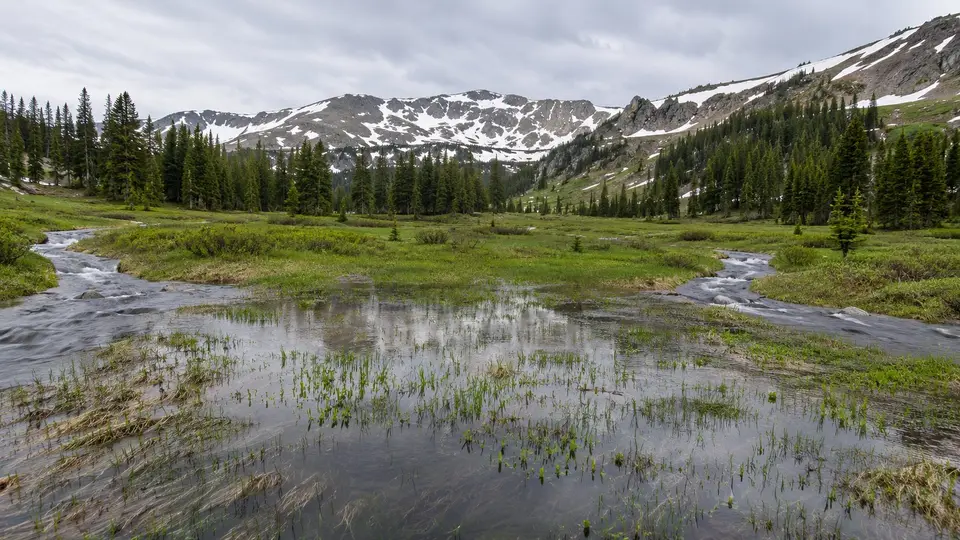
The same page says the origin of nonnative lake trout in Yellowstone Lake remains uncertain. Researchers found that lake trout crossing the pass was a viable hypothesis, not a settled one, and USGS says the pass could let nonnative fish cross in future.
For how basins that hold such lakes form, see how a lake is formed.
Birds: from old theory to one experiment#
For centuries, researchers assumed water birds move fish eggs between lakes. The University of Basel says Darwin, Wallace and Lyell all concluded that water birds must be responsible, on the theory that sticky eggs cling to feathers or feet. A 2018 systematic review found that no in-depth scientific studies exist to prove it. The researchers also looked for evidence of birds moving aquatic invertebrates and found numerous studies with experiments and field work. About 40 surveyed experts mostly thought the question solved, yet none had empirical evidence. One author added that the lack of evidence does not mean birds are not responsible.
In 2020 a PNAS study tested a different route: eggs passing through the gut. Researchers force-fed developing common carp and Prussian carp eggs to captive mallards and found live embryos in fresh droppings. Six of eight ducks passed at least one egg, and survival occurred in both species. The details matter:
- Only 8 intact common carp eggs (about 0.2% of those fed) and 10 Prussian carp eggs (about 0.25%) came back.
- Of 18 eggs recovered, 12 held viable embryos and three hatched. The authors say the low hatch rate was likely due to lab conditions, since a fungal infection also hit the control groups.
- Most eggs passed within an hour, which suggests a maximum range of 60 km at mallard flight speed. One egg held four to six hours implies up to 360 km.
- The authors cite movement data suggesting most eggs carried in mallards end up between feeding and roosting sites within 10 km.
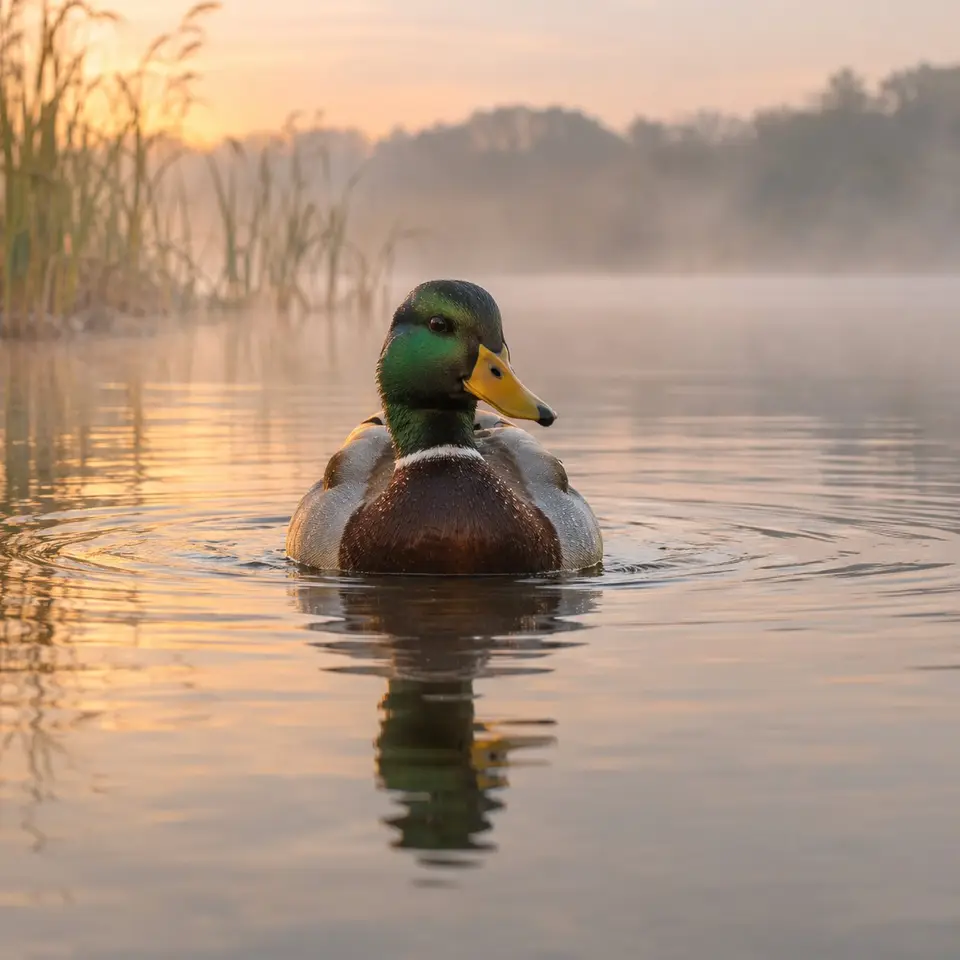
Fish eggs turn up in the digestive tracts of dabbling and diving ducks, gulls and shorebirds, the authors note. But the experiment used captive birds and two invasive carp species. It says nothing about trout or bass, and the authors say how often such events create new populations is a critical question for future research.
What the sources do not support#
Our earlier version described fish pushing through underground gravel tunnels, and deer or elk carrying fish in their droppings. We found no source for either. It also said bears or otters and muskrats move fish, which we could not source. All of it is gone.
What anglers can do#
Missouri’s advice for leftover bait is to take it home for a future trip, give it to another angler, dump it on land far from any waterway or seal it in the trash. Do not release aquarium or pond animals. Inspect and drain boats, trailers and live wells before leaving a lake. For more habits that protect the water, read our guide to lake fishing ethics and best practices.
If you fish stocked trout, our guide to fishing for trout in lakes and rivers explains where and how.
Sources#
Checked on November 15, 2026: Wisconsin DNR fish stocking, Wisconsin DNR 2023 stocking summary, USGS NAS fishes, USGS NAS flood tracker, USGS floodplain study, USGS Two Ocean Pass, University of Basel, PNAS 2020, Missouri Department of Conservation.
Frequently asked questions#
How do fish get into lakes that have no streams flowing in or out?
Nobody has a complete answer. The University of Basel notes that many small lakes in remote areas have no inflow or outflow, yet most of them hold fish. People stock lakes on purpose, and they also move fish by accident. Birds are the long-standing guess, and a 2020 PNAS experiment showed live carp embryos can pass through a duck’s gut. Its authors still list how often this starts new populations as a question for future research.
Do birds carry fish eggs on their feet or feathers?
It is an old idea with no proof behind it. A systematic review by the University of Basel found no in-depth scientific studies showing that water birds disperse fish eggs, and a survey of about 40 experts turned up no empirical evidence either. The reviewers added that the lack of evidence does not mean birds play no part. The better-supported bird route is eggs passing through the gut.
Can a fish swim from one watershed into another?
Sometimes, where the land is low enough. USGS says that when the meadow at Two Ocean Pass in Wyoming floods in a wet spring, a fish can swim from the Pacific watershed into the Atlantic watershed. Its flood-tracking pages also name floods as a way to connect adjacent watersheds, although they describe this as a potential pathway rather than a measured rate.
Is stocking the most common way fish get into lakes?
We could not confirm that. None of the pages we saved ranks the routes. Wisconsin’s DNR says the vast majority of its lakes and streams have self-sustaining fish populations and that stocking remains an important tool for some waters. Our guide to fishing for trout in lakes and rivers covers the stocked species anglers often meet.
Can I move fish from one lake to another?
Usually not without permission. As checked on November 15, 2026, Wisconsin’s stocking page says its VHS rules do not allow moving live fish away from any state waterbody, and that collecting fish by angling for your own pond is illegal. We did not check other states’ rules, so ask your state wildlife agency before you move any live fish.
Why should I not dump leftover bait or aquarium fish?
Because it spreads species into water where they do not belong. Missouri’s Department of Conservation calls bait bucket introductions one of the most common means of spreading aquatic invaders, and says releasing aquarium animals often causes harm and can upset balanced ecological systems. See our guide to lake fishing ethics and best practices for more habits that protect a lake.
Written by
We started this blog as a place to go to when we had questions about buying our first home on the lake. There was a lot of information on the internet, but we always spent hours...