How to Protect Our Lakes: What Individuals and Communities Can Do
Most lake damage starts on land, in the watershed. Here is what EPA, NOAA, USFWS and University of Minnesota Extension say households, boaters and communities can actually do about it.
On this page
Quick answer: Most of what hurts a lake arrives from the land around it, so protecting a lake mostly means changing what washes off yards, roofs, roads and farms. Use less fertilizer and apply it at the right time, slow rainwater down with rain gardens and planted shoreline buffers, pick up pet waste, clean, drain and dry your boat between waters, and ask your community to treat stormwater where it falls. That is the common thread in guidance from EPA, NOAA, the U.S. Fish and Wildlife Service and University of Minnesota Extension.
What the 2022 national survey found#
The best national picture comes from EPA’s 2022 National Lakes Assessment. During spring and summer of 2022, 80 field crews sampled 981 lakes with standardized procedures. Because the lakes were chosen statistically, EPA extrapolates the results to 268,020 U.S. lakes that are at least 2.47 acres in area. The Great Lakes and the Great Salt Lake were not part of it.
From the key findings:
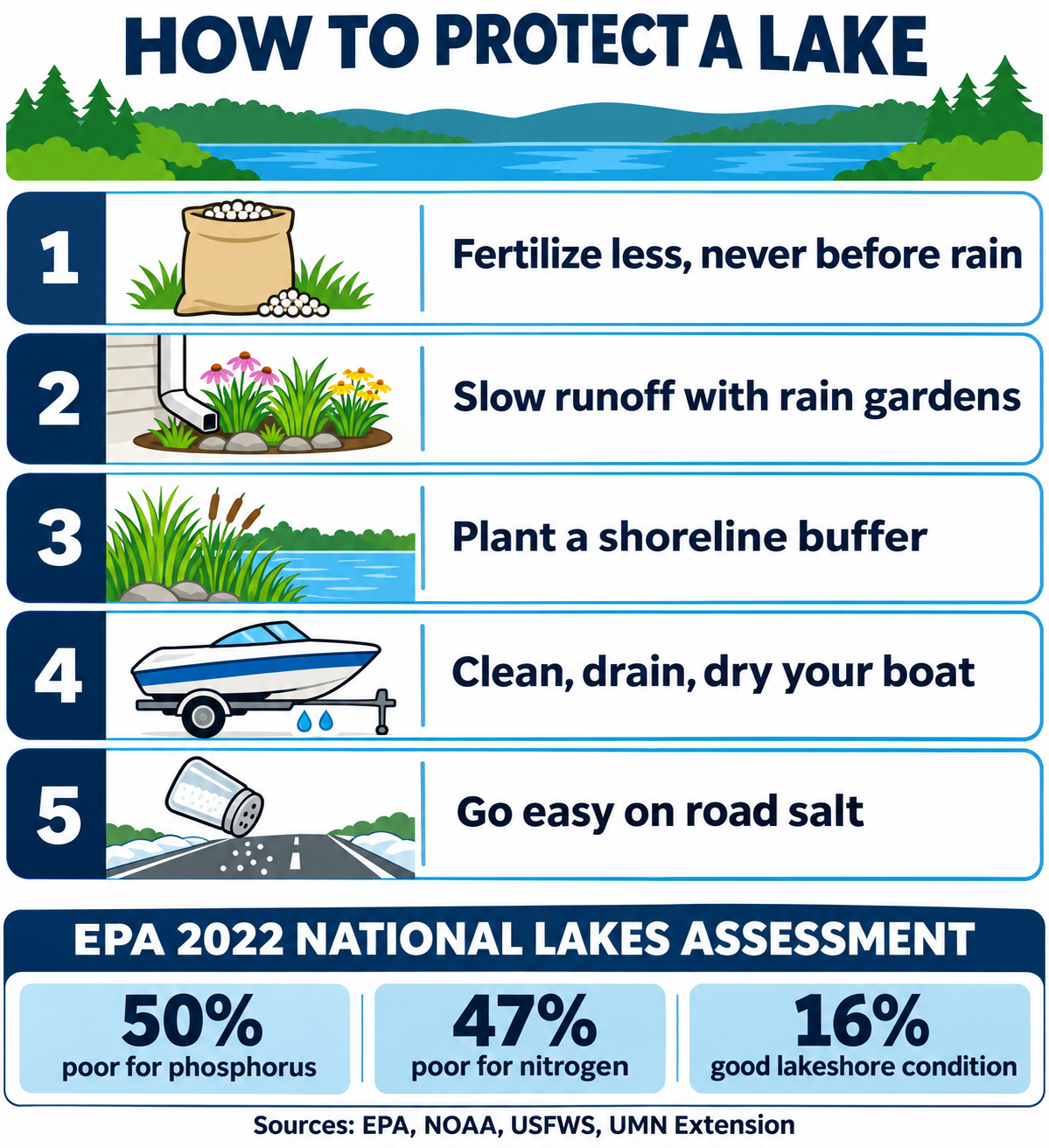
- Nutrients: 50% of lakes were in poor condition with elevated phosphorus, and 47% with elevated nitrogen.
- Algae: hypereutrophic conditions, meaning excess nutrients, heavy algae growth and low transparency, were observed in 30% of lakes.
- Shorelines: only 16% of lakes were in good condition on lakeshore disturbance, which points to moderate to high human activity and shoreline alteration in 84% of lakes.
- Toxins: microcystins were detected in 50% of lakes, and open-water levels exceeded EPA’s recreational criterion in 2% of lakes, about 5,360 lakes.
- Water levels: drawdown was poor in 5% of lakes.
Read these as national estimates. They do not tell you the condition of the lake down the road. For that, check your state or local water agency. There is good news in the same report: most lakes were rated good for lakeshore vegetation cover (52%) and shallow water habitat (55%), so there is a lot left to protect.
Why nutrients matter so much#
NOAA defines nutrient pollution as too much nitrogen and phosphorus added to water, where they act like fertilizer and cause excessive algae growth. Too much can lead to low dissolved oxygen, and severe algal growth blocks light that plants need.
EPA’s guidance on preventing cyanobacterial blooms says the most effective measures control the main drivers, above all the discharge or runoff of excess nutrients. It wants nitrogen and phosphorus reduced from both point and nonpoint sources, including treatment plant discharges, agricultural runoff and stormwater.
Two cautions from the same page. First, nutrients stored in lake sediments can cycle back into the water, a process EPA calls internal loading, so a lake may keep blooming for a while after the watershed improves. Second, in-lake fixes such as mixing the water can be expensive and are best suited to small, affected water bodies. One rain garden will not cure a lake. Many small changes across a watershed are the point.
If you want the geology behind why some lakes are more sensitive than others, our piece on how a lake is formed covers basins and inflows.
At home: yard, lawn and driveway#
EPA’s yard guidance and NOAA’s bloom prevention tips overlap on a short list:
- Fertilize less, and at the right time. Apply fertilizer only when necessary and at the recommended amount. Don’t apply it before windy or rainy days. NOAA adds that applying too much can contribute to harmful algal blooms.
- Keep clippings and leaves out of the street. EPA suggests using grass clippings and leaves as mulch or compost, or bagging them for community composting, which keeps them from washing into streams.
- Pick up after your pet. NOAA says pet waste, like agricultural manure, contains high levels of nitrogen.
- Choose phosphate-free soaps and detergents. NOAA says these can reach waterways with wastewater because they are not always removed during treatment.
- Wash the car on the lawn or at a commercial car wash. Commercial washes are required to dispose of wastewater properly, and a lawn keeps soapy water out of storm drains.
- Slow the water down. EPA lists rain barrels and practices such as grassed swales, filter strips and buffer strips to control and temporarily store runoff.
Rain gardens#
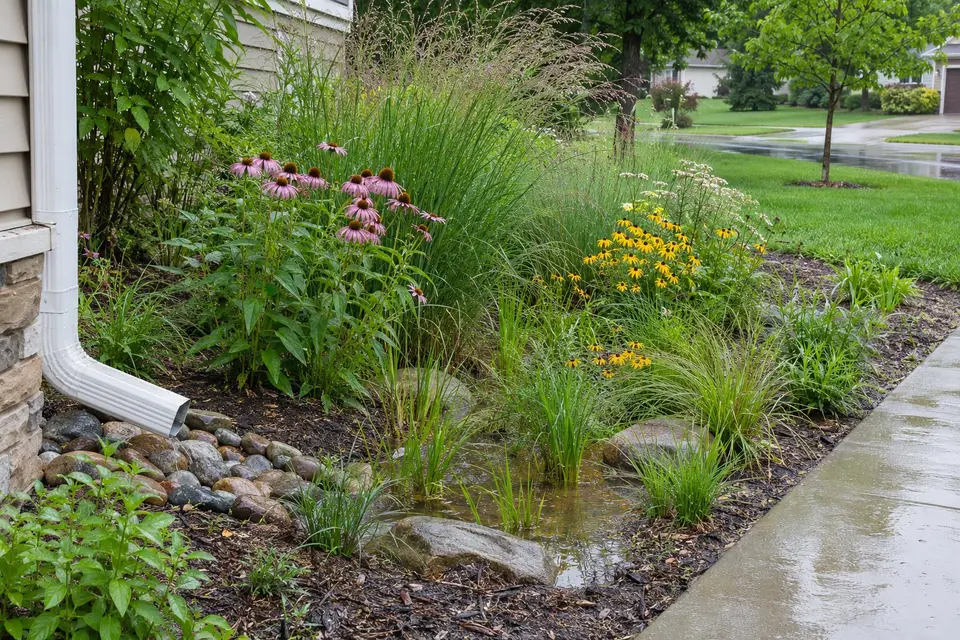
University of Minnesota Extension explains that rain gardens collect stormwater runoff and keep it from flowing directly into lakes, rivers and wetlands. The water soaks in, sediments settle and plants absorb nutrients. Extension also notes that runoff warmed on hard surfaces in summer can affect aquatic life if it enters a lake directly.
Its simple soil test: dig a wide hole 10 inches deep and fill it with water. If the water disappears within 48 hours, the site is suitable. Near a lakeshore, local ordinances may require native plants, so check with your Soil and Water Conservation District first.
On the shoreline#
Shoreline condition was the weakest number in the national survey, and it is the one lakefront owners can change most directly.
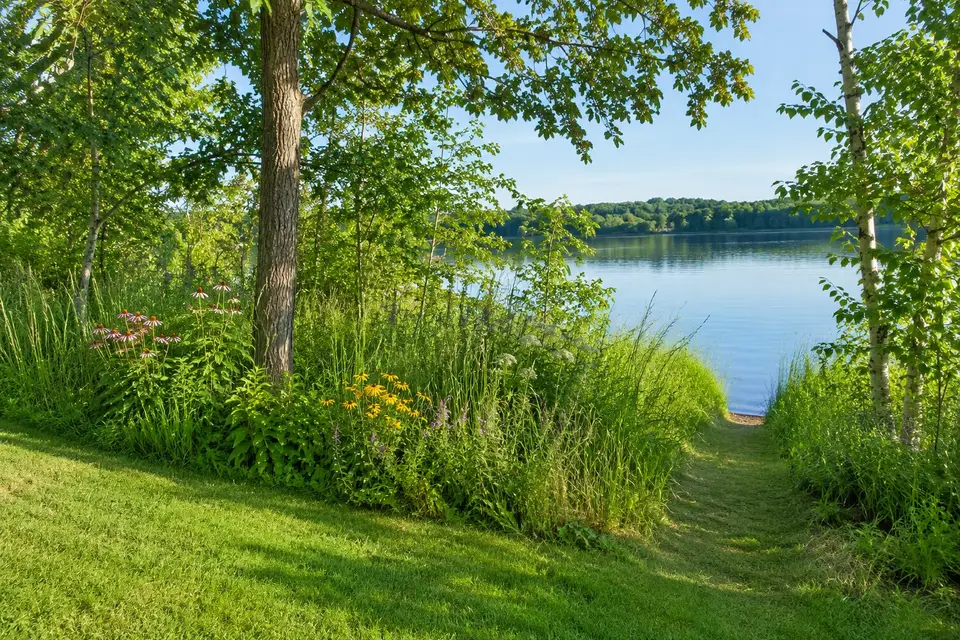
Extension describes a buffer as a strip of trees, shrubs, grasses or other plants that helps protect water from runoff and stabilize shorelines. EPA’s survey adds weight: poor biological condition was twice as likely when lakeshore vegetation cover or habitat complexity was poor.
How wide should a buffer be? There is no national answer in these sources. Minnesota law requires perennial vegetation buffers of up to 50 feet along lakes, rivers, streams and ditches, but that is a Minnesota rule. Width and permits depend on your state, slope, soil and local shoreland rules, so ask your county or conservation district before you dig or plant.
On the water: boats, bait and gear#
Invasive species travel on boats, trailers and fishing gear. The U.S. Fish and Wildlife Service routine is Clean, Drain, Dry, every time you leave a waterbody:
- Clean visible plants, animals and mud off all equipment before leaving the access. Where possible, rinse with hot water (USFWS gives 120°F, and says to flush the motor for 2 minutes or as the owner’s manual says). Check that your equipment can take the heat.
- Drain the motor, bilge, livewell and anything else that holds water.
- Dry everything for at least five days, or wipe it with a towel before reuse.
- Dispose of unwanted bait, worms and fish parts in the trash. Never dump live fish or other organisms from one water body into another.
USFWS does not recommend bleach or other chemical disinfectants on boats and gear, because they can damage equipment, the environment and health. For the rest of your conduct on the water, see our lake fishing ethics guide.
If your trip includes a night at a lakeside campground, our bear-safe food storage guide and alligator safety guide cover how to keep wildlife and people apart. Our lake camping safety guide covers the basics for first trips.
In winter: road salt#
EPA’s salt page says salt levels in freshwater are rising around the world because of road salt, water softening, wastewater and other human activities. Too much salt is toxic and lethal to aquatic life and pollutes drinking water sources. High salinity can also mobilize nitrate in soil, which makes nutrient pollution worse.
EPA’s page does not give a deicing amount for homes or lakeside roads. Use what your city or state winter maintenance program recommends.
What communities and farms can do#
Some of the biggest levers sit with towns and landowners rather than households:
- Green infrastructure. EPA says communities can invest in rain gardens, planter boxes, green roofs and permeable pavements to reduce and treat stormwater where it falls.
- Farm nutrient management. EPA’s agriculture guidance says farmers can apply fertilizer and manure in the right amount, at the right time of year, with the right method and placement, and that planted buffers can absorb or filter nutrients before they reach a water body.
If you belong to a lake association, these are the projects worth pushing at township and county meetings.
What we removed from the old version#
An earlier draft of this page made claims we could not verify against any source we fetched: that freshwater supplies will run out by 2030, that overfishing is among the biggest threats to lakes, that green infrastructure generates energy through hydro dams, and a specific septic pumping schedule. We removed them. The sources here also do not cover climate effects on lakes, septic systems or fishing pressure in enough detail to give advice, so this guide leaves those out rather than guess.
Sources#
Checked November 2026: EPA National Lakes Assessment 2022 report, EPA NLA 2022 key findings, EPA preventing cyanobacterial HABs, EPA yard guidance, EPA green infrastructure, EPA agriculture, EPA salt, NOAA nutrient pollution, NOAA HAB prevention, USFWS Clean, Drain, Dry, UMN Extension rain gardens, UMN Extension buffers.
Frequently asked questions#
What is the biggest threat to lake water quality in the US?
In EPA’s 2022 National Lakes Assessment, nutrients stood out: 50% of lakes were in poor condition for phosphorus and 47% for nitrogen. These are national estimates, not a verdict on any one lake. EPA also found heavy lakeshore disturbance, with only 16% of lakes in good condition on that measure.
How does lawn fertilizer get into a lake?
Rain and melting snow carry it. EPA says runoff picks up chemicals and other pollutants as it flows into storm drains and out into streams, rivers and lakes. NOAA notes that fertilizers contain the nitrogen and phosphorus that support harmful algal blooms. EPA’s advice is to fertilize only when necessary, at the recommended amount, and not before windy or rainy days.
Do shoreline buffers really help a lake?
University of Minnesota Extension describes a buffer as a strip of trees, shrubs, grasses or other plants that helps protect water from runoff and stabilize shorelines, and says Minnesota’s buffers will help filter out phosphorus, nitrogen and sediment. EPA’s 2022 survey also found poor biological condition was twice as likely where lakeshore vegetation cover was poor. Required widths depend on your state and local rules.
What does clean, drain, dry mean for boaters?
It is the U.S. Fish and Wildlife Service routine for stopping aquatic invasive species: clean visible plants, animals and mud off all equipment, drain the motor, bilge, livewell and anything else that holds water, and dry everything for at least five days or wipe it with a towel before reuse. Anglers should also put unwanted bait, worms and fish parts in the trash.
Is it safe to swim in a lake with an algal bloom?
Check first. EPA says people should ask state, Tribal or local governments about cyanotoxins in a specific lake before swimming, boating or fishing. In its 2022 survey, microcystins were detected in 50% of lakes, and open-water levels exceeded EPA’s recreational criterion in 2% of them. For background, see our article on why lakes turn green after rain.
Does road salt harm lakes?
EPA says too much salt in the environment is toxic and lethal to aquatic life and pollutes drinking water sources, and that high salinity can also mobilize nitrate and worsen nutrient pollution. EPA’s page does not give a lake-specific deicing amount, so follow your city or state winter maintenance guidance.
Written by
We started this blog as a place to go to when we had questions about buying our first home on the lake. There was a lot of information on the internet, but we always spent hours...