Layout Boat vs Duck Boat: What’s the Difference?
A layout boat is a specific low-profile design. A duck boat is a broad label for any boat set up for waterfowling. Here is how they differ and how to choose.
On this page
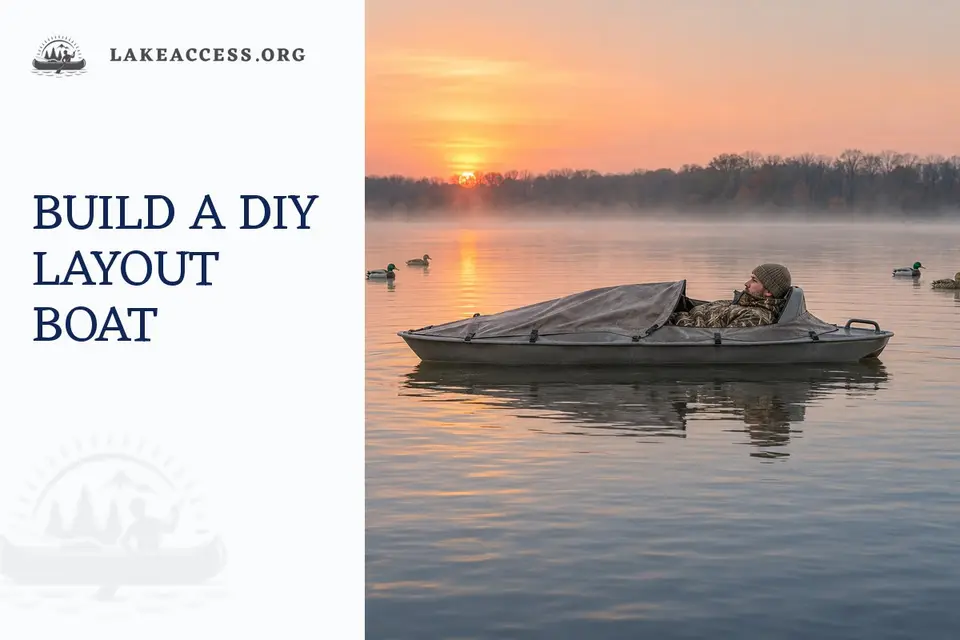
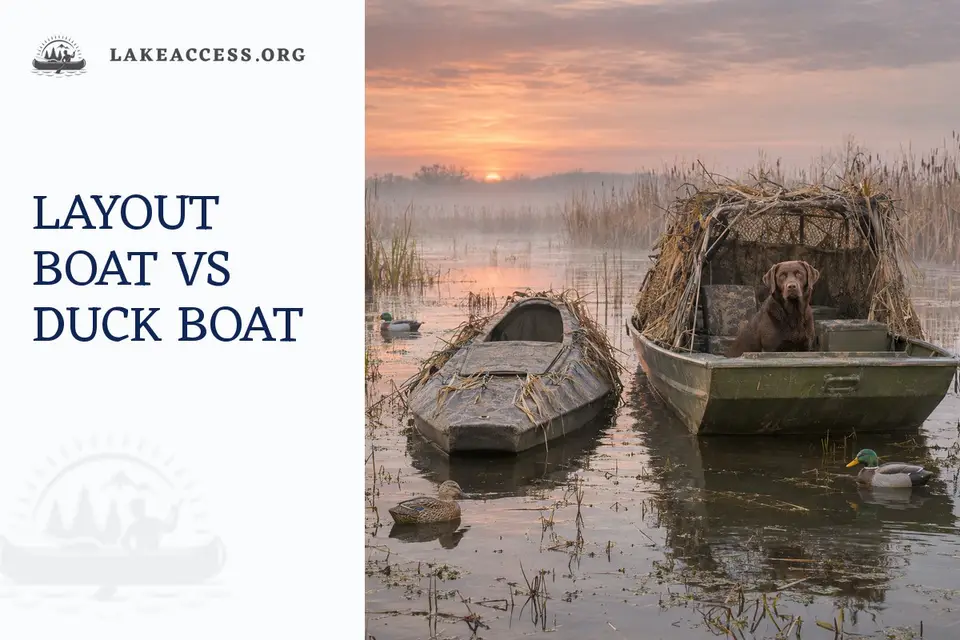
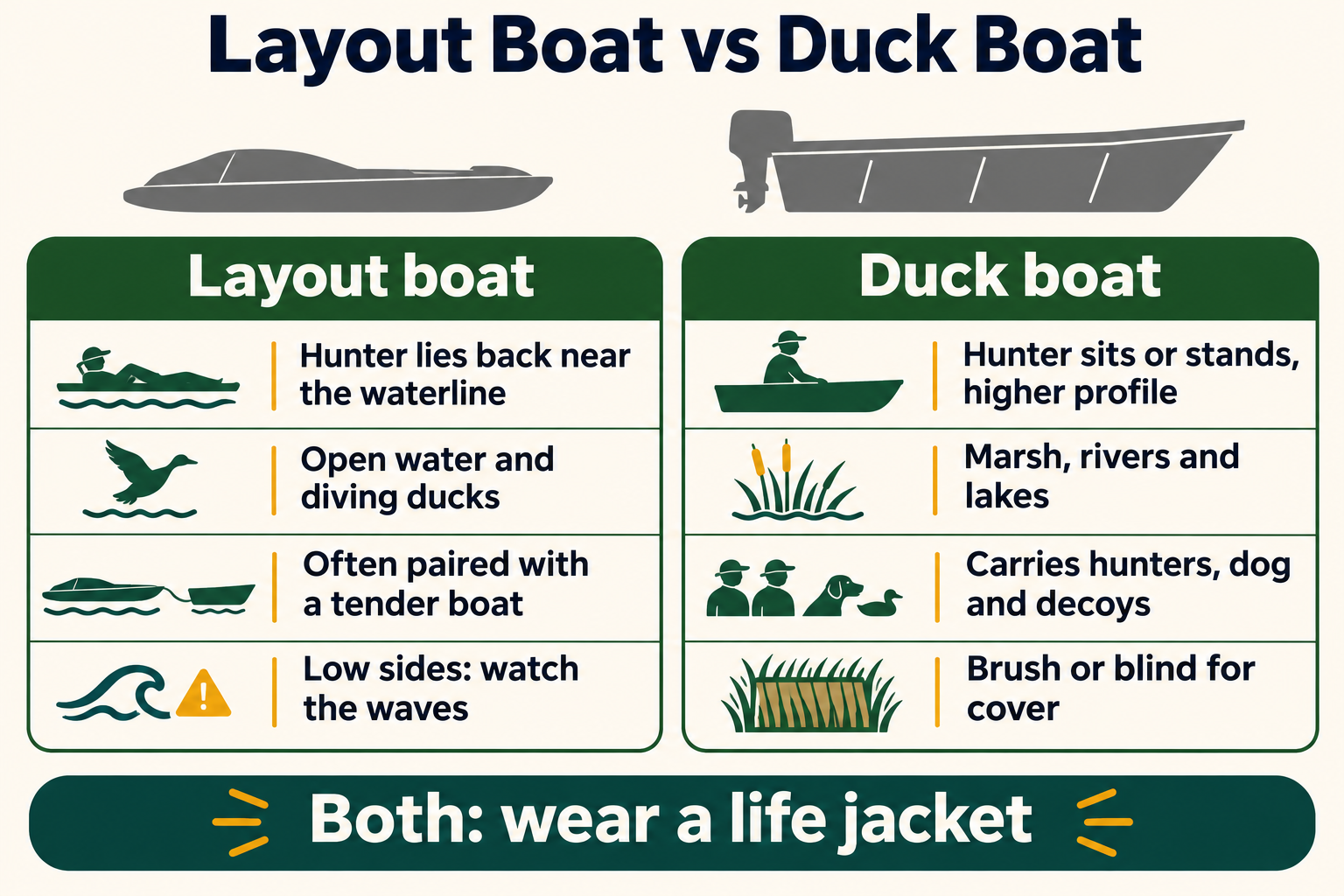
A layout boat is a low, narrow boat you lie back in, close to the waterline. A duck boat is any boat set up for waterfowling, and that covers a lot of hulls: jon boats, semi-V and V-bottom boats, kayaks, canoes and skiffs. So the two are not opposites. One is a specific design, and the other is a job description.
This guide compares them on the things that matter when you are choosing one: how well they hide you, where they work, what they carry, and how safe they are when the weather turns. If you are shopping for a layout boat specifically, see our list of the best layout boats for duck hunting. If you would rather build one, read how to build a DIY layout boat.
The short version#
| Layout boat | Duck boat | |
|---|---|---|
| What it is | Low-profile boat the hunter reclines in | Broad label: jon boats, V-hulls, kayaks, canoes, skiffs |
| Concealment | Very low; one builder reports about 15 inches above the water when fully grassed | Higher profile; usually needs a boat blind, brush or cover along the sides |
| Best water | Open water for traditional use; shallow wetlands for light models | Marsh, rivers, lakes and shallow flooded fields |
| Typical load | One or two hunters, a few dozen decoys, a blind bag | Several hunters, a dog, a full decoy load |
| Weak point | Little freeboard, so waves come in easily | Easier for ducks to spot if not concealed |
| Often paired with | A larger tender boat on big water | A mud motor in shallow, vegetated water |
What a layout boat does well#
Ducks Unlimited describes layout hunting as concealing yourself by reclining inside a low-profile boat or coffin blind. The point is to hunt open water, such as reservoirs, big lakes and flooded fields, where there is no natural cover. Ducks and geese gather in those open places, and they quickly learn to avoid any patch of cover big enough to hide a hunter.
Traditional layout boats are carried or towed to the hunting area by a larger tender boat. Hunters take turns shooting from the layout boats and manning the tender, which stays nearby to retrieve downed birds. This style is most associated with diving ducks such as canvasbacks, redheads and scaup.
Newer light layout boats work differently. Ducks Unlimited quotes one builder who says he fits three or four dozen decoys, his gun and his blind bag in the boat with him, and that with the whole surface grassed the boat stands only 15 inches above the water. Another manufacturer says his boats are shaped like a series of concentric circles radiating from the cockpit, which gives a gradual slope to the water that does not cast a shadow.

What people mean by “duck boat”#
There is no single duck boat. Ducks Unlimited’s buyer’s guide splits the category by hull:
- V-bottom. Built for crossing big water. Heavy and stable with a sharp keel to part waves and high sides. Many diving-duck hunters prefer them, especially as tender boats for layout hunting.
- Semi-V. A pointed bow and mild keel to part waves, with a flat bottom for shallow-water use. Many are sold for waterfowl and can take a boat blind.
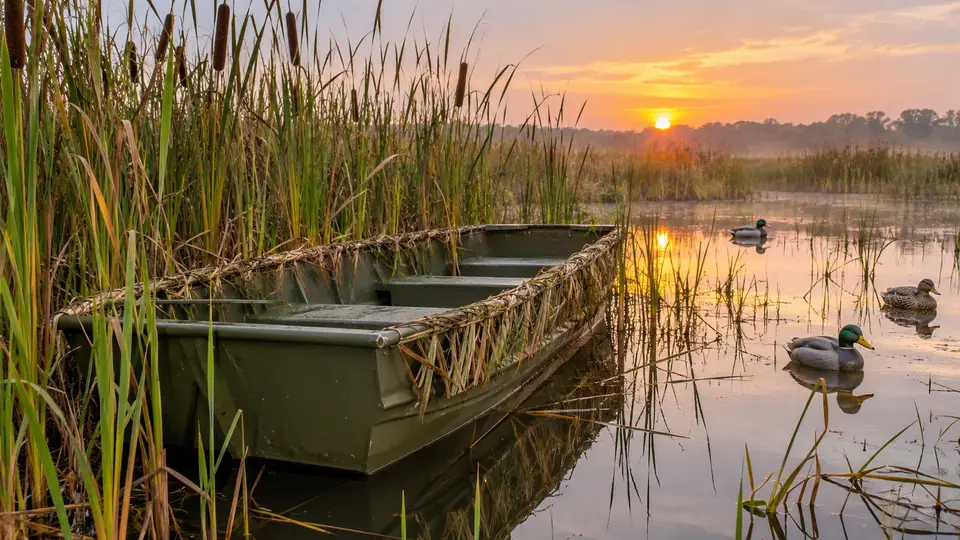
- Flat-bottom jon boat. Excels in shallow water, especially with a mud motor. Wide and stable, which makes it a good base for a boat blind. The downside is a square bow that slaps waves in chop.
Smaller craft count too. Ducks Unlimited lists kayaks, canoes and duck skiffs among the shallow-water options, and a Wisconsin biologist quoted there estimates that roughly 80 percent of the public hunting areas in his state can be reached with some version of a duck skiff.
Mud motors are what let many duck boats get into shallow, weedy water. They come in long-tail and surface-drive types. Surface-drive motors are more useful in wide-open soft-bottom water where you can stay on plane, and long-tail motors suit stump-ridden areas where you are more likely to hang up.
Where each one wins#
Open water. A layout boat with a tender is the classic answer. You get a very low profile in a place with no cover, and a larger boat nearby as backup.
Shallow marsh. Both work. A light layout boat slips through shallow wetlands and floats in very little water. A jon boat with a mud motor can push through vegetation a layout boat would have to be paddled or poled through.
Hauling gear and a dog. The duck boat wins. Space is the point of a jon boat. A layout boat is built around one reclining hunter, though Ducks Unlimited notes that some modern layout boats can be powered by outboard motors.
Staying hidden. The layout boat wins on profile alone. A jon boat can still hide well. One Bass Pro Shops writer describes sitting in his 17-foot jon boat with no blind at all, just camouflage material over the console and shiny parts.
Rough water. The duck boat is more forgiving. Layout boats are described as extremely stable, but they sit very low by design, so once waves build they take water over the side sooner than a high-sided duck boat.
Safety is the same problem in two sizes#
A low boat on cold water is the setup for the worst case. The National Weather Service warns that cold shock can be as severe in 50-60°F water as in 35°F water, and that the gasp reflex can be triggered by water as warm as 77°F. A life jacket gives you time.
In the Coast Guard’s 2024 recreational boating statistics, drowning accounted for about three-quarters of deaths, and 87% of those drowning victims were not wearing a life jacket. About 70% of deaths occurred on boats run by someone who had not taken boating safety instruction.
For a duck boat, Ducks Unlimited lists the basics you should not overlook: life jackets and a throw cushion, a fire extinguisher, an anchor and rope, a spare plug, and whatever else your state requires. For a layout boat, add a tender boat or a spotter on open water. Our lake boating safety guide covers the rest.
Check the rules before you rig#
Two federal rules apply to both boats. Under 50 CFR 20.21, you may not hunt migratory game birds from a sinkbox or other low floating device with a depression that hides you beneath the water’s surface. You also may not shoot from a motorboat unless the motor is completely shut off and the boat has stopped moving, although a boat under power may be used to retrieve dead or crippled birds.
States add their own rules on registration, motors, shooting hours and where you can hunt. Check with your state wildlife agency before the season.
Which one should you choose?#
- You hunt big open water for divers. A layout boat with a tender boat is the traditional fit.
- You hunt shallow marsh and flooded fields alone. A light layout boat or a small skiff is easy to move and hard to see.
- You hunt with a dog or a partner and carry a big spread. A jon-style duck boat with a mud motor and a blind.
- You want one boat for everything. A semi-V or jon-style duck boat that you can fish from in summer is the compromise. The same Bass Pro writer owns a canoe, a kayak, a sneak boat and a big jon boat, one for each way he hunts, so even experienced hunters rarely find a single perfect hull.
Frequently asked questions#
Is a layout boat the same as a duck boat?
No. A layout boat is one specific design: a low, narrow boat the hunter reclines in. “Duck boat” is a broad label for any boat set up for waterfowling, including jon boats, semi-V and V-bottom hulls, kayaks, canoes and purpose-built sit-in hunting boats.
Can a jon boat be used as a layout boat?
Sometimes. One Bass Pro Shops writer describes using the spare space in an 18-foot camo jon boat as a layout when hunting alone. A jon boat is much higher than a true layout boat, so it will not hide you as well.
Which is safer, a layout boat or a duck boat?
A duck boat with higher sides and a wider beam is generally the more forgiving platform in waves. A layout boat sits very low, which is why open-water layout hunters usually work with a larger tender boat nearby. Either way, wear a life jacket.
Do layout boats need a tender boat?
Not always, but on big water it is the traditional setup. Ducks Unlimited says traditional layout boats are carried or towed to the hunting area by a larger, more seaworthy tender boat, which stays nearby to retrieve birds. Small light layout boats are also used in shallow wetlands without one.
Are there legal differences between them?
Federal rules (50 CFR 20.21) ban hunting from a sinkbox or other low floating device with a depression that hides the hunter beneath the water’s surface, and from a motorboat unless the motor is off and the boat has stopped moving. States add their own rules, so check with your wildlife agency.
Sources#
- The Lowdown on Layout Hunting, Ducks Unlimited
- Small-Craft Waterfowling, Ducks Unlimited
- Buyers Tips for Duck Boats, Ducks Unlimited
- Waterfowl Boat Options for Shallow Waters, Bass Pro Shops
- 50 CFR 20.21, Hunting methods, Cornell Legal Information Institute
- Cold Water Hazards and Safety, National Weather Service
- Coast Guard reports fewest boating fatalities in more than 50 years, U.S. Coast Guard
Written by
We started this blog as a place to go to when we had questions about buying our first home on the lake. There was a lot of information on the internet, but we always spent hours...