How to Maintain Your Lake Boat for the Long Term
A sourced plan for long-term lake boat care: the owner's manual first, then clean-drain-dry habits, engine and fuel basics, battery care and winter lay-up.

On this page
Quick answer: Treat your engine’s owner’s manual as the schedule. Between outings, clean, drain and dry the boat before you leave the ramp, keep an eye on oil, gear lube, anodes and hoses, treat the fuel before any long rest, look after the battery, and lay the boat up properly for winter. Mercury, Yamaha, BoatUS, the Coast Guard and two state wildlife agencies agree on the basics. They disagree on some details, and we point those out below.
Start with the manual, not a generic checklist#
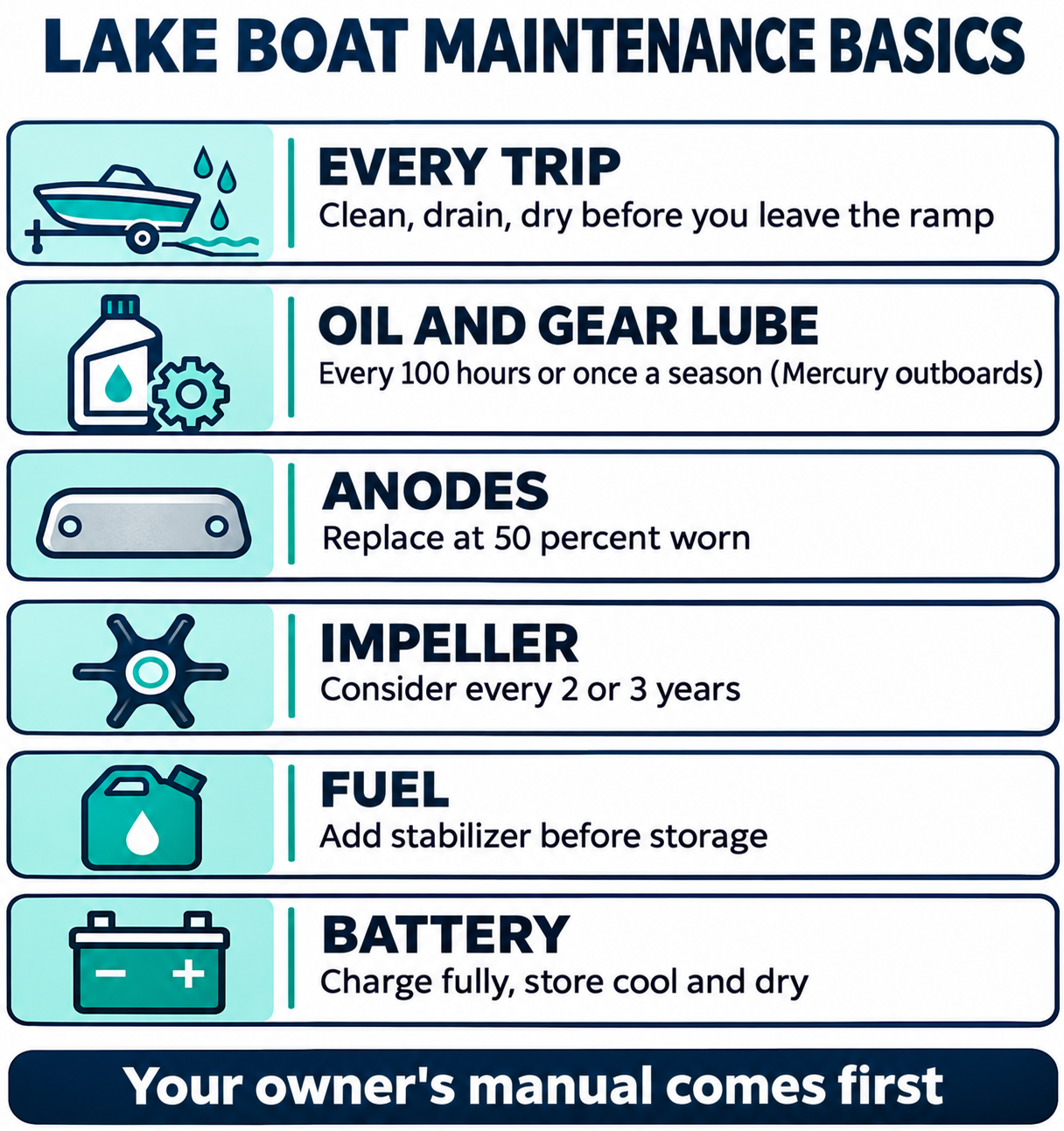
Mercury calls the operation and maintenance manual for its outboards and MerCruiser sterndrives “your best basic guide for maintenance.” It contains a maintenance schedule and instructions for the essential tasks. Mercury also argues that a small investment in regular maintenance can help you avoid major repairs and preserves the boat’s value.
Ohio DNR ends its own winterizing list the same way: check the owner’s manual for tips particular to your brand of boat, engine and trailer.
That matters because intervals really do vary by model. An earlier version of this page gave fixed hull and propeller inspection intervals and suggested scrubbing the hull with a pressure washer. We found no source for those intervals, and BoatUS warns about pressure washing (see below), so they are gone.
After every trip: clean, drain, dry#
This is the habit that protects both the boat and the lake.
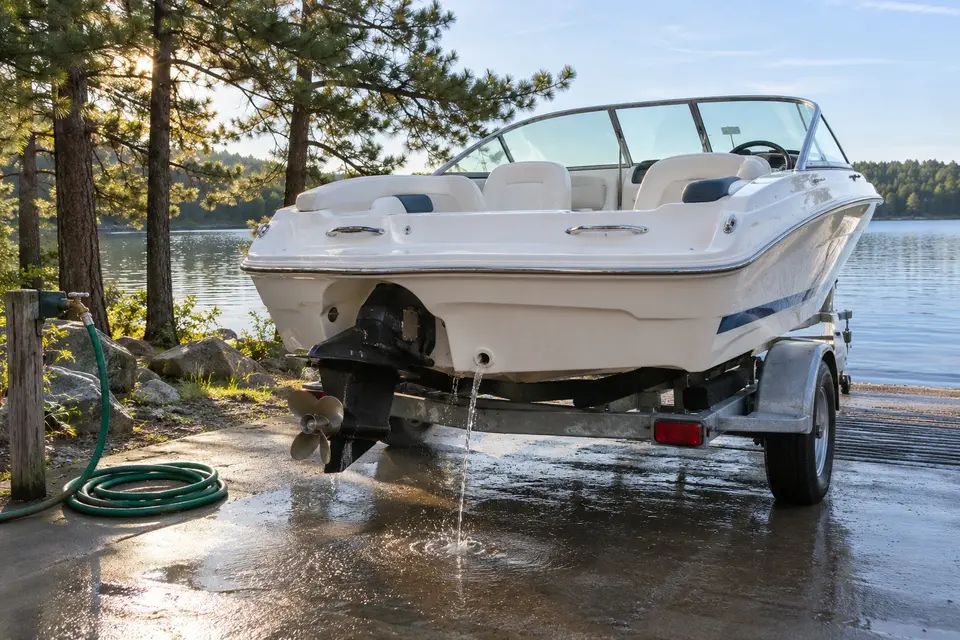
- Clean before you leave. Washington Fish and Wildlife says all gear and watercraft used on the water should, whenever possible, be cleaned before leaving the boat launch or access area.
- Drain everything. Minnesota DNR tells boaters to drain the boat, motor, ballast tanks and bait containers, and to drain the bilge, livewell and baitwell by removing drain plugs before leaving the access. WDFW lists the motor, bilge, live-well and bait tanks too.
- Dry it out. WDFW says to let the boat fully dry before moving to a new waterbody, then keep gear dry for an additional 48 hours. Minnesota lists drying for at least 5 days among its extra precautions, especially after zebra mussel and spiny waterflea waters. The two states do not match, so follow the rule where you boat.
- Wash gently. BoatUS recommends rinsing regularly with fresh water so you need fewer harsh cleaners, and says power washing can remove bottom paint, so save it for a designated washdown area.
For deeper cleaning, see our guides on how to clean a pontoon boat and the best way to remove oxidation from a boat.
Engine care through the season#
BoatUS puts it plainly: routine inspections can alert you to problems, and changing engine oil and checking fluid levels are the best way to keep a boat running smoothly. The specifics below come from engine makers and Ohio DNR.
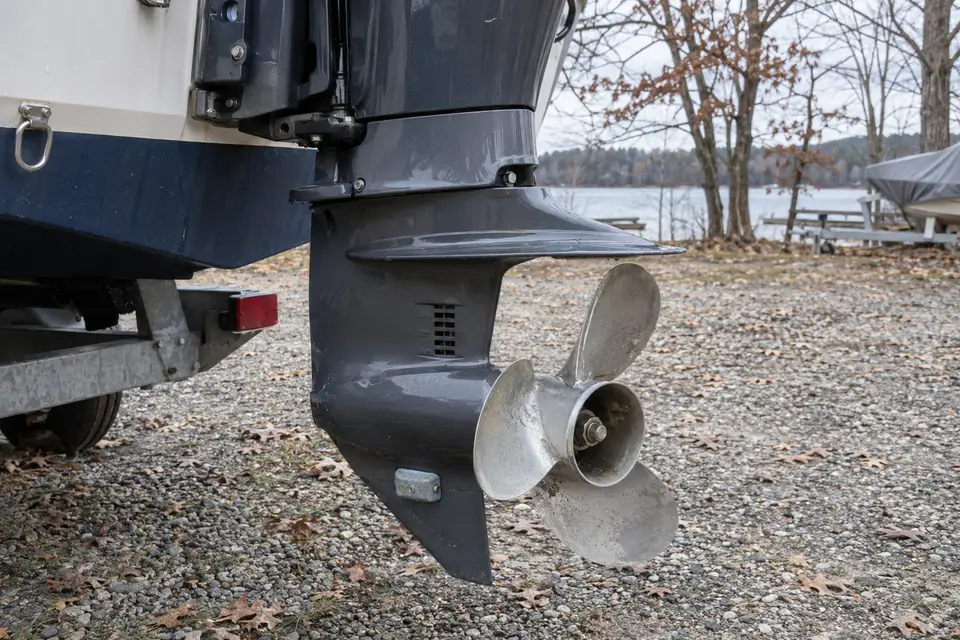
- Oil and filter. For a four-stroke outboard, Mercury’s outboard guide says to change the oil and filter every 100 hours or once a season, regardless of hours used. It also says never to use automotive oil in a marine engine.
- Gear lube. Mercury gives the same 100-hour-or-season interval for lower-unit gear lube, but tells you to check the manual for your model. Water in gear lube can freeze and expand in storage and crack the gearcase.
- Anodes. Mercury says sacrificial anodes should be replaced when they are 50 percent deteriorated.
- Trim fluid. Pink or milky trim fluid indicates water in the system, according to Mercury.
- Impeller and props. Ohio DNR suggests considering a water pump impeller replacement every two or three years and checking props for nicks, since even slight damage can hinder performance.
- Hoses, belts and steering. BoatUS says to inspect hoses and belts for peeling or cracking. Ohio DNR adds steering systems, including tiller friction fittings.
When you change oil, BoatUS suggests temporarily disabling the bilge pump so it does not cycle on during a spill, and using oil-only absorbent pads under the engine.
Fuel: stabilizer, filters and tank level#
Every fuel source we read agrees on stabilizer. Mercury says to always store a boat with fresh fuel treated with marine fuel stabilizer, then run it for about 10 minutes so treated fuel reaches the whole system (follow the manual if you use a hose). A Mercury dealer lead adds that most of the issues their dealers see are caused by stale fuel. Ohio DNR warns that untreated gasoline can gum up fuel lines over winter.
Tank level is where the makers differ:
- Mercury: fill an older vented tank to about 95 percent, leaving room for the fuel to expand. Newer tanks that cannot vent freely do not need to be filled.
- Yamaha: store with the tank 7/8 full to limit condensation, and never plug or cap the vent.
Neither is universal. Use the advice for your engine and tank type.
On filters, BoatUS notes that ethanol fuel tends to clean out fuel systems, so filters may need changing more often with the first few tanks of ethanol-blend gas.
Battery care#
Mercury says to make sure a lead-acid battery is fully charged, remove it and store it in a cool, dry place, ideally on a maintenance charger. Yamaha says to charge fully, have it load tested, check the charge monthly, and bring it indoors if the outboard is stored outside in cold months. Neither source says one routine fits every battery type, so check your battery maker’s instructions too.
More detail is in our posts on how to keep boat batteries charged and testing a boat battery with a multimeter.
Bilge, safety gear and the boat itself#
The Coast Guard’s federal requirements guide says your boat should be in top operating condition, free of tripping and fire hazards, with clean bilges. It asks you to verify that required safety equipment is aboard, maintained in good working order, and that you know how to use it. Inspect your fire extinguisher each time you get underway. Pyrotechnic distress signals must be approved, not expired, serviceable and readily accessible.
BoatUS points out that leaks from steering cables, old oil drips and leaky fuel fittings can all end up in the bilge. Keep the engine tuned, check clamps and filters, and wipe up drips right away.
Our lake boating safety guide and boat ramp checklist cover the on-water side.
Laying up for the off-season#
Ohio DNR calls winterizing a boat and motor the most important maintenance an owner can do to help ensure safe boating the next spring. The common steps from Ohio DNR, Mercury and Yamaha:
- Inspect the outboard. Yamaha says to work from the top of the cowling down to the skeg, with the cowling and propeller off.
- Treat fuel and change fluids as above.
- Protect against freezing. Ohio DNR says to drain engine cooling and drinking water systems as much as possible, then fill them with non-toxic propylene glycol marine antifreeze. Inboard owners should read our inboard winterizing guide.
- Trim the outboard down. Mercury says to trim it to vertical so remaining water can self-drain, on a trailer or a rack.
- Clean, dry and cover. Yamaha says the boat should be bone-dry before you close it up. Ohio DNR says to cover it even indoors, with air circulation under the cover to prevent mildew.
- Drain the bilge and pull the plug. Ohio DNR suggests leaving the transom drain plug out with a reminder note somewhere you will see it in spring, and hanging life jackets up to air out.
- Service the trailer. Ohio DNR lists checking tires, greasing wheel bearings and checking lights. See our trailer wheel bearing guide.
An Alaska Sea Grant winterizing advisory also says to change the oil and the reduction gear oil before lay-up. It dates from August 1997 and was written for cold, wet climates, so treat it as general background.
What these sources do not cover#
None of these sources gives one schedule for every boat. They do not set hull inspection intervals, bottom-paint cycles or upholstery care for lake boats in general, and the engine figures above apply to the makers who published them. If you live aboard or keep a large boat at the dock, our houseboat maintenance schedule goes further. For anything structural or electrical you are not sure about, Mercury notes that dealers handle routine service and winterization.
Sources#
Checked November 2026: Mercury maintenance guide, Mercury outboard winterizing, Yamaha extended storage, BoatUS boat maintenance, Ohio DNR winterizing, Minnesota DNR, WDFW Clean, Drain, Dry, US Coast Guard guide (revised November 2023). The Alaska Sea Grant advisory (August 1997) was saved from seagrant.uaf.edu, which did not respond when we rechecked it.
Frequently asked questions#
How often should I change the oil in my boat engine?
Check your engine’s manual. Mercury says a four-stroke outboard’s oil and filter should be changed every 100 hours or once a season, regardless of how many hours the engine ran. That is Mercury’s figure for its four-stroke outboards, not a rule for every engine.
Should I fill the fuel tank before storing my boat?
It depends on the tank and the maker. Mercury says to fill an older vented tank to about 95 percent and says newer tanks that cannot vent freely do not need to be filled. Yamaha says to store its outboards with the tank 7/8 full and never plug the vent. Both say to use fuel stabilizer, so follow your own engine’s manual.
Should I take the battery out of my boat for winter?
Mercury recommends fully charging a lead-acid battery, removing it and storing it in a cool, dry place on a maintenance charger. Yamaha says to charge fully, have the battery load tested, check the charge monthly and bring it indoors if the outboard is stored outside in winter. See also how to keep boat batteries charged.
How long should my boat dry before going to another lake?
States differ. Minnesota DNR lists drying for at least 5 days as one of its extra precautions, especially after zebra mussel or spiny waterflea waters. Washington’s WDFW says to let the boat fully dry, then keep gear dry for an additional 48 hours. Follow the rule of the state you are boating in.
Can I pressure wash my boat hull?
BoatUS says power washing or high-pressure washing can remove bottom paint, so it should be saved for a designated washdown area. For routine cleaning it suggests rinsing regularly with fresh water to avoid harsh cleaners.
When should I replace the sacrificial anodes on my outboard?
Mercury says sacrificial anodes should be replaced when they are 50 percent deteriorated, and that the owner’s manual shows where they are on your motor.
Written by
We started this blog as a place to go to when we had questions about buying our first home on the lake. There was a lot of information on the internet, but we always spent hours...