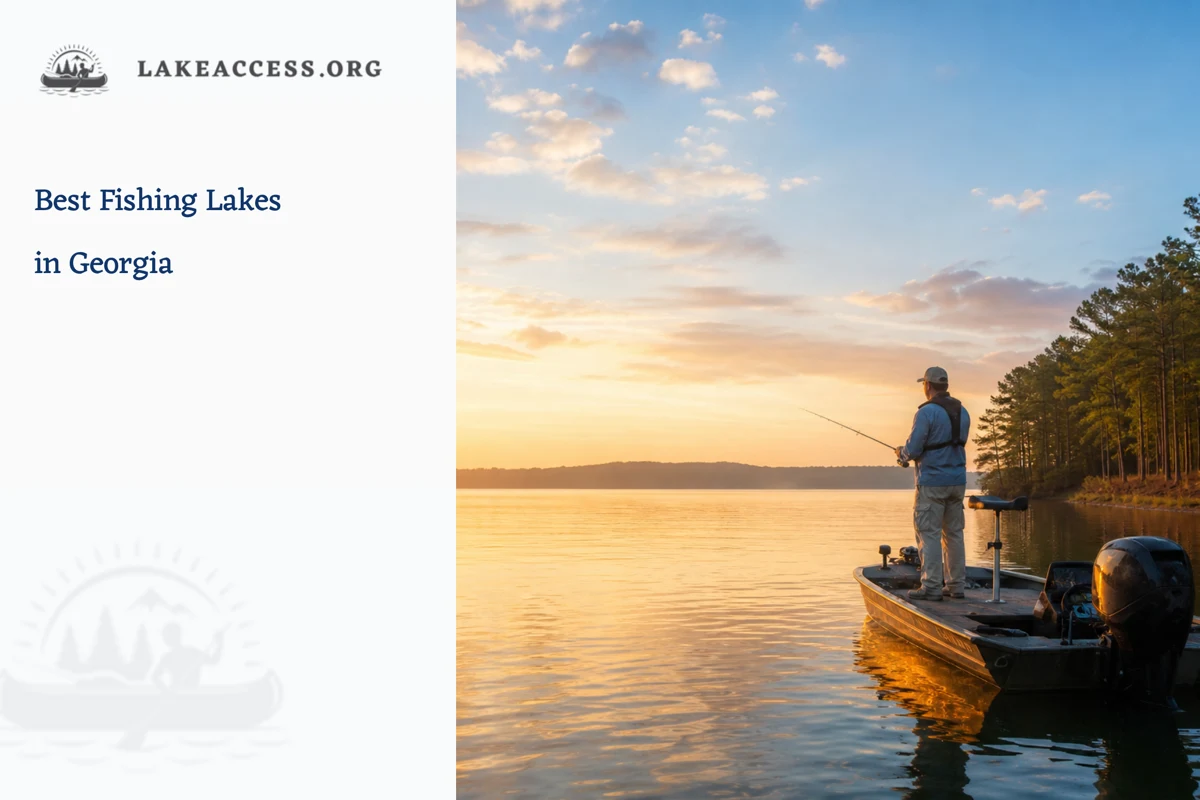
Quick answer: A useful list of the best fishing lakes in Georgia starts with a method, not a promise. This guide highlights public-water candidates with established fisheries and official planning sources, then asks you to confirm the current rule, access point, conditions, and fish-consumption advice for the exact waterbody before a trip. A lake that is right for walleye, bass, trout, musky, crappie, or family shore fishing can be wrong for your day if a ramp is closed, water is low, weather shifts, or a special regulation applies.
How this Georgia list was selected
The word “best” is used here as a planning shortcut, not as a claim that one water will outperform every other lake on every day. Candidates were selected because they have a recognizable public-management or access pathway, a fishery worth researching through Georgia Department of Natural Resources Wildlife Resources Division, and enough scale or regional relevance to support a deliberate trip. We did not rank private water, publish secret spots, or turn old catch reports into current forecasts.
Use the table to choose a starting direction. The final decision belongs to the live sources, posted notices, and the people at the water. Species, seasons, length limits, creel limits, bait rules, launch availability, and consumption advisories can all be water-specific.
| Lake or reservoir | Why it belongs on a research shortlist | Verify before travel |
|---|---|---|
| Lake Lanier | Large reservoir with strong bass and striped-bass planning interest. | Current access, weather, regulations, and water conditions. |
| Allatoona Lake | Corps-managed reservoir option for bass and crappie research. | Corps recreation notices, launch status, and DNR rules. |
| West Point Lake | West Georgia reservoir for multispecies planning. | Current Corps access, lake rules, and fish guidance. |
| Clarks Hill Lake | Major border reservoir with bass and crappie research relevance. | Jurisdiction, current access, and applicable regulations. |
| Lake Seminole | Southwest Georgia reservoir for warmwater fishing research. | Current launch, weather, and advisory information. |
Five Georgia waters worth researching
Lake Lanier
Lake Lanier’s size makes wind, traffic, launch logistics, and the return trip part of the decision. Use current official sources rather than a generic lake list.
Allatoona Lake
Developed recreation does not remove the need to check water, ramp, and weather conditions. Treat an official listing as a starting point.
West Point Lake
Check the exact access point and managing notice before travel; large reservoirs can have different conditions across the water.
Clarks Hill Lake
Border waters require special care with license and rule assumptions. Verify the jurisdiction and the activity you intend to undertake.
Lake Seminole
Warm weather does not eliminate wind, storms, water-level changes, or consumption-advisory checks.
These profiles are intentionally conservative. They identify an appropriate research path rather than telling an angler to fish a particular cove, depth, or launch lane. Confirm site boundaries and access rules on the ground. Public water does not make every adjacent shore, dock, road, parking area, or boat ramp open for the use you have in mind.
Match the water to the fishing goal
Start with a primary species or experience rather than a dramatic photo. A large reservoir may suit a boat-based plan but demand more weather, navigation, and launch preparation. A smaller lake or managed shoreline may make a better first trip for children or a shore-only group. Georgia’s mountain lakes, piedmont reservoirs, and southern impoundments brings different water types together, so a useful plan separates warmwater and coldwater expectations instead of pretending that every lake fishes alike.
Make a short shortlist: one first-choice water, one lawful backup, and one no-fishing alternative. That structure reduces the temptation to improvise when an access point is full, a ramp is closed, conditions deteriorate, or a site is not suitable for the group.
Rules, license, and special regulations
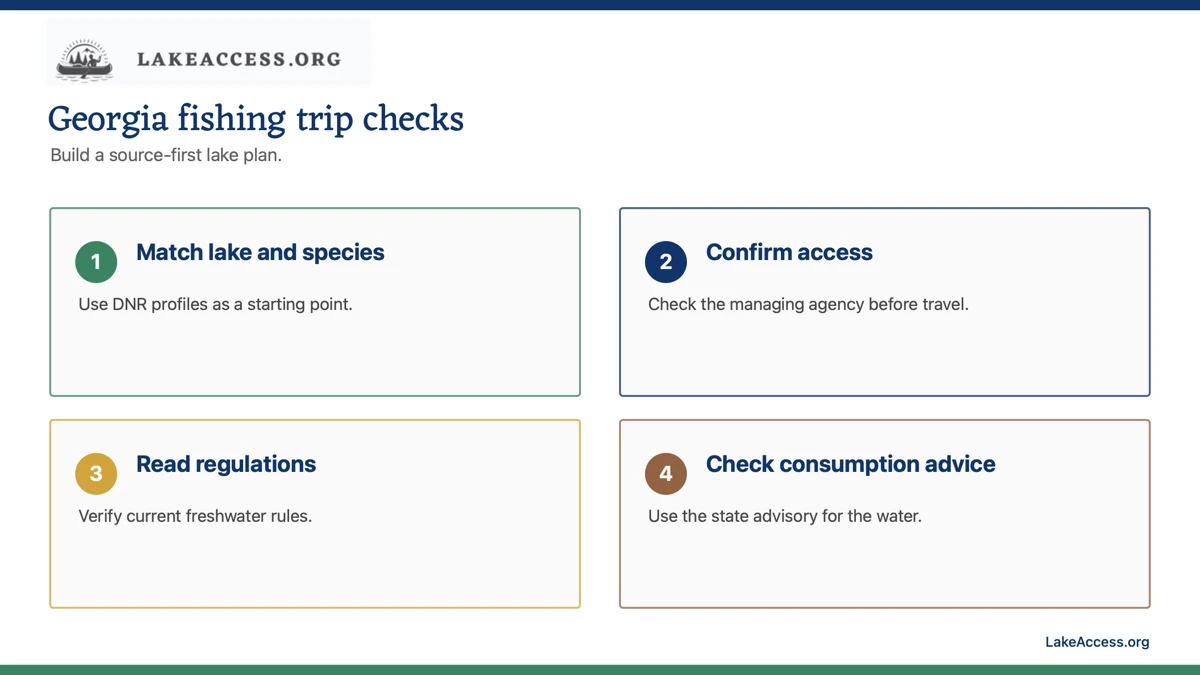
Georgia Department of Natural Resources Wildlife Resources Division is the primary starting point for current fishing regulations. Read the active digest or water-specific rule page before leaving, then check for emergency updates. Do not copy a bag limit, season date, size rule, bait rule, or species claim from this article into a trip plan. A regulation may differ by water, tributary, species, season, or management zone.
- Confirm the license required for every angler and the date it is valid.
- Read the exact waterbody rule after reading statewide information.
- Check for temporary closures, drought, drawdown, fire, storm, or construction notices.
- Identify the fish you may encounter before you fish, especially where protected or special-rule species are possible.
- Carry a release plan: correct tools, brief handling, and no pressure to keep a fish you cannot identify or lawfully retain.
Access is an on-the-day question
Georgia DNR, Georgia Power, and U.S. Army Corps of Engineers pages can identify managers and public facilities, but active ramp, parking, and closure conditions must be confirmed before travel. That is why a map pin is not enough. Confirm the manager, ramp or shore facility, parking instructions, hours, and whether an alert changes the plan. A trail, shoreline, or water surface can have different access rules from a developed launch. Follow posted instructions even when an older webpage, social post, or route app says something else.
For a boat trip, include the return in the first decision: wind, cold water, changing reservoir level, daylight, fuel, and the skills of everyone aboard. For shore fishing, protect shared paths and launch lanes, look behind you before casting, and never turn a crowded edge into a safety problem for other visitors.
Fish consumption advice is separate from fishing access
Georgia’s fish-consumption guidance is maintained separately from its freshwater fishing rules; use the state source for the exact lake and species. A water can be open to fishing while advice for eating a particular species or size class is more restrictive. Use the current advisory lookup or health guidance for the named waterbody and species. This page does not substitute a generic “safe to eat” statement for that check.
If an advisory, water appearance, fish condition, or local notice raises a question you cannot resolve from an official source, choose the conservative option. Release fish carefully where lawful, avoid eating a catch until the guidance is clear, and report concerns through the managing agency’s published channels rather than relying on a social-media diagnosis.
Build a resilient fishing-day plan
- The evening before, read the official water or access page, current rules, weather, and closure notices.
- On the morning of travel, refresh the forecast and confirm the actual ramp, shore, or park status.
- At the site, read posted rules and reassess wind, water level, visibility, crowds, and the group’s comfort.
- Set a return time before the first cast and leave enough margin to load, clean up, and travel without rushing.
This method works better than a blanket “best month” or “best lure” claim. It respects changes in seasonal access and fisheries management, and it leaves room to stop when the conditions no longer fit the plan.
Seasonal timing without a false forecast
A statewide guide cannot promise that a particular lake will be fishable, uncrowded, or productive at a particular hour. Ice-off, runoff, water temperature, storms, drawdown, algae, smoke, and heavy holiday use can change the practical trip. Start with the current forecast and the managing agency’s notices, then match the plan to the group’s gear and experience. When official sources describe a closure or caution, change the destination rather than trying to interpret an exception from an old photograph.
Use the season to decide what to check, not to skip the check. Early-season trips may put road, ice, and cold-water readiness ahead of a fishing method. Summer trips may require an earlier start, heat and storm awareness, and greater attention to water level. Fall trips can bring shorter daylight and changing facility hours. The right preparation is specific to the day and the water, not the calendar label.
Shore fishing and boat fishing ask different questions
Shore fishing can be a simpler option when it uses a confirmed public bank, keeps casting clear of shared paths, and respects posted boundaries. It still needs a safe footing, a way to protect children and dogs from hooks, weather awareness, and a plan to leave before darkness or fatigue changes the walk back. Do not create an access point by climbing a fence, crossing private land, or sliding down an unstable shore because a map appears to put water nearby.
A boat expands the water you can reach but also adds launching, navigation, wind, cold-water, equipment, and return-trip responsibilities. Wear a properly fitted life jacket on the water, prepare the boat away from a ramp where the facility layout allows, and keep the ramp lane available for other users. A crowded launch or changing conditions are reasons to wait, choose a shore plan, or return another day, not reasons to improvise.
Do not turn a lake list into false precision
Exact depths, lure colors, current catch rates, “secret” points, and claims that a fish is waiting in a certain cove age fast and can damage a trip. This guide intentionally points to fishery surveys, official water pages, rules, and access tools instead. Those sources are better suited to a responsible decision because they name the water, manager, and relevant conditions. Personal observations can help an angler learn, but they should not override a closure, a posted restriction, or a conservation rule.
Keep a private trip log if it helps: the date, broad weather, access type, official notices checked, general method, and what the group learned. It supports better preparation without encouraging an unsupported public promise about fragile habitat or a guaranteed catch.
Protect the fishery and the people sharing it
Fishing ethics are part of access. Pack out line, hooks, containers, and food waste; do not leave bait or fish remains on shore; and follow cleaning, draining, and invasive-species rules that apply to the state and water. Handle fish only as long as necessary, especially when a fish will be released. A protected species, a fish you cannot identify, or a catch outside the current rule is a reason to take the conservative course and seek official guidance.
Give swimmers, paddlers, shore visitors, launch users, and other anglers room. Reduce wake near people and access areas, do not block a ramp with gear, and keep a casting lane clear of paths. A good fishing day should not make another person’s lawful use of the water less safe.
Planning with children or newer anglers
New anglers usually benefit from a short trip with fewer moving parts: one confirmed access site, one simple legal setup, close adult supervision around water and hooks, and an easy exit plan. Explain why the rule check matters before a fish is on the line. Success can be reading a current regulation, casting safely, identifying a species, or leaving a clean shoreline. It does not need to be a full cooler.
Choose a day that matches the least experienced person in the group. Keep drinking water, sun or rain protection, first aid, and a charged communication plan available. When the group is uncomfortable, tired, or unable to manage the water safely, end the trip early. The lake will offer a better window another time.
Know when to reset the plan
A closed ramp, low water, wind, lightning, smoke, a posted advisory, an access conflict, or a rule you cannot verify are all valid reasons to stop. The backup plan can be a different lawful site already checked with its manager, a shore-only activity, a tackle-preparation day, or a return home. Avoid the pressure to make the original destination work just because the gear is packed.
That flexibility is the value of a source-first list. It gives you several places to research while making clear that current conditions, lawful access, and safety decide the actual trip.
Use equipment that fits the plan
Bring the equipment that helps you follow the decision you made, not the equipment that pressures you into a larger or riskier trip. For shore fishing, that can mean a compact kit, a way to control hooks, water, weather protection, and a bag for waste. For a boat trip, it includes required safety equipment, a communication plan, enough fuel and power for the return, and a way to secure loose items before the ramp. Check local boating requirements through the appropriate agency rather than assuming that a rule from another state applies here.
Keep the setup simple enough to observe the place. An angler who is focused on too many rods, electronics, or a crowded deck can miss a changing sky, a child near a hook, a low-water obstacle, or a request from another ramp user. Good preparation creates attention for the conditions that matter most.
Read the destination with humility
A named lake has more than one story. It can be a fishery, a drinking-water or flood-control reservoir, a recreation site, a cultural landscape, wildlife habitat, or a neighbor’s everyday shoreline. That is why the best trip plan avoids shortcuts: it follows the manager’s rules, respects private property, avoids disturbing wildlife, and does not claim that public interest in fishing gives permission to ignore other uses.
When an official source is incomplete, call or contact the managing agency before making a long trip. A careful question about a current facility, water level, closure, or rule is better than inventing an answer. The goal of this guide is not to make every destination feel certain; it is to help anglers make a better-informed, lower-risk choice.
Leave the water ready for the next visitor
Before departure, take a minute to inspect the shore, dock, boat, or staging area. Retrieve line and hooks, place trash in the proper container, secure the gear, and leave the ramp lane as soon as the boat is stable and the facility layout allows. Small actions reduce injuries to wildlife and other visitors, protect access, and make the next trip easier to start well.
Use the same care with information. Share the official access page and current regulation with a partner instead of a stale screenshot or an unverified rule summary. That habit keeps a group aligned on the facts that matter before the next trip begins, and it makes the next decision easier to explain and follow.
Related LakeAccess guides
- Lake Lanier fishing guide
- How deep is Lake Lanier?
- Best fishing lakes in Florida
- How to read a lake map for fishing
Sources
- Georgia DNR fishing (checked July 11, 2026).
- Georgia freshwater fishing regulations (checked July 11, 2026).
- Georgia fish consumption guidelines (checked July 11, 2026).
- U.S. Army Corps of Engineers Allatoona Lake (checked July 11, 2026).
- U.S. Army Corps of Engineers West Point Lake (checked July 11, 2026).