Lake Camping for Pet Owners: What to Consider
Park rules first, then water, heat, swimming and ticks. What the National Park Service, California State Parks, the CDC and veterinary schools say about camping at a lake with your dog.
On this page
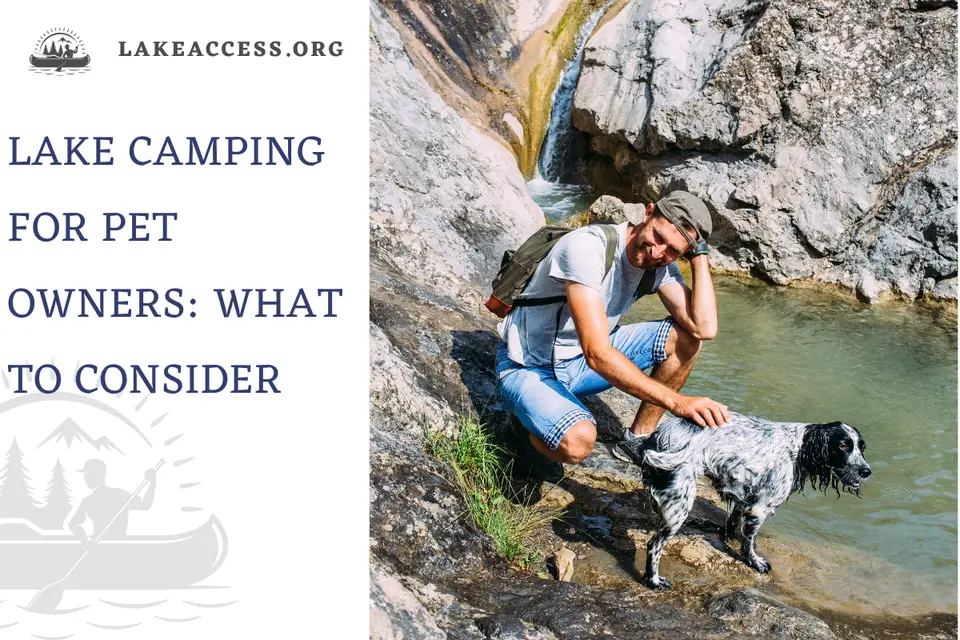
Quick answer: Before you go, read the dog rules for the exact park and campground, not a general list. At camp, keep the dog leashed and attended, keep it out of water that looks or smells wrong, rinse it after any doubtful swim, plan around the heat, and check for ticks every day. The National Park Service, California State Parks, the CDC and three veterinary sources agree on most of this; where they differ, it is because each park writes its own rules.
Start with the park’s own pet rules#
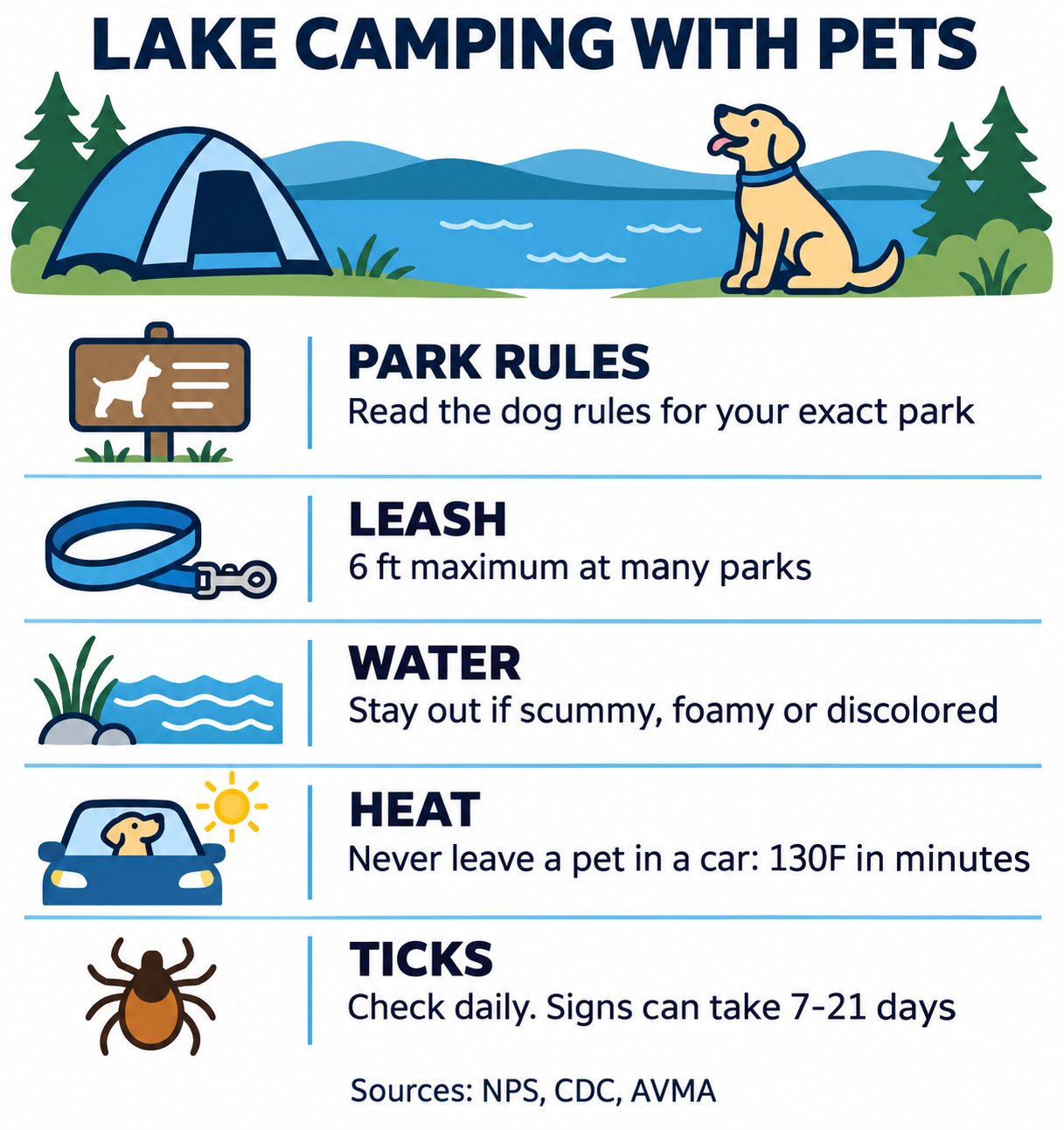
There is no national “pet-friendly lake” standard. Each agency, and often each park, decides where dogs can go.
- The Park Service’s general advice. NPS camping with pets says to find out whether the campsite allows pets, because some parks restrict facilities, lakes, ponds, creeks, streams and the backcountry. It adds that many parks do not allow pets on hiking trails or boardwalks.
- One lake, one set of rules. At Lake Roosevelt National Recreation Area, dogs are allowed except in developed swim beach areas, on a leash no more than 6 feet long. Barking dogs are treated as a nuisance, and owners must remove them from the campground.
- A state system with a table. California State Parks requires a maximum 6-foot leash at all times, says dogs must not be left unattended, and tells overnight campers to keep their dog in a tent or vehicle. In general, dogs are not allowed on trails, near rivers or creeks, in open forest and meadows, or in environmental campsites, and they are not permitted on most beaches.
The California table shows how much lake parks differ, even inside one state:
- Clear Lake State Park: dogs only in the parking lot, paved roadway and campgrounds; not on trails or day-use areas.
- Folsom Lake State Recreation Area: dogs allowed on trails and in the water, but not in the swim areas at Black Miners Bar, Granite Bay, Beals Point and Nimbus Flat.
- Castaic Lake State Recreation Area: dogs not allowed in the water. The park is run by Los Angeles County, so check the county page too.
- Auburn State Recreation Area: dogs allowed, except at Lake Clementine.
- Brannan Island State Recreation Area: dogs on paved roads or in your campsite only, kept out of trails and beaches except designated areas, and inside tents or vehicles at night.
- Donner Memorial State Park: dogs allowed on the Lakeside Interpretive Trail, Zig Zag Trail, fire roads and the Donner Lake shore, but not at China Cove Beach, the visitor center, the half-mile Nature Trail, or designated ski trails when snow is present.
Park rules change, so treat these as examples, not a guide to your trip (checked November 2026 on the California State Parks dog page and the Donner Memorial State Park page). If you are heading to Tahoe, our list of dog-friendly beaches at Lake Tahoe is a starting point, and the same rule applies: confirm on the managing agency’s page.
One correction to the earlier version of this article: it said a six-foot leash rule applies throughout every lake property. Six feet is common, and NPS says most parks use it, but each park also sets its own beach, trail, swim-area and overnight rules.
Before you leave home#
The Park Service’s pre-trip list is short and practical:
- Know your pet. If camping could put your dog, you or other campers at risk, NPS says to leave it at home. The same goes for a dog that struggles with long walks when the site needs a hike to reach.
- Vaccinations and parasites. Make sure your dog is up to date on required vaccinations and protected against heartworm, fleas and ticks, and ask your vet about the area you will camp in.
- Collar, tags and a chip. Keep a collar with ID tags securely on your dog at all times. NPS notes that even well-behaved dogs can slip a loose collar and chase wildlife, and suggests microchipping and registering your dog.
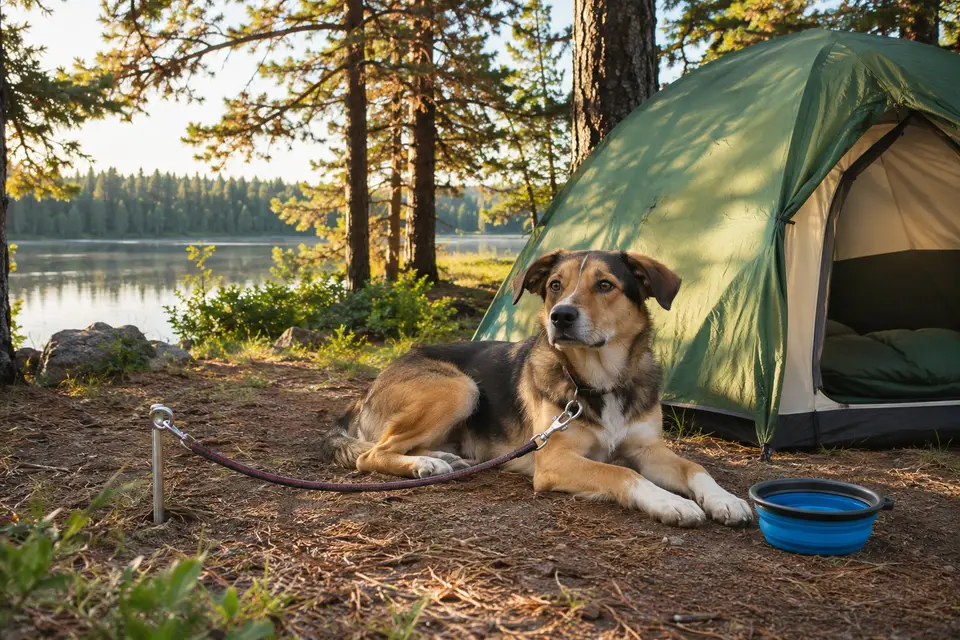
- Pack for the dog. Food, water and bowls (collapsible ones save space), extra food for strenuous days, a first aid kit, poop bags, towels, and a tether with a stake. Many parks will not let you tie a tether to a tree.
For the rest of the trip planning, see how to plan a lake camping trip.
Lake water: the biggest lake-specific risk#
Harmful algal blooms are the main reason a lake trip with a dog needs more care than a forest one.
- Check advisories first. The CDC says to check for and follow swimming advisories before visiting lakes, and that local or state governments often post them online, near the water, or both. Our guide on how to check harmful algal bloom alerts lists where to look.
- Stay out of water that looks or smells wrong. CDC’s warning signs: bad smell, discolored water, foam, scum, mats of algae or paint-like streaks, and dead fish or other animals on the shore. It also says toxins are sometimes in the water even when you cannot see any sign of a bloom.
- You cannot judge a bloom by eye. The Minnesota Department of Health says there is no way to tell whether a blue-green algal bloom is toxic just by looking at it, so you and your pets should avoid the water until it goes away.
- Dogs are more exposed than people. CDC says animals are more likely than people to get sick, partly because they drink water that looks or smells bad and eat algae or dead fish on the shore. Minnesota adds that pets can swallow toxins by licking algae from their fur.
If your dog does go into doubtful water, CDC says to rinse it off immediately with tap water and not to let it lick its fur before you do. If it seems sick afterward, call a veterinarian right away. Minnesota says symptoms generally begin minutes to hours after exposure. Read more in our article on blue-green algae in lakes.
Even without a bloom, Texas A&M veterinarian Dr. Erin Ray recommends discouraging pets from drinking lake water, because parasites, trash, contaminants and algae can be in it. Bring fresh water for the dog. The older version of this page gave a daily water amount per pound and named specific diseases; we could not verify either in official sources, so we removed them.
Heat, cars and tents#
- Never leave a pet in a car. The AVMA says this holds even in the shade or with windows cracked. Lake Roosevelt says a closed vehicle can soar to 130F (55C) in minutes.
- Shade and water, always. AVMA says pets need unlimited access to fresh water and shade when outside.
- Move in the cool hours. Walk, hike or run in the cooler part of the day, take frequent breaks, and avoid hot surfaces such as asphalt.
- Know the higher-risk dogs. AVMA says overweight pets and short-nosed breeds have a higher risk of problems with warm-weather exercise; Texas A&M names brachycephalic breeds and dogs with thick or long coats.
- Test the ground. University of Wisconsin vets say if you cannot comfortably hold your hand on the pavement for several seconds, it is too hot for your pet’s paws.
AVMA’s heat stress signs are anxiousness, excessive panting, restlessness, excessive drooling, unsteadiness, abnormal gum and tongue color, and collapse. Any of them means emergency veterinary care. While you get there, University of Wisconsin advises moving the pet to a cool area, cooling it gradually with fans and water on its fur, and avoiding ice baths.
None of these sources gives a universal safe temperature or a set amount of exercise for every dog. Ask your vet about yours.
Swimming and life jackets#
- Supervise and plan a rescue. University of Wisconsin vets call close supervision and a rescue plan the keys to safe swimming.
- Start easy. Introduce a dog to swimming in calm, shallow water, and never force a pet into the water.
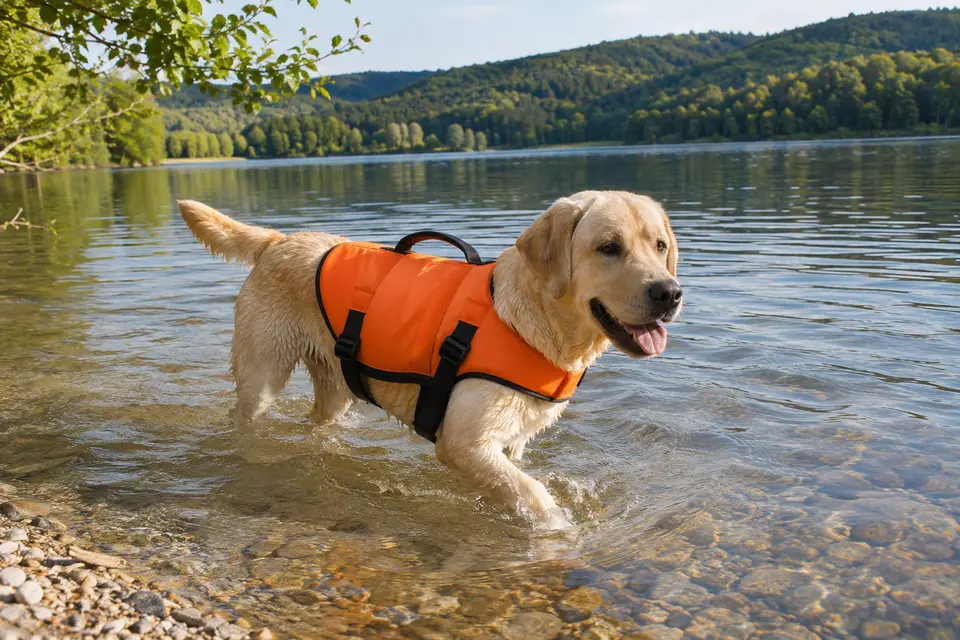
- Use a life jacket the dog knows. Texas A&M says a dog used to a well-fitted life jacket is probably best off wearing it whenever it is on or near water, and that it should get used to the jacket before the trip.
In the South, the water’s edge has another hazard. Our checklist on dogs near alligator lakes covers it.
Ticks#
- Daily checks. The CDC says to check pets daily for ticks, especially after time outdoors, and to remove any you find right away. Ticks are hard to spot on breeds with long, dark fur.
- Watch for late signs. Signs of tickborne disease may not appear for 7-21 days or longer after a bite, so watch for changes in behavior or appetite after you get home.
- Use a preventive. CDC says it is important for dogs, because vaccines exist only for Lyme disease in dogs. Ask your vet which product fits, and do not put tick products on cats without asking first.
What we did not find#
The sources here do not give a safe distance between a dog and a campfire, so follow the campground’s fire rules and keep the dog tethered away from it. We also did not verify any campground amenities, rates or off-leash areas, so we dropped the old list of “best pet-friendly campgrounds”. For general camp safety, see our beginner’s guide to lake camping safety.
Sources#
Checked on November 25, 2026: NPS camping with pets, NPS Lake Roosevelt pets, California State Parks dog rules, Donner Memorial State Park, CDC harmful algal blooms, Minnesota Department of Health, CDC ticks on pets, AVMA warm weather pet safety, University of Wisconsin School of Veterinary Medicine, Texas A&M Veterinary Medicine.
Frequently asked questions#
Are dogs allowed at lake campgrounds?
Often, but not everywhere, and rarely everywhere inside one park. The National Park Service says some parks restrict pets in facilities, lakes, ponds, creeks, streams and the backcountry, and that many parks do not allow pets on hiking trails or boardwalks. California State Parks publishes a park-by-park table: Clear Lake State Park allows dogs only in the parking lot, paved roadway and campgrounds, while Folsom Lake State Recreation Area allows them on trails and in the water outside its swim areas. Read the page for the exact park before you book.
Can my dog swim in the lake?
Only where the park allows it and the water looks clean. Castaic Lake State Recreation Area, for example, does not allow dogs in the water, and Lake Roosevelt keeps dogs out of developed swim beaches. CDC says to check advisories first and keep pets away from water that smells bad, looks discolored, or has foam, scum, mats of algae or paint-like streaks. University of Wisconsin vets add close supervision, a rescue plan, and a life jacket for inexperienced or weak swimmers.
What should I do if my dog went into water with algae?
Rinse the dog right away with tap water from a sink, shower, hose or spigot, and do not let it lick its fur first, CDC says. If the animal seems sick after being in or near the water, call a veterinarian right away: CDC warns that animals can get very sick or die within hours of swallowing some algal toxins. Our guide to blue-green algae in lakes covers what blooms look like.
Can I leave my dog at the campsite while I go out on the lake?
Not at many parks. California State Parks says dogs must not be left unattended, and the National Park Service says never to leave your dog unattended, especially in a hot vehicle. Lake Roosevelt warns that temperatures in a closed vehicle can soar to 130F (55C) in minutes. If your plans include long stretches of activities where dogs are not allowed, the Park Service suggests considering a boarding facility.
How often should I check my dog for ticks when camping?
Every day, and especially after time outdoors, according to CDC. Remove any tick you find right away, and watch for changes in behavior or appetite, because signs of tickborne disease may not appear for 7-21 days or longer after a bite. Ask your vet which preventive suits your dog, and never put a dog product on a cat: CDC and University of Wisconsin both warn against it.
What are the signs of heat stress in a dog?
The AVMA lists anxiousness, excessive panting, restlessness, excessive drooling, unsteadiness, abnormal gum and tongue color, and collapse, and says to seek emergency veterinary care if you see any of them. University of Wisconsin vets say to move the pet to a cool area, cool it gradually with fans and water on its fur, get veterinary care as soon as possible, and avoid ice baths.
Written by
We started this blog as a place to go to when we had questions about buying our first home on the lake. There was a lot of information on the internet, but we always spent hours...