
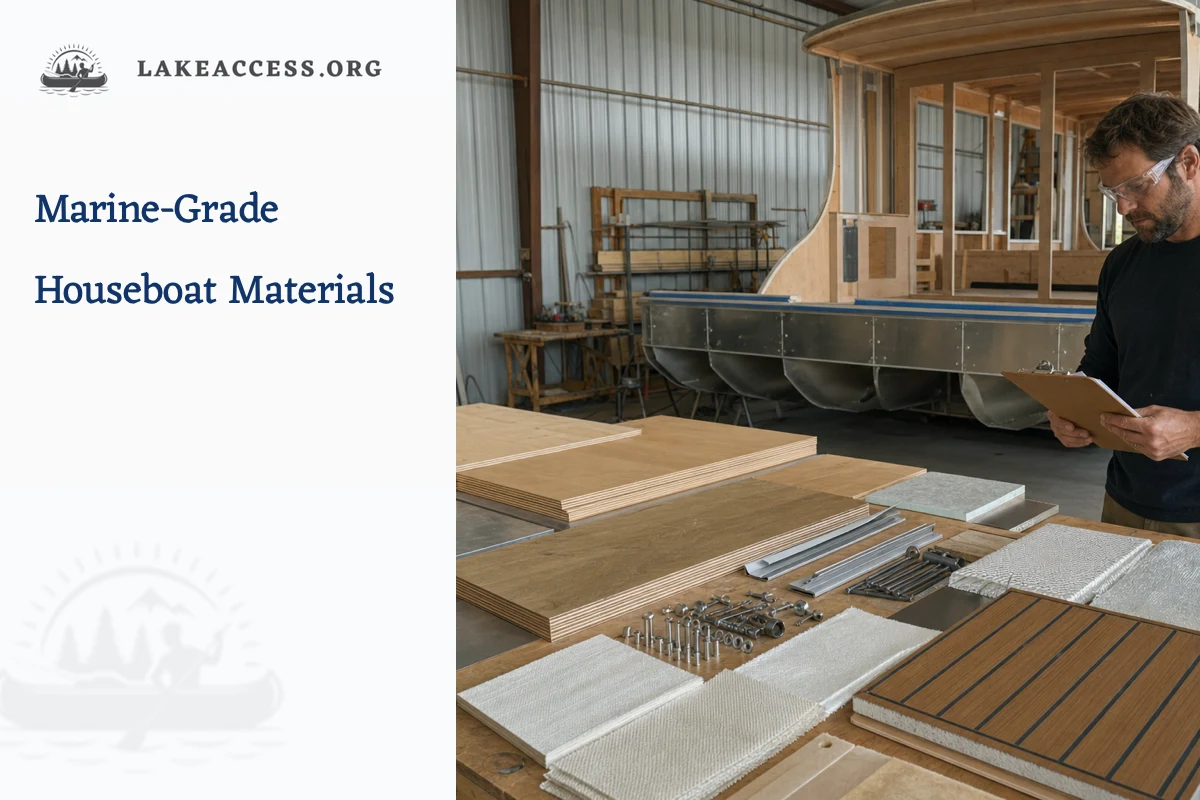
Quick answer: Choose materials from the reviewed structural design and the exact service environment, then verify grade, strength, corrosion compatibility, fire behavior, weight, installation process and inspection access. The phrase marine grade does not make plywood, metal, fasteners, foam, sealant or insulation interchangeable. Structural substitutions need designer approval, and every product must be installed within its current technical data.
Decision table
| Decision point | Evidence to collect | Do not assume | Safe next step |
|---|---|---|---|
| A product says marine grade | Standard, grade stamp, technical data and intended structural function | That the phrase defines strength or compatibility | Match the exact specification on the reviewed drawing |
| Stainless fastener meets aluminum | Alloy, isolation detail, coating and wet exposure | That stainless cannot drive galvanic corrosion | Use the engineer's compatible fastening and isolation system |
| Sealant is rated below waterline | Substrates, joint movement, surface prep, cure and removability | That below-waterline rating makes it structural | Follow joint design and manufacturer data; never substitute for structure |
| Insulation or finish is lightweight | Fire, moisture, smoke, adhesive and hidden-space behavior | That land-building approval covers a vessel installation | Verify marine use and system-level fire/moisture requirements |
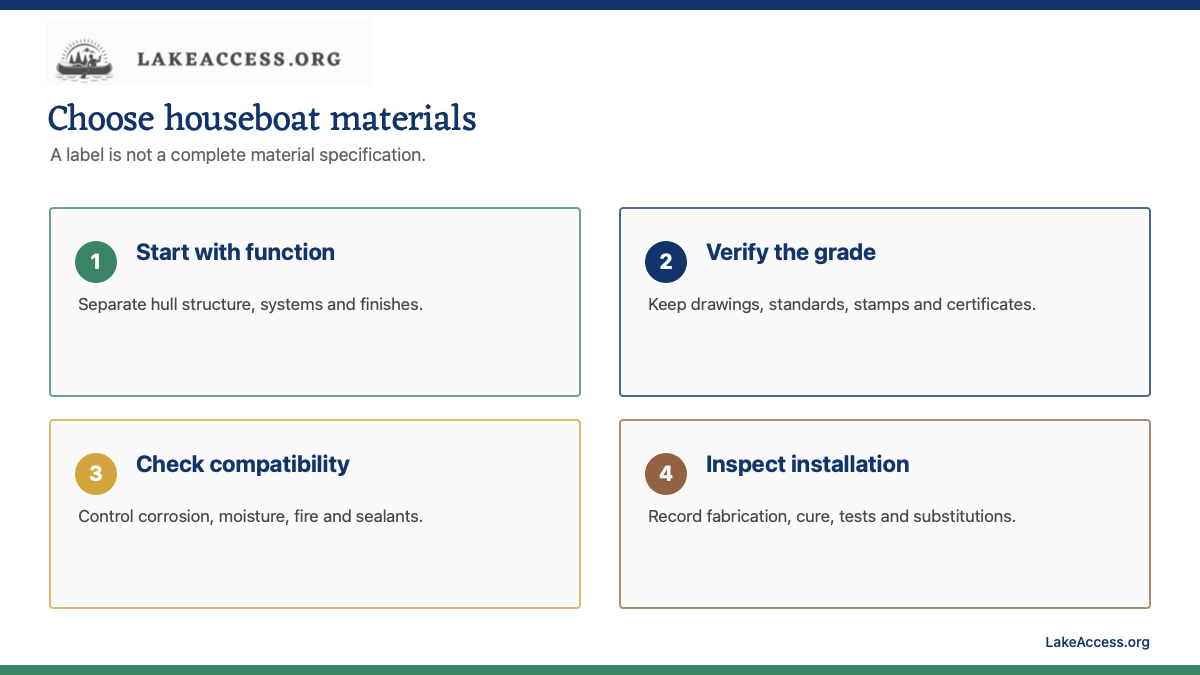
Separate primary structure from finishes
Primary hull, pontoon, deck and cabin framing materials carry global and local loads. Skin, liners, cabinetry and finish panels may still affect stiffness, fire spread, moisture and weight but cannot replace specified structure. Buy to the exact alloy, temper, laminate schedule, plywood grade, thickness and quality requirement in the reviewed drawings; a similar-looking sheet is not an engineering substitution.
Keep certificates, grade stamps and batch identification. Inspect for damage, contamination, storage moisture, core gaps, corrosion and distortion before fabrication. If a supplier cannot document the product, place it in quarantine rather than using it in a hidden load path. Any change in thickness, alloy, species, layup or joint method returns to the designer.
Specify wood and composite moisture protection
APA describes Marine Grade plywood as an Exterior-bond panel with more restrictive veneer and manufacturing requirements; that does not make an unsealed edge or drilled core waterproof forever. Follow the structural drawing and coating system, seal cut edges and holes, isolate wet hardware and prevent standing water. Preserve ventilation and inspection where the design requires it.
For fiberglass or bonded composite work, control resin, reinforcement, mix ratio, temperature, humidity, surface preparation, cure and laminate sequence. Personal protective equipment and ventilation follow the safety data. Do not create an undocumented laminate schedule from online repair advice, and do not hide voids, poor wet-out or contamination beneath paint.
Manage metal compatibility and fabrication quality
Aluminum and steel structures need specified alloy, thickness, weld procedure, filler, joint design and inspection. Heat can reduce strength in affected zones, while distortion can change fit and waterline geometry. Use qualified fabrication and the inspection method on the drawings. Protect tanks and structure from moisture-trapping supports and avoid abrasive or incompatible contact.
Select fasteners by alloy, strength, thread, head, backing and exposure. Stainless hardware connected to aluminum needs an engineered isolation and sealing detail, not a random plastic washer. Coatings, anodes and electrical bonding each serve defined roles and can conflict when improvised. Keep drainage paths open and make high-risk joints visible for maintenance.
Treat sealants, insulation and fire safety as systems
A sealant may bed removable hardware, create a flexible weather seal or form a near-permanent adhesive bond. Those are different jobs. Confirm substrate compatibility, immersion, fuel or chemical exposure, ultraviolet resistance, movement, surface preparation and cure. Plan future removal before choosing a permanent adhesive around a service item or fragile laminate.
Insulation and interior finishes must work with wiring, heaters, cooking equipment, machinery spaces and escape routes. Confirm flame, smoke, moisture and temperature behavior required for the exact vessel and jurisdiction. Maintain clearances and access from equipment manuals. A light decorative panel is still unacceptable if it conceals overheating, traps moisture or blocks inspection.
Start with a design basis, not a shopping list
Write down the intended water body, operating season, maximum people, propulsion, cruising speed, range, overnight systems, dock arrangement, haul-out method and whether the vessel will ever be rented or carry passengers for hire. The answer changes structure, freeboard, stability, fuel, electrical, sanitation, fire protection and legal requirements. A lake-only personal vessel is not automatically exempt from design risk, and a component sold for marine use does not prove that the completed system is suitable.
Freeze a dated design basis before buying structural materials. Record the assumptions that control every later decision: fresh or salt water, expected wave and wind exposure, loaded displacement, tank locations, machinery, deckhouse height, openings, emergency egress and maintenance access. When an assumption changes, send that change back through the weight, stability, structure and compliance review rather than treating it as a cosmetic revision.
Separate concept arithmetic from engineering approval
Simple displacement arithmetic, a spreadsheet or a scale reading can expose an impossible idea, but it cannot establish adequate stability, scantlings, weld design, fatigue life, flotation performance or regulatory compliance. The U.S. Coast Guard Boatbuilder’s Handbook explicitly describes its compliance guidance as something other than a complete engineering manual. Use calculations in this guide as a way to organize questions for the responsible designer, not as authorization to launch.
A qualified naval architect or marine engineer should review a new or materially changed hull, especially when the project adds a deckhouse, rooftop equipment, large tanks, batteries, fuel, an unusual pontoon arrangement or passenger capacity. Give the reviewer measured weights, drawings, material certificates and the intended operating profile. A useful review produces controlling limits, loading conditions, test requirements and an as-built record, not only a general statement that the concept looks stable.
Build one traceable weight and equipment ledger
List every permanent and variable item with description, manufacturer, model, measured or documented weight, longitudinal position, transverse position and vertical position. Include hull structure, deck, cabin, windows, doors, roof, tanks, plumbing, wiring, batteries, appliances, furniture, propulsion, fuel, water, waste, anchors, safety gear, people and movable stores. Mark estimates clearly and replace them with scale tickets or manual values before the final analysis.
Keep a change log beside the ledger. A heavier refrigerator, extra battery bank or rooftop solar frame affects more than the purchase line: it changes displacement, trim, center of gravity, freeboard, structural loads and available payload. Photograph the item on a calibrated scale when practical and keep the source document. Weight control works only when the installed vessel and the spreadsheet describe the same configuration.
Protect freeboard, drainage and watertight integrity
Freeboard is the vertical distance from the waterline to the relevant deck edge or gunwale. Added weight reduces it, while heel or trim can bring an opening closer to the water. Identify the lowest downflooding points, including doors, vents, drains, hatches, plumbing penetrations and poorly sealed service openings. Do not count a decorative lip, untested seal or bilge pump as reserve buoyancy.
Rain, spray and shipped water need an unobstructed route overboard that does not rely on an undersized pump. Keep scuppers and freeing paths clear, avoid low pockets in the deck and inspect penetrations from both sides. A houseboat’s broad roof and enclosed accommodation can collect wind load and conceal leaks. Verify drainage and watertight closures in the real loaded attitude, not only while the empty hull is level in a shop.
Treat partially filled tanks as a stability input
Water, fuel and waste are variable loads. Their quantity changes displacement and trim, while liquid moving across a partly filled wide tank creates free-surface effect that reduces stability. A tank being low in the hull does not make this disappear. Tank geometry, baffling, fill state, orientation and restraint belong in the naval architect’s loading cases, and each tank needs a reliable means to determine its actual level.
Do not improvise internal baffles or alter a certified tank. Select equipment designed for its contents and installation, follow support and venting instructions and keep inspection access. Plan credible combinations such as full fresh water with an empty waste tank, the reverse condition, uneven consumption and people gathered on one side. An operating checklist should identify loading combinations that the design review prohibits.
Design structure and systems as interfaces
A deck panel, tank, battery tray, window, rail or appliance transfers load through attachments into surrounding structure. Verify the complete load path, fastener material, edge distance, backing, isolation, sealing and inspection access. Do not use a sealant as an undocumented structural joint, and do not drill a pontoon, hull, deck beam or pressure boundary merely because the fitting itself is labeled marine grade.
Electrical, fuel, ventilation, sanitation and fire systems have placement conflicts that must be resolved on drawings. Ignition sources need required separation or protection around gasoline fuel sources; batteries need restraint and terminal protection; plumbing needs serviceable valves and winterization access. Route conductors and hoses so normal movement, vibration and maintenance cannot abrade them against structure. Record every hidden run before closing walls or decks.
Control corrosion and moisture by compatible details
Dissimilar metals connected in a wet environment can create galvanic corrosion. Wood and composite cores can retain water after an unsealed penetration. Trapped moisture can attack a tank or fastener even when the visible finish looks sound. Select metals, coatings, isolators, fasteners and sealants as a compatible system for the substrate, immersion, ultraviolet exposure, temperature and future disassembly.
Follow the exact coating and sealant technical data for surface preparation, film thickness, cure conditions and material compatibility. More adhesive is not a substitute for correct joint design. Provide drainage and ventilation where the engineering calls for them, seal every core penetration and make high-risk interfaces inspectable. Keep batch numbers and product data with the build record so a later repair does not mix incompatible chemistry.
Plan construction inspection before closing access
Create hold points for hull dimensions, welds or bonds, structural framing, pressure or leak tests, tank installation, hose and conductor routing, electrical protection, ventilation, steering, propulsion, drainage and final loading. Photograph measurements with a scale and location reference. The person checking critical work should be competent for that process and independent enough to reject it before the next layer hides the defect.
An as-built package should show what changed from the reviewed drawings. Include material certificates, equipment manuals, receipts, inspection results, photographs, wiring and plumbing diagrams, weight ledger, test reports and maintenance intervals. This evidence supports registration, insurance, surveys, troubleshooting and resale. A folder of purchase receipts without installation and test evidence is not an as-built record.
Test in controlled stages
Complete shop checks before launch: fastener and attachment review, electrical protection tests, fuel and plumbing leak checks, steering travel, controls, alarms, ventilation, drainage and emergency access. The first launch should occur at a suitable facility with recovery capability, conservative weather and only essential personnel. Follow the naval architect’s test plan and stop criteria; do not use passengers or a public outing as ballast for an informal trial.
Progress only after resolving discrepancies. Record actual draft, trim, list, tank states, aboard weight and environmental conditions. A calm-dock result does not demonstrate behavior in wind, wake, turning or equipment failure. Sea or lake trials must remain within the design professional’s approved sequence and applicable agency requirements. Update the operating limits and as-built record with the accepted results.
Verify federal, state and local requirements separately
Federal construction and equipment rules, state titling and registration, local launch or marina rules, zoning, sanitation restrictions and insurance requirements are separate layers. The applicable rule depends on vessel length, propulsion, use, water, location and whether compensation is involved. Ask the named authority about the exact project and keep its current written instructions; another owner’s registration story is not controlling guidance.
Do not mark a homemade vessel with an invented manufacturer code or copy another hull identification number. Do not represent an imported or commercially produced hull as home-built. Confirm the state-assigned HIN process before permanent marking. If commercial use, rental, carrying passengers, liveaboard occupancy or a change of principal-use state is contemplated, disclose that early because it can change inspection, documentation, licensing and local permission.
Define stop conditions before spending more
Stop construction when the controlling drawings are absent, the calculated or measured weight exceeds the design basis, the hull sits with unexpected trim or list, freeboard is less than reviewed, an opening approaches the water, structure differs from the approved detail, materials cannot be identified, tanks or batteries lack rated restraint, or required inspection evidence is missing. Covering the work makes diagnosis harder and more expensive.
Also stop when agencies give conflicting instructions or an insurer, surveyor, marina and registration office require different evidence. Resolve the conflict in writing with the authority that owns each decision. A credible alternative may be a professionally designed stock platform, an existing certified hull or a smaller shore-based cabin. The safe result is not necessarily the design that preserves every feature in the first sketch.
Project checklist
- Tie every structural material to a reviewed drawing and specification.
- Retain grade stamps, certificates, technical data and batch records.
- Detail corrosion isolation, drainage and inspection access.
- Follow exact surface preparation, cure and fabrication procedures.
- Recalculate weight and obtain approval before any substitution.
Related LakeAccess guides
- How to build a DIY homemade houseboat
- Houseboat flotation basics
- Houseboat weight distribution planning
- Houseboat maintenance schedule
Sources
Standards, agency procedures and product requirements can change. These official or high-trust sources were checked July 20, 2026; confirm the current rules and exact equipment before building, modifying or operating a vessel.
- APA Wood University marine-grade plywood definition (checked July 20, 2026)
- USCG Boatbuilder's Handbook fuel systems PDF (checked July 20, 2026)
- USCG Boatbuilder's Handbook electrical systems (checked July 20, 2026)
- 33 CFR Part 183 boats and associated equipment (checked July 20, 2026)
- 33 CFR 183.550 fuel tank installation (checked July 20, 2026)
- West Marine material compatibility and sealant overview (checked July 20, 2026)
- USCG boating safety circular archive (checked July 20, 2026)