
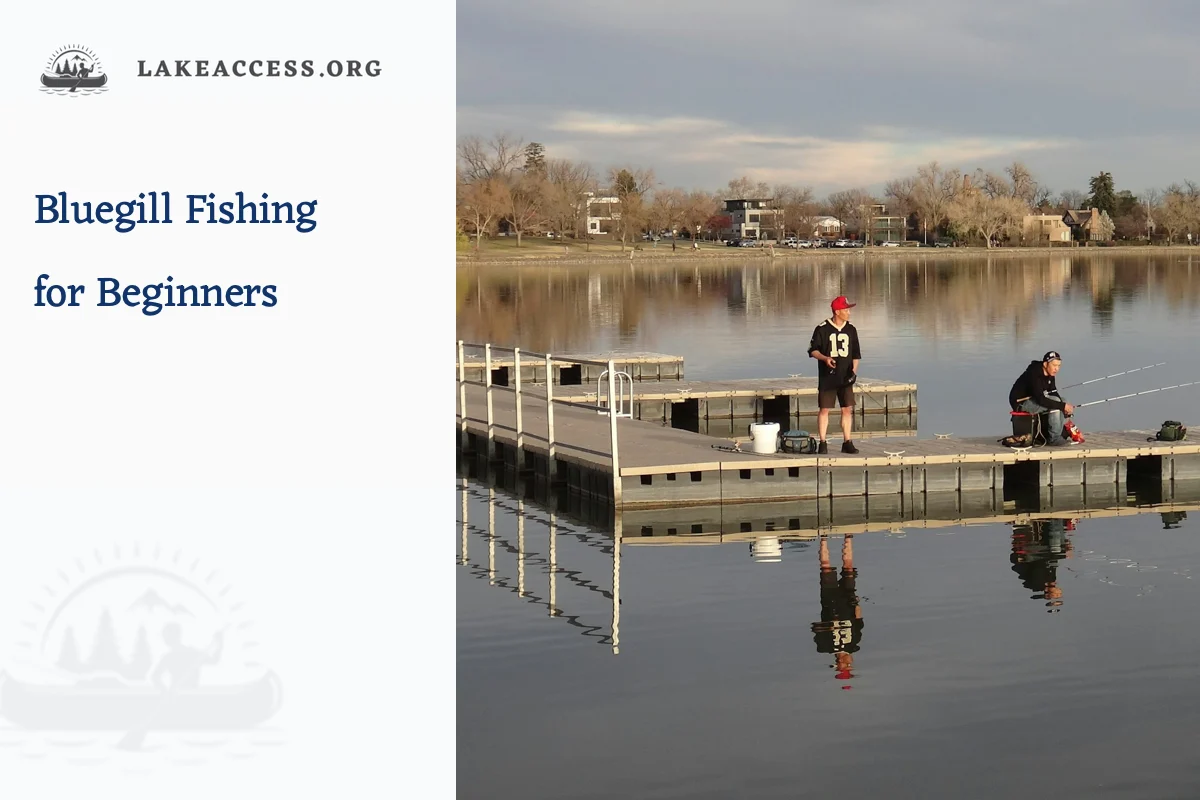
Quick answer: A beginner bluegill setup can be one light spinning or spincast rod, light line, a small hook, one small float, minimal split shot and a small piece of legal bait. Start at a confirmed public pier or bank beside vegetation, shade or a bottom change. Set the bait shallow enough to avoid snags, then adjust the float in small steps until fish respond. Keep pliers, a measuring board and the current regulations ready before the first cast.
At-a-glance fishing plan
| Target or condition | Where to begin | Useful approach | Verify before fishing |
|---|---|---|---|
| First setup | Public pier or open bank beside vegetation or a depth change | Small hook, small float, minimal weight and legal bait | License, access hours, hook and bait rules |
| Float moves or tips | Same depth for two controlled casts before changing | Reel slack, lift smoothly and keep the rod clear of people | Species identification and current retention rule |
| No bites after a short test | Change bait depth or move to the next legal habitat edge | Adjust one variable instead of rebuilding the rig | Private boundaries, swimming areas and posted closures |
| Fish is landed | Keep it wet, control the hook and decide quickly | Use wet hands and pliers; cut line when removal would cause damage | Size, bag, possession and consumption advice |
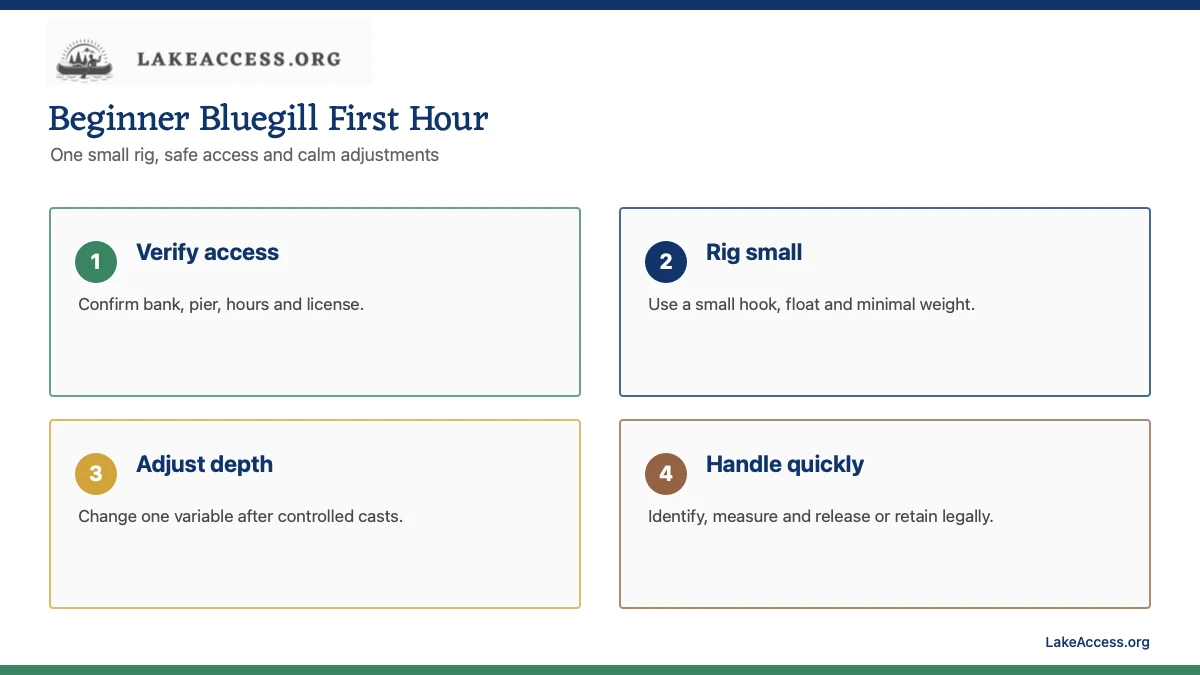
Keep the first rig small and visible
Bluegill have small mouths, so use a hook, bait and float sized for the fish rather than a heavy general-purpose rig. Missouri conservation guidance recommends light tackle and only enough float and weight to present the bait. The goal is to see a light bite without making the fish pull a large float under.
Rig at home with the hook covered and the line secured. At the water, choose a casting lane with no person, tree, railing or power line behind it. A child or new angler needs direct supervision around hooks and water; a verbal reminder is not a substitute for a clear casting boundary and a properly fitted life jacket where appropriate.
Use a first-hour plan instead of chasing a hotspot
Begin beside legal vegetation, shade, a dock edge or a bottom transition. Make several casts at one depth, then move the float a small distance and repeat. If the area remains inactive, move to the next confirmed public position rather than casting across other anglers or stepping onto a private bank.
Bluegill can use shallow nesting areas in warm seasons and deeper weed edges or open water later, but timing differs among lakes. Do not walk through nests, damage plants or assume visible circular depressions are permission to harvest. Let the observed fish and current agency guidance determine the next step.
Identify panfish before counting a limit
Bluegill are one kind of sunfish, while pumpkinseed, redear, green sunfish, crappie and other panfish may share the same water. Common names and combined panfish limits vary. Use the local agency identification material and release a fish when the identification or rule is uncertain.
Track each retained fish against the correct species or combined limit. Check fish-consumption advice before keeping a catch, especially for children and people who are pregnant, may become pregnant or are nursing. A legal bag limit is not a meal recommendation.
Practice safe hook removal and release
Prepare long-nose pliers, a wet rubberized net and a stable work area. Keep the fish in the water or wet whenever practical, minimize air time and support it rather than squeezing. If a hook is deeply swallowed, follow the responsible agency guidance; tearing it out can cause more damage than cutting the line close.
Store used line, damaged hooks and bait containers where wildlife and people cannot contact them. Never release unused live bait or bait water into the lake unless the current rule expressly allows it. Clean, drain and dry equipment as required before moving to another water.
Confirm access and rules before rigging
Use the managing agency’s current page to confirm the exact pier, park or bank, its hours, parking, license requirement and any closure. A shoreline visible from a road or map is not automatically public. Read the current statewide fishing regulations and then search for the named water because seasons, combined panfish limits, bait rules and special areas can differ.
Save the rule and access page for offline use, but note when it was checked. Keep the license and measuring tool available. If a fish cannot be identified confidently or the water boundary is unclear, release the fish and ask the responsible agency instead of relying on another visitor’s interpretation.
Make the casting area safe
Look behind, above and beside the angler before every cast. Keep hooks away from people, pets, trees, railings and overhead wires. Bags, spare rods and bait containers must not block a public path or accessible fishing position. New anglers need a clearly assigned casting lane and direct supervision around the water.
Use a properly fitted life jacket where the agency, activity or conditions require it, and choose a stable position rather than leaning over a rail or stepping onto wet rock. Stop for lightning, increasing wind, unsafe heat or cold, rising water, poor visibility or an injury. Plan the return before dusk.
Change one part of the presentation at a time
Begin with a small bait at a visible depth near legal cover. Make several controlled casts before moving the float, changing bait or walking to another position. A simple sequence makes it possible to learn whether depth, location or presentation mattered. Rebuilding the entire rig after every cast hides that evidence.
Keep the float only large enough to support the bait and required weight. Inspect the knot and line after a snag. Do not pull a loaded hook toward a person, climb or enter the water to recover inexpensive tackle, or cast across another angler’s line. Cut and retain damaged line so it cannot entangle wildlife.
Handle each fish as a decision
Prepare wet hands or gloves, pliers, a wet rubberized net and a measuring board before the first bite. Keep a fish wet whenever practical, minimize air exposure and make the keep-or-release decision promptly. Never place an unidentified or undersized fish in a bucket while deciding what it is.
Track retained fish by the correct species and combined limit. A daily limit and a possession limit may answer different questions. Fish-consumption advice is also separate from harvest law and may vary by waterbody, fish length and consumer group, so review it before the trip rather than after cleaning the catch.
Protect the water between trips
Remove plants, mud and animals from footwear, nets, boats and tackle. Drain water where required and never release unused live bait, bait water or a fish into another lake. A bait sold locally is not proof that it may be transported or released under the current rule.
Pack out line, hooks, packaging and food. Report damaged access infrastructure, invasive species or a rule violation through the agency’s published channel rather than confronting another visitor. A clean, organized position is safer for the angler and keeps the public access usable.
Choose one minimal gear system
A beginner does not need several rods or a large tackle box. One light rod and reel, line suitable for the water, a few small hooks, floats, split shot, legal bait, pliers and a measuring board can cover the first trip. Carry spare terminal tackle in a closed container and keep every unused hook covered. Read the rod, reel and line instructions before casting.
Set the drag and practice a short cast in an open area without a hook when instruction permits. At the lake, do not overload the float with weight or use a hook too large for the target fish. Simple gear makes it easier to notice a bite, control the fish and identify which adjustment changed the result.
Find habitat without creating a hotspot claim
Look for a legal edge between two conditions: vegetation beside open water, shade beside sun, rock beside sand, or a shallow flat connected to a modest drop. These are repeatable habitat clues, not coordinates or promises. Keep clear of private docks, swimming zones, restoration areas and boat-launch lanes even when the habitat looks attractive.
From a pier, try the near edge before casting as far as possible. From an open bank, cast parallel to reachable cover, then fan outward. Move only after the same small sequence has been tested. Give other anglers enough space that crossed lines and hooks cannot turn a simple outing into an injury.
Use weather and daylight as firm limits
Check the National Weather Service forecast and current alerts before leaving. Heat, cold, wind, lightning and poor visibility affect a bank or pier as well as a boat. Bring drinking water, sun protection, a light and clothing suited to the credible conditions, and leave before the route becomes difficult.
Thunder ends the fishing session; a shelter plan is made before it arrives. Do not stand under an isolated tree, remain on an exposed pier or hold a rod in a storm. If wind makes casting uncontrolled or waves cover the walking surface, pack the hooks safely and leave.
Keep a short learning log
Write down the date, time, weather, access point, water clarity, habitat, float depth, bait and observed fish. Include periods with no bites. A five-line log teaches more than a claim that one bait always works because it shows which variables were actually present.
Review the log beside the official weather and water information after the trip. Use it to choose one change for the next outing, not to publish a private coordinate or encourage crowding. The durable skill is learning how to test depth and habitat legally and safely.
Plan a calm first hour
Use the first ten minutes to organize the casting lane, check knots and point out the legal boundary. Spend the next blocks testing one depth near cover, one depth slightly farther out and one second public position. Pause to handle each fish correctly rather than racing to recast.
Finish with time to count and identify retained fish, collect line and hooks, clean the position and walk back in daylight. A successful beginner trip is one in which the angler can repeat the setup and safety sequence, regardless of how many fish were caught.
Pre-trip checklist
- Confirm the public access, hours and license requirement.
- Rig one small hook, float and minimal weight.
- Bring pliers, a measuring board and eye protection.
- Open the current species and combined panfish limits.
- Check the waterbody fish-consumption advisory.
Related LakeAccess guides
- Beginner lake fishing gear
- Shore fishing setup for lakes
- Essential lake fishing safety tips
- Best time of day to fish a lake
Sources
Rules, access and live conditions can change. These official or high-trust sources were checked on July 22, 2026; open them again for the trip date.
- Wisconsin DNR bluegill profile (checked July 22, 2026)
- Missouri Department of Conservation bluegill tips (checked July 22, 2026)
- Illinois Extension 4-H sportfishing fundamentals (checked July 22, 2026)
- U.S. Fish and Wildlife Service first-time fishing guide (checked July 22, 2026)
- Wisconsin DNR 2026 fishing regulation changes (checked July 22, 2026)
- EPA fish and shellfish advisories (checked July 22, 2026)