
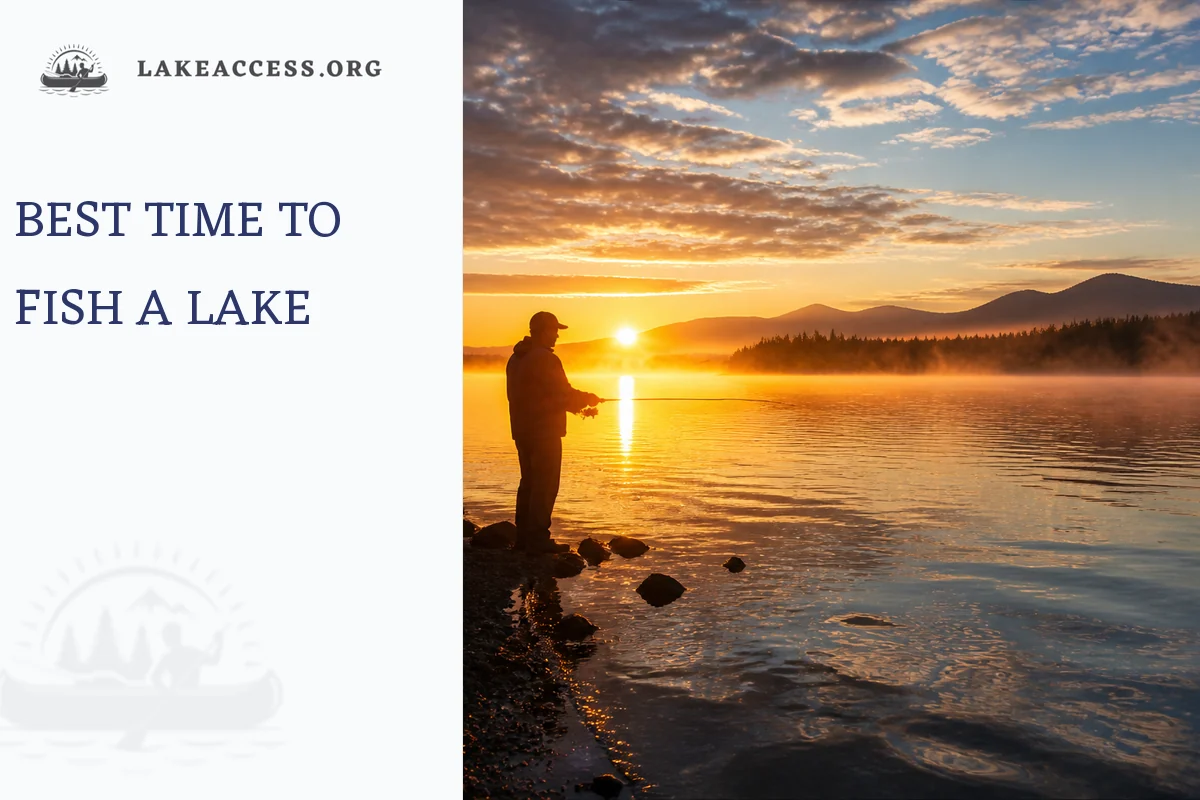
The best time of day to fish a lake is usually the first two hours after sunrise or the last two hours before sunset. Those low-light windows often put baitfish and game fish closer to shore, keep summer surface temperatures more comfortable, and give lures a more natural look. The exception: in spring, fall, cold weather, or cloudy conditions, the middle of the day can be excellent too.
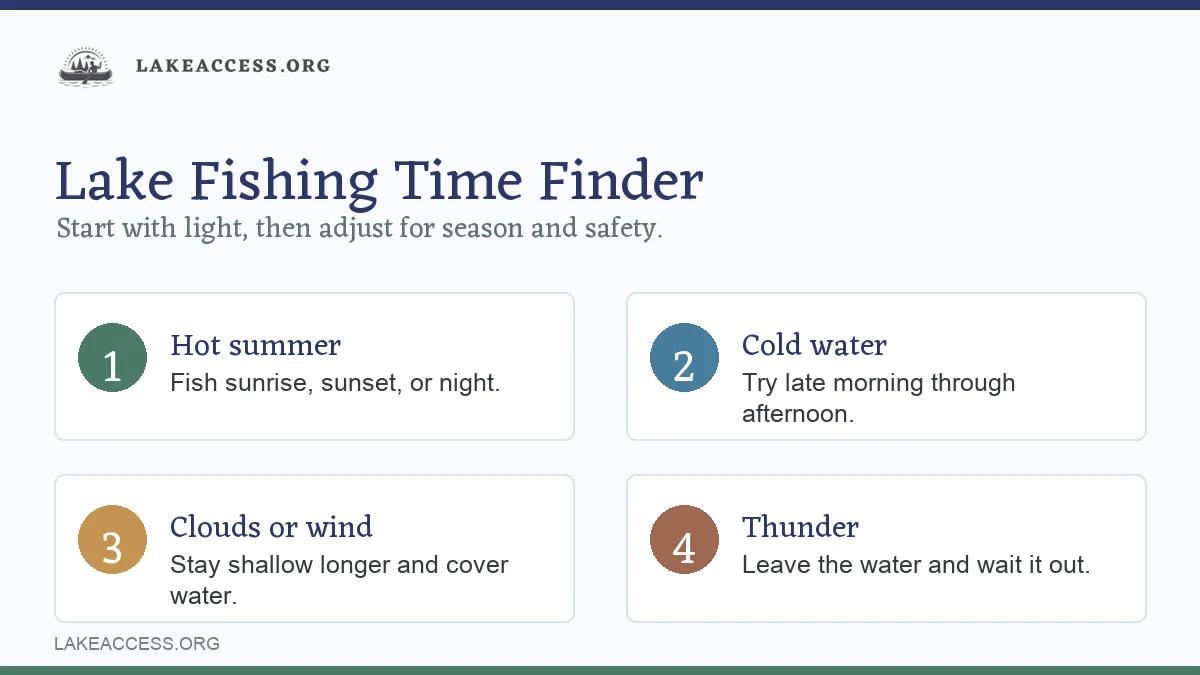
Use dawn and dusk as your default. Then adjust for season, water temperature, weather, and the species you want to catch.
Lake Fishing Time Finder
- Hot summer day? Fish sunrise, sunset, or after dark.
- Cold spring or winter day? Try late morning through mid-afternoon.
- Cloudy or light rain? Extend your window; fish may roam shallower longer.
- Bright, calm midday? Move deeper, shade tighter, or fish slower.
- Thunder nearby? Leave the water and wait for safe conditions.
Best Lake Fishing Times at a Glance
| Time of day | When it is usually best | Why it works | What to try |
|---|---|---|---|
| Pre-dawn to sunrise | Summer, clear water, pressured lakes, bass and walleye trips | Low light helps predators feed shallow before boat traffic and heat build | Topwater, shallow crankbaits, spinnerbaits, jerkbaits, live bait near points |
| Morning after sunrise | Most seasons | Light is still soft, oxygen and temperature are often more comfortable than hot midday | Fish weed edges, docks, riprap, points, and shallow flats |
| Midday | Spring, fall, winter, cloudy days, deep-water species | Sun can warm shallows in cold seasons; in heat, fish may hold deeper | Slow plastics, jigs, drop shots, slip bobbers, trolling deeper contours |
| Late afternoon to sunset | Summer and fall | Cooling light often restarts feeding activity | Moving baits, topwater near dusk, live bait on edges |
| Night | Hot summer lakes, catfish, bass, some walleye fisheries | Cooler, darker, quieter conditions can bring fish shallow | Noisy topwater, dark soft plastics, cut bait, glow jigs where legal |
Why Sunrise and Sunset Are So Productive
Lake fish do not all feed on the same clock, but many popular game fish respond strongly to light and temperature. Take Me Fishing notes that early morning and evening are often better than bright midday, especially because strong sun and warmer surface water can push fish deeper.
Low light gives predators an advantage. Bass, walleye, trout, catfish, crappie, and panfish may use weeds, rocks, docks, points, and drop-offs differently as the light changes. That is why a spot that looks empty at 2 p.m. can suddenly come alive at sunset.
For a local plan, check the exact sunrise and sunset with NOAA’s Solar Calculator, then build your trip around the surrounding two-hour windows.
Quick rule: If you only have one free window, choose sunrise in hot weather and late morning or afternoon in cold weather.
Best Time by Season
| Season | Best starting window | Useful adjustment | Why |
|---|---|---|---|
| Spring | Late morning to afternoon | Fish shallows that warm first, then return near evening | Cool water can make the first warm sunlight more important than dawn |
| Summer | Sunrise, sunset, and night | Move deeper or into shade after the sun gets high | Heat and bright light often push fish off shallow cover |
| Fall | Morning through afternoon, plus evening | Cover water until you find baitfish | Kentucky Fish and Wildlife notes fall can offer more all-day activity than summer |
| Winter | Warmest part of the day | Fish slowly and check ice or access conditions carefully | Cold water slows many fish, so small warming trends matter |
Spring: Do Not Sleep on Midday
In spring, the best fishing may not happen at sunrise. A cold night can leave shallow water sluggish at first light. As sunlight warms north-facing pockets, dark-bottom bays, riprap, and protected coves, baitfish and predators may slide shallower.
For spring bass, panfish, and trout, try late morning through mid-afternoon before assuming you missed the bite. Wisconsin DNR’s fishing guidance also points anglers toward structure such as points, vegetation, docks, reefs, and drop-offs, which become especially useful as fish move between shallow and deeper water.
Related LakeAccess reads: How to Fish for Trout and Fishing.
Summer: Go Early, Late, or Deep
Summer is the clearest case for dawn and dusk. Kentucky Department of Fish and Wildlife advises looking for bass shallow early in the morning and late in the evening, then fishing deeper as the day progresses.
That does not mean midday is hopeless. It means your approach changes:
| Summer condition | Better move |
|---|---|
| Clear, sunny, calm | Fish deeper edges, shade, docks, grass lines, or offshore structure |
| Windy bank | Try wind-blown points where bait may collect |
| Cloudy sky | Stay shallow longer and cover water |
| Hot, stable night | Try night fishing for bass, catfish, or walleye where legal |
| Heavy boat traffic | Fish early, late, weekdays, or quieter coves |
If you are after catfish, evening and night can be especially practical because fish may move along shallower feeding routes after dark. For tactics, see Catfish Fishing in Lakes.
Fall: The Window Gets Wider
Fall can be forgiving. Cooling water often brings baitfish back into reachable areas, and predators feed more actively before winter. Kentucky Fish and Wildlife notes that, unlike summer’s early and late pattern, fall can offer productive fishing throughout the day.
Start in the morning, but do not quit just because the sun is high. If you see baitfish flickering, birds working, wind pushing into a bank, or fish on electronics, stay with it. Fall fishing is often less about the exact hour and more about finding the food.
Winter: Fish the Warmest Safe Window
In winter, especially on open water, the warmest part of the day often beats dawn. Fish slowly, target deeper wintering areas or nearby sunny edges, and avoid making long casts with fast retrieves unless fish are clearly chasing.
For ice fishing, timing matters less than safety. No article can tell you a lake is safe today. Check local ice reports, local authorities, and current conditions before stepping onto ice. If you are planning a cold-weather trip, LakeAccess has more seasonal context in Lake Winnipeg Ice Fishing.
Best Time by Fish Species
| Target fish | Best time of day | Notes |
|---|---|---|
| Largemouth bass | Sunrise, sunset, night in summer; midday can work in spring/fall | Fish shallow low light, deeper or shaded cover in bright heat |
| Smallmouth bass | Morning and evening; windy midday can be good | Try points, rock, humps, and current-influenced areas |
| Trout | Early morning in summer; midday in cooler seasons | Cold-water fish often respond to temperature more than clock time |
| Catfish | Evening, night, and low-light periods | Warm stable nights can be productive from shore |
| Crappie | Dawn, dusk, and shaded midday cover | Docks, brush, bridge pilings, and deeper schools matter |
| Walleye | Low light, wind, dusk, night | Clear lakes often fish better after sunset |
| Bluegill/panfish | Morning and evening in summer; midday in spring | Look for weeds, docks, beds in season, and small structure changes |
Weather Can Beat the Clock
Time of day matters, but weather can override it. A cloudy, breezy noon may outfish a bluebird sunrise. A thunderstorm can make any “perfect” fishing window a hard no.
| Weather pattern | What it often means for lake fishing |
|---|---|
| Light overcast | Fish may stay shallow and active longer |
| Light rain without thunder | Can improve surface activity and reduce glare |
| Bright sun after a front | Fish may hold tighter to cover or deeper water |
| Steady wind | Wind-blown banks and points may concentrate bait |
| Thunderstorms | Get off the water; lightning risk is not worth it |
The National Weather Service warns that thunderstorms produce lightning and can be dangerous for boaters. If thunder is close enough to hear, stop fishing and move to safe shelter.
Water Temperature and Oxygen Matter
Fish are tied to water conditions. Utah State University Extension summarizes the basics well: aquatic life depends on suitable temperature and dissolved oxygen. For anglers, that means the best time is not only a clock time. It is the moment when fish can feed comfortably near the places you can reach.
In summer, shallow water can get too warm under bright sun, especially in still coves. In cold seasons, the same sunlight can make shallow water more attractive. During turnover or unstable weather, fish may scatter or suspend, making depth and electronics more important than sunrise or sunset.
A Simple Trip Plan
Use this checklist before you pick your fishing window:
- Choose the species first.
- Check current state fishing regulations, license rules, seasons, and harvest limits.
- Check sunrise, sunset, weather, wind, and storms.
- Match the season to the table above.
- Pick two likely windows, not one.
- Bring a backup pattern for deeper water or shade.
- Stop or relocate if weather, lightning, heat, ice, or access conditions become unsafe.
NOAA Fisheries directs recreational anglers to state fish and wildlife agencies for state fishing regulations and licenses. That matters because seasons, size limits, night-fishing rules, bait rules, and lake-specific regulations can change.
Shore vs. Boat Timing
Shore anglers often benefit even more from dawn and dusk because fish move within casting range. If you are fishing from shore, prioritize:
- Public points and fishing piers near deeper water
- Riprap banks that warm quickly in spring
- Weed edges within casting distance
- Creek mouths after safe rain conditions
- Wind-blown banks when waves are manageable
- Lighted areas at night only where fishing is legal and safe
Boat anglers can keep fishing through tougher midday periods by moving to offshore structure, shaded docks, deeper grass, humps, ledges, and suspended fish. If you are comparing lake options, start with the Guides hub or browse more destination-specific examples such as Pyramid Lake Fishing, Reelfoot Lake Fishing Packages, and Lake Lanier Fishing.
The Bottom Line
For most lake anglers, the best time of day to fish is early morning or late evening, especially in summer. In spring, fall, winter, cloudy weather, or cold water, midday can be just as good or better. The easiest winning plan is simple: fish low light by default, adjust for season and weather, and always check current regulations and safety conditions before you go.
Sources
- Take Me Fishing, Best Times to Fish — Used for general dawn, dusk, cloud cover, and bright-sun timing guidance.
- Kentucky Department of Fish and Wildlife, Summer Fishing Tips — Used for official warm-weather bass guidance on shallow early/late and deeper daytime fishing.
- Kentucky Department of Fish and Wildlife, 10 Ways to Improve Your Fall Fishing — Used for official fall guidance that fish can be active for more of the day.
- Wisconsin DNR, Hook Your Catch With These Tips — Used for state fishery guidance on structure, temperature, and species timing.
- Utah State University Extension, Utah Water Week Results — Used for high-trust water-quality context on temperature and dissolved oxygen.
- NOAA Global Monitoring Laboratory, Solar Calculator — Used for official sunrise, sunset, and solar timing checks.
- National Weather Service, Safe Boating and Thunderstorms — Used for official thunderstorm and lightning safety guidance.
- NOAA Fisheries, Resources for Recreational Fishing — Used for guidance to check state fish and wildlife agencies for recreational fishing licenses and rules.