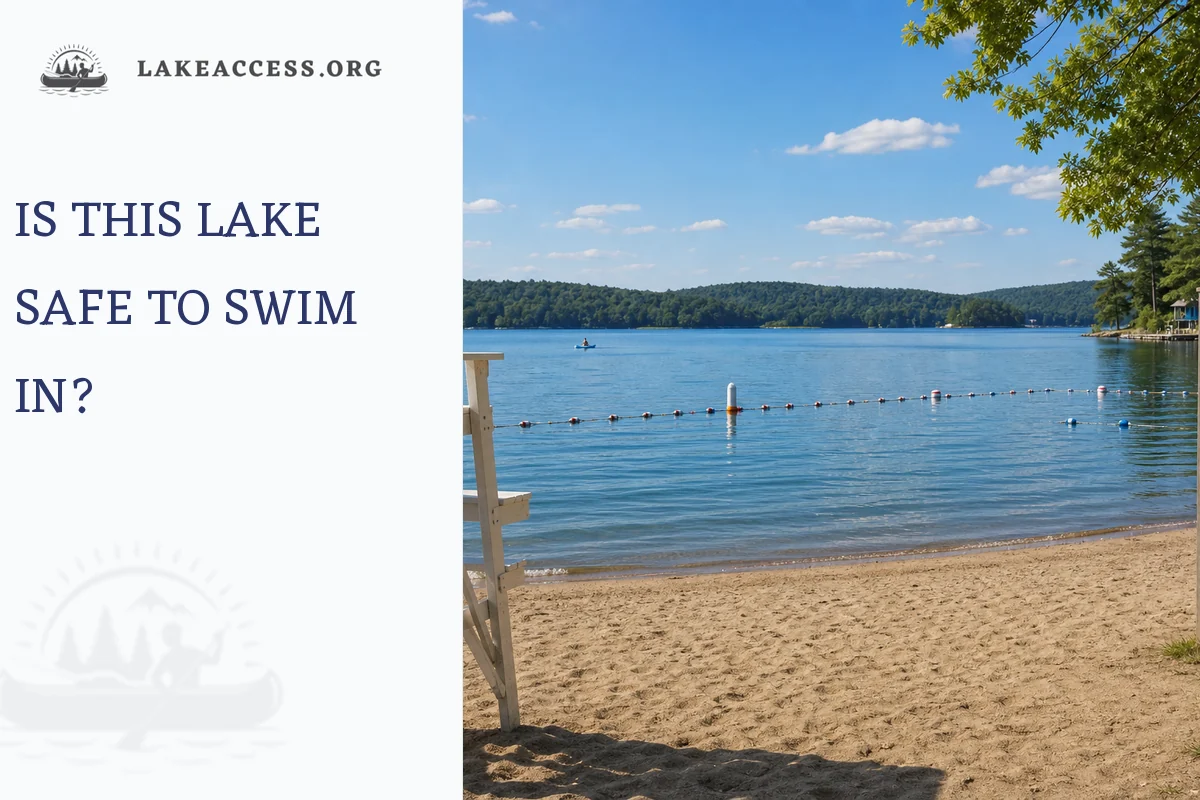
A lake is more likely to be safe for swimming when three things line up: the official swim area is open with no current advisory, the water looks and smells normal, and the day is calm enough for your swimming ability. No lake can be guaranteed safe just by looking at it. Before you get in, check the beach or health department status, look for algae or pollution signs, consider recent rain, and avoid swimming during storms, high waves, strong currents, or poor visibility.
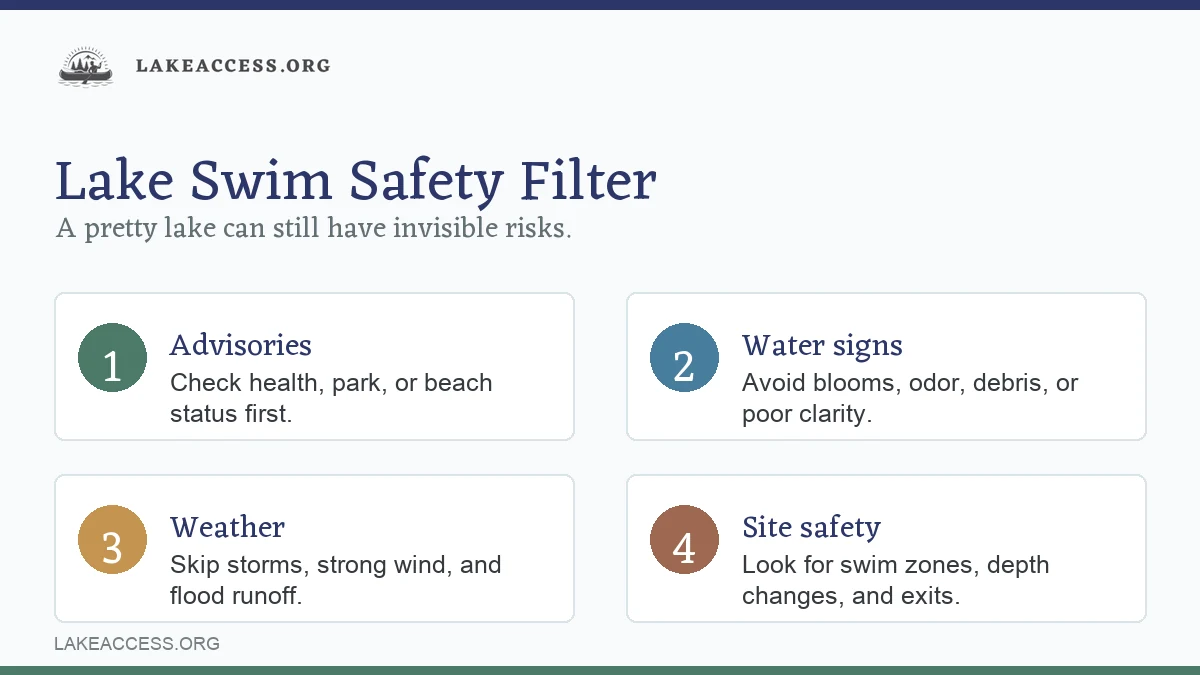
For lake-specific planning, start with the LakeAccess lakes hub and outdoor guides, then confirm same-day conditions with the local agency that manages the beach.
The quick lake swimming safety checklist
| Check | Safer sign | Stay out or wait |
|---|---|---|
| Official status | Beach is open, monitored, and has no current health advisory | Posted closure, bacteria advisory, algae advisory, missing or outdated status |
| Water appearance | Clear enough to see hazards near shore; normal color for that lake | Cloudier than usual, discolored, scummy, paint-like, foamy, or foul-smelling water |
| Recent weather | No recent heavy rain, flooding, sewage spill, or storm runoff concern | Heavy rain, floodwater, storm drains flowing, debris, or pipes discharging nearby |
| Waves and currents | Calm water, protected swim area, lifeguard or posted guidance | High waves, offshore wind, rip/current warnings, outlet currents, pier currents |
| Swim area | Designated beach, buoy line, safe entry, no boat traffic | Boat ramps, marinas, dam areas, spillways, cliff jumps, unknown depth |
| Your group | Swimmers are supervised, sober, and within ability; kids or weak swimmers use life jackets | Alcohol, fatigue, weak swimmers without flotation, kids without close supervision |
| Personal health | No diarrhea; cuts are fully covered or you skip swimming | Diarrhea, open wounds, recent surgery or piercing, immune-risk concerns |
Lake Swim Go / Wait / No-Go Card
- Check official status. If closed or under advisory, do not swim.
- Scan the water. If it is scummy, oddly colored, cloudy, or smells bad, stay out.
- Think about rain. After heavy rain or flooding, wait and check local guidance.
- Read the day. Storms, high waves, strong currents, or poor visibility mean wait.
- Choose the right spot. Use designated swim beaches, not ramps, dams, marinas, or channels.
- Match ability to conditions. Use life jackets for kids, weak swimmers, and anyone in open water who needs support.
Start with the official status
The best first check is not the color of the water. It is the current status from the agency responsible for that beach, lake, park, county, state, Tribe, or local health department.
Look for:
- Beach open or closed status
- Bacteria advisories, often based on E. coli or enterococci monitoring
- Harmful algal bloom advisories
- Swim-risk flags, lifeguard status, or beach hazard statements
- Park alerts for floods, debris, unsafe access, or storm damage
The EPA’s beach tools can help you find monitored coastal and Great Lakes beaches, but EPA notes that state, Tribal, territorial, and local governments decide whether to open or close a beach. For inland lakes, the most useful source is often the county health department, state environmental agency, state park page, city beach page, or lake authority.
If you are choosing among swim destinations, our guides to lakes for swimming around Philadelphia, Jordan Lake swimming, and swimming in Lake Como show the pattern to follow: find the official swim access first, then check current water-quality and local notices.
Understand what water tests can and cannot tell you
Beach monitoring often uses indicator bacteria. In freshwater, E. coli is commonly used because it can signal fecal contamination from sewage, animal waste, stormwater, or swimmers. That does not mean every E. coli result is itself the whole danger; it means conditions may allow illness-causing germs to be present.
There are two important limits:
| Limit | Why it matters |
|---|---|
| Test results can lag real conditions | USGS notes conventional lab methods can take 18 to 24 hours, so a posted result may describe yesterday’s water more than this afternoon’s runoff. |
| Unmonitored water is not automatically safe | A quiet cove, creek mouth, or unofficial shoreline may have no current testing, no lifeguard, and no posted warning even when risk is elevated. |
This is why official status plus your own on-site checks matter. If test data says “open” but the water is suddenly cloudy after a storm, smells bad, or has a bloom-like surface scum, treat that as a reason to stay out and recheck.
Do not swim after obvious contamination clues
CDC guidance for natural bodies of water is straightforward: check whether the swim area is monitored, under advisory, or closed, especially after heavy rain. Heavy rain can wash human or animal waste into swimming areas, and CDC also flags unusually cloudy, discolored, or bad-smelling water as a reason to stay out.
Avoid swimming when you see:
- Pipes, drains, or runoff flowing into or near the swim area
- Trash, dead fish, oil sheen, sewage odor, or unusual foam
- Muddy floodwater or storm debris
- Water that is much cloudier than usual for that lake
- A posted advisory, even if other people are still in the water
If you want to understand broader lake water issues, read our guide to lake weeds and muck and the related article on how to get rid of algae in a lake. For swimming decisions, though, do not try to treat or diagnose the water yourself. Use official advisories.
Treat possible harmful algal blooms seriously
Blue-green algae, also called cyanobacteria, can sometimes produce toxins. The hard part is that you usually cannot tell from appearance alone whether a bloom is toxic. CDC says to follow advisories and stay out of water that looks or smells bad. New York State DEC gives the same practical advice: because harmful and non-harmful blooms can be hard to tell apart, avoid swimming or recreating in water with a bloom.
Possible bloom warning signs include:
| What you see or smell | What to do |
|---|---|
| Green, blue-green, yellow, brown, or reddish surface scum | Stay out and keep children and pets away |
| Water that looks like pea soup or spilled paint | Stay out and report it to the local agency if requested |
| Strong musty, rotten, or chemical-like odor | Stay out, especially if paired with discoloration |
| Floating mats or streaks pushed into a cove by wind | Choose another beach; blooms can concentrate along shore |
Do not let dogs drink or swim in suspect water. Pets can be exposed by swallowing water, licking wet fur, or eating shoreline material. If a managed beach posts a harmful algal bloom advisory, follow the notice even if the water looks better when you arrive.
Check weather, waves, and lake currents
Water quality is only half the answer. A clean lake can still be unsafe for swimming because of weather, waves, currents, cold water, or poor visibility.
Stay out during thunder, lightning, high winds, or rapidly building waves. On the Great Lakes and other large lakes, check the National Weather Service beach forecast, swim-risk forecast, or Beach Hazard Statement when available. Dangerous currents can form near piers, breakwalls, sandbar gaps, river outlets, and channels. For more detail, see our guide to how lakes can have rip currents and our explainer on what causes whirlpools in water.
| Hazard | Where it shows up | Safer move |
|---|---|---|
| Rip currents | Large-lake beaches with waves and sandbar gaps | Swim near lifeguards; if caught, float, conserve energy, and swim parallel when able |
| Structural currents | Piers, breakwalls, jetties | Stay well away from structures; NWS Great Lakes guidance says to steer clear of piers |
| Outlet currents | Where rivers or streams enter a lake | Swim away from outlets and channels |
| Sudden drop-offs | Reservoir beaches, quarry lakes, unclear shorelines | Use designated swim areas and life jackets for kids or weak swimmers |
| Boat traffic | Marinas, ramps, channels, docks | Do not swim there; use marked swim beaches |
Pick a designated swim area, not just a pretty shoreline
A designated swim beach is not risk-free, but it usually gives you more safeguards: clearer access rules, posted notices, known hazards, possible lifeguards, buoy lines, and a responsible agency to contact.
Be extra cautious around:
- Boat ramps and marinas
- Dams, spillways, locks, and intake structures
- River mouths and channels
- Private docks with electrical service
- Cliff-jumping spots or unknown-depth ledges
- Shorelines with heavy vegetation, fishing hooks, glass, or poor visibility
If there is no designated swim area, make a conservative decision. Ask the local park office or lake authority whether swimming is allowed, where it is commonly done, and whether there are current advisories. “No sign” does not mean “safe.”
Match the lake to the swimmers
CDC drowning-prevention guidance emphasizes close supervision, life jackets, buddy swimming, and avoiding alcohol around water. Those basics matter more in lakes than many people expect because natural water has changing depth, limited visibility, uneven bottoms, vegetation, waves, and fewer controlled edges than a pool.
Use this group check:
| Swimmer or situation | Better precaution |
|---|---|
| Young children | Touch supervision near water; properly fitted life jackets in and around natural water |
| Weak or tired swimmers | U.S. Coast Guard-approved life jacket; stay shallow and near shore |
| Teens and adults | Buddy system; no alcohol before or during swimming |
| People with medical conditions or medications affecting balance or alertness | Extra supervision and a lower-risk swim setting |
| Everyone | Know the beach address, emergency access point, and where flotation or life rings are located |
Air-filled toys, pool noodles, and inflatable floats are not safety devices. They can drift, flip, or fail.
Know when health issues make swimming a bad idea
Skip lake swimming if you have diarrhea. CDC notes that diarrhea-causing germs can spread in water and make other swimmers sick. Also avoid natural water with open cuts or wounds, especially after surgery or a piercing, unless a healthcare professional says it is okay and the wound can be fully covered with a waterproof bandage.
Warm fresh water adds one rare but serious consideration: Naegleria fowleri. CDC describes this ameba as naturally living in warm fresh water and soil. Infection is rare, but it can occur when contaminated water goes up the nose. In warm, shallow fresh water during hot periods, avoid stirring up sediment, hold your nose or use nose clips if jumping or diving, and keep your head above water in hot springs or naturally hot water.
The practical takeaway is not panic. It is to avoid forcing lake water up your nose, especially in warm shallow areas, and to be more cautious during very hot, low-water periods.
What about clean-looking mountain lakes or remote lakes?
Clear water can still contain germs, cold-water hazards, sudden drop-offs, or submerged obstacles. Remote lakes may have less runoff from cities, but they also may have no monitoring, no lifeguards, no quick emergency response, and very cold water even in summer.
Before swimming in a remote lake:
- Check park or land-manager rules
- Avoid drinking untreated surface water
- Enter slowly and watch for cold shock
- Wear water shoes where rocks, shells, or hooks are possible
- Keep children and weaker swimmers in life jackets
- Leave if weather shifts or visibility drops
Simple rule: when in doubt, sit it out
Swim when the beach is officially open, current advisories are clear, water looks and smells normal, weather is calm, and the spot matches your group’s ability. Wait or choose another lake when the status is unknown, the water looks wrong, heavy rain just passed, waves or currents are up, or anyone in your group would need conditions to be perfect.
For more lake planning, use the LakeAccess guides hub, compare known swim destinations through the lakes hub, and keep safety-specific reading handy with lake rip current guidance.
Sources
- CDC: How to Safely Visit Oceans, Lakes, and Rivers — Core official guidance for natural-water swimming risks, advisories, heavy rain, cloudy or smelly water, cuts, diarrhea, and avoiding swallowing water.
- CDC: Preventing Illnesses Caused by Harmful Algal Blooms — Official guidance on checking advisories and staying out of water that looks or smells bad or may have a harmful algal bloom.
- CDC: Preventing Brain Infection When Swimming — Official guidance for rare Naegleria fowleri risk in warm fresh water and nose-risk precautions.
- CDC: Preventing Drowning — Official drowning-prevention guidance for life jackets, supervision, buddy system, weather, alcohol, and natural-water hazards.
- EPA: Find Information about a Particular U.S. Beach — Used for where to look for monitored beach, advisory, and closure information, with the caveat that current status is set by state, Tribal, territorial, and local authorities.
- EPA: Recreational Water Quality Criteria and Methods — Used for the role of bacteria and cyanotoxin criteria in protecting people during swimming and other water-contact recreation.
- USGS: Recreational Water Quality — Used for explaining E. coli as an indicator of fecal contamination and why lab results may lag current conditions.
- National Weather Service: Great Lakes Beach Hazards — Used for current beach forecast and Beach Hazard Statement checks on the Great Lakes.
- National Weather Service: Great Lakes Safety — Used for lake-current, wave, pier, and "flip, float, follow" safety guidance.
- New York State DEC: Harmful Algal Blooms — High-trust state guidance on avoiding blooms because harmful and non-harmful algae can be hard to distinguish by sight.