
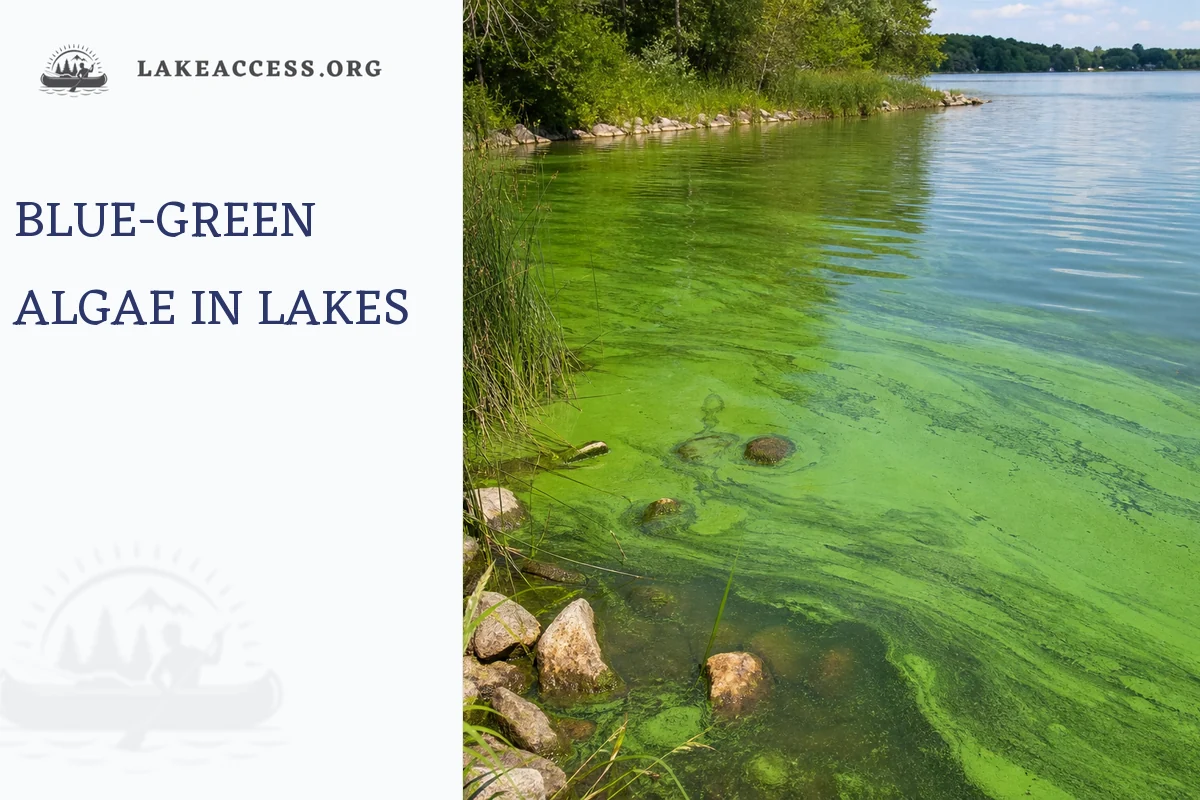
Blue-green algae in lakes can look like green paint, pea soup, surface scum, streaks, dots, clumps, foam, or mats along the shore. If the water looks discolored, smells bad, or has floating scum, the safest move is simple: stay out, keep children and pets away, check official advisories, and report the suspected bloom to the lake manager or local health/environmental agency.
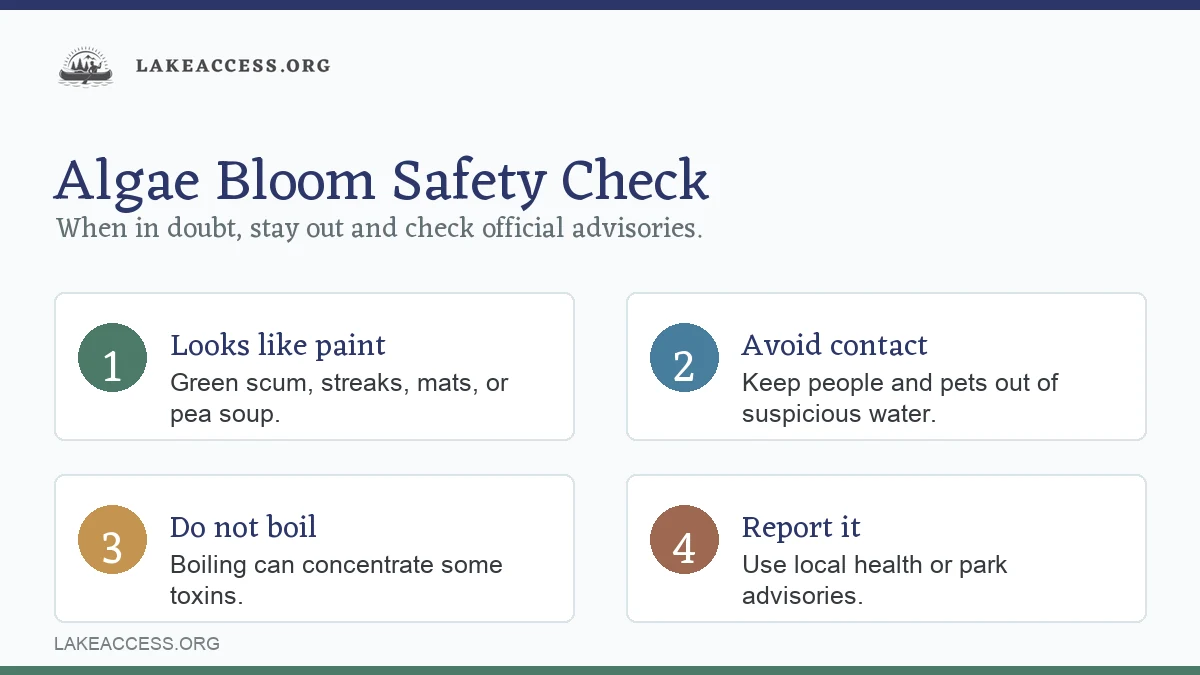
You cannot tell whether a bloom is toxic just by looking at it. Some blooms produce cyanotoxins that can make people or animals sick, while others are mainly a nuisance. Treat suspicious water as a “do not touch” situation until local officials say otherwise.
For more lake-planning basics, start with the LakeAccess lakes hub and guides hub. If your trip includes swimming, compare this advice with our lake-swimming guides for Jordan Lake, Lake Como, and swimming lakes around Philadelphia.
What are blue-green algae?
“Blue-green algae” is the common name for cyanobacteria. Cyanobacteria are naturally present in many lakes, ponds, rivers, and reservoirs. They are not true algae, but they behave enough like algae that the common name stuck.
A small amount of cyanobacteria is normal. The concern starts when conditions allow cyanobacteria to grow quickly into a bloom. According to EPA and CDC guidance, harmful algal blooms are more likely when water is warm, slow moving, and nutrient-rich, especially where nitrogen or phosphorus enters the water from fertilizer, sewage, stormwater runoff, or failing septic systems.
Not every bloom is harmful. The problem is that some cyanobacteria can produce cyanotoxins, and toxin levels cannot be confirmed by eyesight alone. That is why public-health agencies use practical language: when in doubt, stay out.
What blue-green algae looks like
Possible blue-green algae blooms are often easiest to spot from the shore, dock, boat ramp, or a higher overlook. Look for unusual color, texture, and surface patterns.
| What you see | What it may mean | What to do |
|---|---|---|
| Water that looks like pea soup | Dense suspended bloom | Stay out and keep pets away |
| Bright green, blue-green, brown, red, or white surface streaks | Wind-pushed cyanobacteria or algal material | Avoid the area and check advisories |
| Paint-like slicks or swirls | Common bloom appearance described by health agencies | Do not swim, wade, or let dogs drink |
| Green dots, clumps, or globs on the surface | Possible cyanobacteria accumulations | Photograph from a safe distance and report |
| Foam, scum, or mats near shore | Concentrated bloom material, especially where wind collects it | Keep children and animals off the shoreline |
| Strong swampy, musty, or foul odor | Decaying bloom or poor water quality | Leave the area and choose another access point |
Some harmless green algae and aquatic plants can look similar. NYSDEC notes that non-toxic green algae may look stringy, silky, hairy, wet-fabric-like, or like floating mats. That distinction is useful, but it is not a safety clearance. If you are not sure what you are seeing, avoid contact and look for official updates.
Where blooms usually collect
Blooms can move. Wind can push surface scum across a lake, into coves, against swim beaches, or along boat ramps. A beach that looked clear in the morning may look different in the afternoon.
Check these spots before anyone gets in the water:
- Downwind shoreline
- Quiet coves and backwaters
- Swim beaches and shallow wading areas
- Boat ramps, docks, and marina corners
- Shoreline mats where dogs might sniff or lick
- Areas with dead fish or unusual odors
Blooms are often associated with summer and early fall, but they can happen outside that window when conditions are right. Minnesota health officials note that warm, calm, sunny weather and water above about 75 F can favor blooms, especially in shallow or nutrient-rich water.
Quick decision guide
Possible blue-green algae? Use this 60-second check
- Look: Green paint, pea soup, scum, streaks, dots, clumps, foam, mats, or bad odor?
- Step back: Keep people, dogs, and livestock out of the water and away from shoreline mats.
- Check: Look for posted signs, beach closures, state HAB dashboards, park alerts, or local health advisories.
- Rinse: If contact already happened, rinse skin, swimsuits, gear, and pets with clean tap or bottled water.
- Call: Contact a healthcare provider or Poison Control at 1-800-222-1222 for symptoms. Call a veterinarian right away if a pet seems sick.
- Report: Send photos and location details to the lake manager, park office, or local health/environmental agency.
What to do if you see it
The best response is boring and effective: avoid contact. Do not swim through it, paddle through it for a closer look, let dogs fetch in it, or let children play with scum on the shore.
| Situation | Best next step | Why |
|---|---|---|
| You see scum at a swim beach | Do not enter; check posted signs and official beach advisories | Toxin levels vary and may require testing |
| Your dog jumped in before you noticed | Rinse the dog immediately with clean water and prevent licking | Pets can ingest bloom material from fur |
| You swallowed lake water near a bloom | Rinse off, monitor symptoms, and call Poison Control or a healthcare provider if concerned | Swallowing contaminated water can cause illness |
| You are boating near visible bloom material | Avoid spray, mist, and direct contact; choose a clearer area | Aerosolized droplets may irritate some people |
| You catch fish during a bloom | Follow local advisories; avoid shellfish; if keeping fish where permitted, clean carefully and discard guts | Some agencies advise extra caution with organs and shellfish |
| You manage a private pond or HOA lake | Contact local environmental or health officials before treatment | Treatment can release toxins or create other water-quality problems |
For boating trip planning, pair bloom checks with the boating hub and local weather checks. For fishing, use the fishing hub plus state fish-consumption and HAB advisories before deciding whether to keep a catch.
Symptoms to take seriously
Health effects depend on the toxin, exposure route, amount of exposure, and the person or animal involved. CDC lists possible freshwater HAB symptoms after skin contact, inhaling droplets, or swallowing contaminated water or food.
Possible symptoms in people can include:
- Rash or skin irritation
- Eye, nose, or throat irritation
- Cough
- Stomach pain
- Vomiting or diarrhea
- Headache
- Muscle weakness or dizziness
- More serious effects in some cases, including liver-related illness
Symptoms can appear within hours or later. Minnesota health officials describe a general window of several hours to 2 days after exposure for some human symptoms. Do not use that as a guarantee; if symptoms are severe, unusual, or involve a child, older adult, pregnant person, or medically vulnerable person, contact a healthcare professional promptly.
For questions about possible cyanotoxin poisoning, CDC points people to Poison Control at 1-800-222-1222. If symptoms are severe, call emergency services.
Dogs and pets: be extra cautious
Dogs are often at higher practical risk because they drink lake water, fetch toys, lick their fur, and may be attracted to smelly shoreline material. CDC warns that animals can become very sick quickly after exposure to harmful algae or cyanobacteria.
Keep pets away from:
- Discolored or scummy water
- Floating mats or shoreline clumps
- Dead fish or other dead animals near the water
- Wet fur after accidental exposure
- Puddles or coves connected to a bloom area
If your pet goes in suspicious water, rinse it with clean water immediately and do not let it lick its fur. Call a veterinarian right away if you notice vomiting, diarrhea, weakness, stumbling, drooling, foaming at the mouth, tremors, seizures, breathing trouble, loss of energy, or any unexplained illness after lake contact.
This is one of the few lake-safety topics where leaving early is not overreacting. Choose another beach, trail, or picnic spot.
Can you swim, boat, or fish during a bloom?
The answer depends on the lake, the advisory, the activity, and what you can see at the access point.
| Activity | Safer rule of thumb | Official check |
|---|---|---|
| Swimming or wading | Do not enter water with visible bloom signs | Beach closure/advisory page, park office, posted signs |
| Kids playing at shore | Keep them away from scum, mats, foam, and discolored water | Local health department or park staff |
| Dogs swimming | Do not allow it if a bloom is possible | Veterinarian advice and local advisories |
| Kayaking, paddleboarding, boating | Avoid bloom areas, spray, and accidental immersion | Lake manager, state environmental agency |
| Fishing | Follow state and local HAB/fish advisories; avoid shellfish in bloom waters | State health/fish agency guidance |
| Drinking water | Never drink untreated lake water; follow utility/local official guidance for public supplies | Water utility, local health department |
Do not assume clear water somewhere else on the lake means the whole lake is safe. Advisories may apply to one beach, one cove, or a full water body. EPA notes that cyanobacterial blooms can be transient and variable across a recreational water body, which is why location-specific official messages matter.
What not to do
Avoid these common mistakes:
- Do not swim “just for a minute” through visible scum.
- Do not let dogs drink from green, smelly, or scummy water.
- Do not let kids poke, splash, or throw shoreline mats.
- Do not boil lake water to make it safe from cyanotoxins.
- Do not rely on home filters, camping filters, or UV treatment for bloom water unless officials specifically say it is safe for that use.
- Do not apply algaecide to a pond or private lake without qualified guidance.
- Do not treat a social media post as a current official advisory.
For lake maintenance topics, see how to get rid of lake weeds and muck, but keep cyanobacteria separate from ordinary weed cleanup. A harmful bloom is a water-quality and public-health issue, not just a nuisance vegetation problem.
How to check official advisories
Because bloom conditions change, always verify current status before a swimming, boating, or fishing trip. Good sources include:
- Signs at the beach, ramp, marina, or park entrance
- State environmental agency HAB pages or dashboards
- State or county health department beach advisories
- Park agency alerts and closure pages
- Drinking-water utility notices, if the lake is a water supply
- Local lake authority, watershed district, or reservoir manager
Search the lake name plus terms like “harmful algal bloom advisory,” “blue-green algae,” “beach closure,” or the state environmental agency name. For state parks, start with the official park page rather than a travel blog.
If you are planning a trip around swimming, use official checks the same day you go. Bacteria, algae, storm runoff, water level, and lifeguard status can all change quickly.
How to report a suspected bloom
Many states ask the public to report suspected harmful algal blooms with photos and location details. If your state has a HAB reporting form, use it. If not, contact the park office, lake manager, county health department, or state environmental agency.
Helpful report details include:
- Lake name and nearest access point
- Date and time seen
- Approximate size and location of the bloom
- Color and appearance
- Whether people or pets had contact
- Photos from a safe distance, including close and wide views
Do not collect samples unless an agency specifically asks you to. Some bloom material may be irritating or harmful.
Why blooms happen
Blue-green algae blooms usually need a combination of conditions. The most common drivers are warm water, sunlight, calm or slow-moving water, and nutrients such as phosphorus and nitrogen.
Nutrients can come from many places:
- Lawn and farm fertilizer
- Stormwater runoff
- Eroding soil
- Pet waste and livestock waste
- Leaking or poorly maintained septic systems
- Sewage overflows or wastewater problems
One person cannot fix a whole watershed, but homeowners and lake visitors can still reduce pressure on local water. Use fertilizer carefully, keep leaves and grass clippings out of storm drains, maintain septic systems, pick up pet waste, and support shoreline buffers that slow runoff before it reaches the lake.
Bottom line
If lake water looks like pea soup, spilled paint, scum, streaks, clumps, foam, or mats, assume it could be blue-green algae and avoid contact. Keep pets and children away, rinse after accidental exposure, check official advisories, and contact medical or veterinary help if symptoms appear.
The practical rule is simple: when the water looks wrong, do not negotiate with it. Choose a different beach, cove, or lake day plan, then come back when official sources and on-site conditions look good.
Sources
- EPA, Learn about Harmful Algae, Cyanobacteria and Cyanotoxins — Used for definitions of harmful algal blooms, cyanobacteria, cyanotoxins, and freshwater context.
- CDC, Harmful Algal Blooms and Your Health — Used for current public-health framing, visible warning signs, exposure routes, and prevention basics.
- CDC, Symptoms Caused by Freshwater Harmful Algal Blooms — Used for cautious symptom language and Poison Control guidance.
- CDC, Preventing Pet and Livestock Illnesses Caused by Harmful Algal Blooms — Used for dog, pet, and livestock precautions after possible exposure.
- Minnesota Department of Health, Harmful Algal Blooms Fact Sheet — Used for plain-language bloom appearance, seasonal conditions, and health-effect timing.
- New York State Department of Environmental Conservation, Harmful Algal Blooms — Used for visual examples, "know it, avoid it, report it" guidance, and look-alike caution.
- Connecticut DEEP, Blue-Green Algae Blooms — Used for appearance descriptions, local reporting/checking guidance, and beach-monitoring context.
- Wisconsin DNR, Blue-Green Algae — Used for advisory-level context, local advisory checks, and contact guidance.
- Florida Department of Health, Harmful Algal Blooms — Used for careful fish and shellfish handling guidance during blue-green algae events.