Quick answer: Lake Kachess is open year-round under the WDFW lake listing, with kokanee, rainbow trout, cutthroat trout, burbot, pygmy whitefish, and bull trout among the species that may be present. The same official page says bull trout are closed to fishing and must be carefully released if accidentally hooked; it also lists a 10-fish kokanee limit in addition to a two-fish, 14-inch-minimum trout daily limit, and says two-pole fishing is not allowed. Regulations and emergency rules can change, so read the current WDFW page and rule pamphlet before each trip.
Build a Lake Kachess plan around current rules
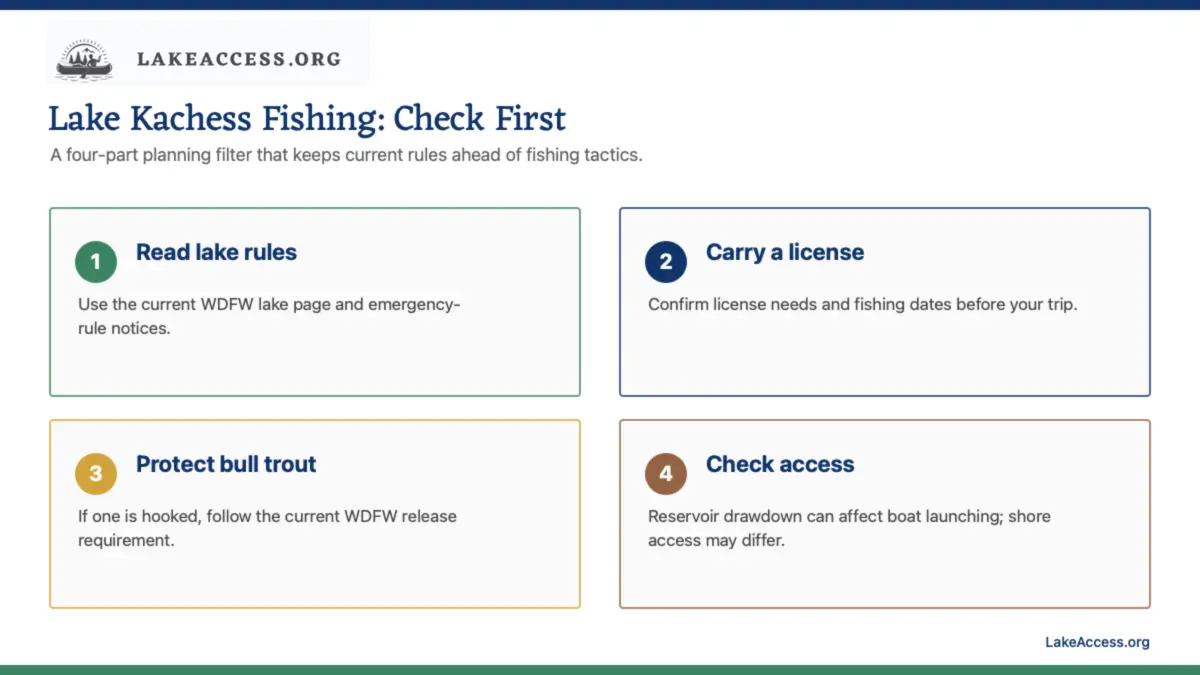
Fishing information ages quickly. A reliable plan starts with the lake-specific WDFW page, then checks the current statewide pamphlet and emergency-rule notices. That order matters: a technique or limit remembered from a prior season is not a regulation. Carry the required license, know what you can identify, and make release handling part of the plan before a fish is on the line.
| Planning topic | Confirmed starting point | What to verify before leaving |
|---|---|---|
| Kokanee | WDFW lists kokanee and a 10-fish catch limit. | Current lake rule, season, and any emergency changes. |
| Trout | WDFW lists rainbow and cutthroat trout plus a two-fish, 14-inch-minimum trout limit. | Whether any current special rule changes the general information. |
| Bull trout | WDFW lists bull trout as closed to fishing. | How to identify and carefully release an accidental catch. |
| Access | WDFW says shoreline access is good near Forest Service campgrounds and the lake trail. | Current facility and launch conditions, especially after drawdown. |
What is confirmed at Lake Kachess
The WDFW Kachess Lake page is the key source for this article. It describes the lake as north of I-90 and west of Cle Elum Lake, identifies the species visitors might encounter, and notes that trolling or still-fishing can be effective for kokanee. It also says chumming is permitted on the lake. Those points are useful orientation, not a promise that a particular lure, depth, or shoreline will produce fish on your day.
WDFW reports that the lake is periodically stocked with kokanee and cutthroat fry. Treat stocking history as biological context, not a real-time fish-location service. This guide deliberately avoids “secret spots,” unverified depth claims, and guarantees about where fish will be. The lake’s water level and weather can change the practical fishing experience faster than an evergreen article can.
Rules and license checklist
Read the current WDFW fishing regulations before departure. WDFW directs anglers to its active pamphlet, emergency-rule updates, and Fish Washington app. Check the lake-specific information again after you read the general rules. A rule change is not a minor footnote when it affects season, species, gear, possession, or a closure.
- Confirm you have the right recreational fishing license for your activity and age.
- Read the Lake Kachess listing, including the no-two-pole notice.
- Review emergency-rule changes on the day of the trip.
- Learn the identification and careful-release requirement for bull trout before you fish.
- Use current onsite notices and official access information for the ramp, shoreline, and campground.
The WDFW page says fishing opportunities are available year-round, but “open” does not mean every access route, boat launch, or weather window is suitable. Do not use the phrase as permission to ignore road, weather, fire, or water-level conditions.
Seasonal planning without invented forecasts
It is more useful to match a method to conditions than to announce a universal “best month.” WDFW notes that 8- to 12-inch kokanee should be good by early June, while the Bureau of Reclamation’s Kachess recreation analysis explains that the reservoir tends to be fullest in spring and early summer and reaches lower levels in late summer. That pattern helps explain why a boat plan can be easier early in the season and less certain later; it does not replace a launch check.
For a shore plan, WDFW specifically identifies good shoreline access near the Forest Service campgrounds and hiking trail along the lake. Respect posted access limits, other recreation users, and changing shoreline conditions. For a boat plan, start with the Lake Kachess boat launch guide, then make the final launch decision at the facility.
Handling an accidental bull trout catch
The official WDFW listing is direct: Lake Kachess is closed to fishing for bull trout, and anglers should carefully release any accidentally hooked bull trout. That is a conservation instruction, not a suggestion to photograph, measure, or prolong the fight. Have pliers or a hook-removal tool ready, keep handling brief, follow current WDFW guidance, and avoid lifting a fish for a trophy-style image. If you cannot confidently identify the fish or understand the rule, pause and consult the current source before continuing.
Fishing safety and lake etiquette
Wear a life jacket in a boat, account for wind and cold water, and leave enough daylight and fuel for a calm return. Keep casting and anchoring clear of launch traffic and swimmers. A camping area is shared space, so respect quiet hours, do not block roads or ramps, and keep line, bait containers, and waste out of the water and shoreline. Never use live conditions as a reason to press into a situation that does not match your gear or experience.
Useful LakeAccess planning links
- Lake Kachess camping guide for the destination context.
- How to read a lake map for fishing for a general contour-reading method.
- Shore fishing setup for lakes for a practical, accessible setup.
Choose shore or boat access without overclaiming
WDFW describes shoreline access near the Forest Service campgrounds and the trail along the lake. That makes a shore-first plan a useful option, particularly if the lake level, ramp, wind, or trailer setup makes a boat launch uncertain. It does not identify a guaranteed productive bank, a reserved fishing spot, or a reason to enter closed or private areas. Arrive ready to walk away from a crowded or unsuitable edge.
A boat can expand the water you can cover, but it also adds weather, cold-water, launching, and return-trip responsibilities. A small craft should stay within the group’s experience and the forecast window. A larger boat should not launch simply because another boat is already out. Match the platform to the actual water, not the title of the article or the gear you hoped to use.
Techniques: use them as experiments, not promises
WDFW notes that trolling or still-fishing can be effective for kokanee at Kachess. Use that as a starting hypothesis. Let the day’s wind, light, fish response, and lawful access shape the plan. Keep tackle simple enough that you can pay attention to safety and fish handling. When fishing from shore, maintain a clean casting area, look behind you before casting, and keep hooks and line away from children, dogs, and busy walking routes.
Depth, lure color, exact speed, and “best spot” claims are intentionally absent here. Without a current, named measurement method they can become false precision. A responsible angler learns from conditions and local regulations, keeps notes for personal use, and avoids broadcasting fragile shoreline or wildlife locations as guaranteed targets.
Respect the lake as shared habitat
The WDFW creel-survey report documents the importance of understanding angler use and impacts on bull trout. That context supports simple choices: release prohibited species carefully, avoid unnecessary handling, collect broken line, and do not leave bait, food, or fish waste at the shoreline. If you keep a lawful catch, confirm the current rule before it goes into the cooler and use a clean, practical plan for storage and transport.
Give paddlers, swimmers, launch users, and shore visitors room. Reduce wake near people and launch areas. Do not claim a narrow piece of shoreline by spreading gear across a shared path. Fishing is more enjoyable when it does not turn another visitor’s safe access into an obstacle course.
A practical fishing-day checklist
- Current WDFW lake rule and emergency-rule check completed.
- License and identification requirements confirmed for every angler.
- Weather, access, and daylight window match the planned method.
- Life jackets, release tools, drinking water, and a first-aid kit are ready.
- Plan B is defined before departure, especially for late-season boat access.
The checklist is deliberately short. It protects the conditions that make fishing possible: legal access, appropriate handling, a safe return, and enough flexibility to stop when the lake does not match the plan.
Species identification deserves time before the trip
Lake Kachess is not a place to rely on a vague “trout” label. WDFW’s lake page distinguishes multiple trout-related species and separately calls out the bull trout closure. Study the current WDFW photos and descriptions before you fish, and use the agency’s rules as the final source if you are uncertain. Identification is not a quiz to finish after a fish is already stressed at the surface.
Build a release plan into the tackle setup. Keep a legal, appropriate landing and hook-removal option ready; minimize handling; and do not hold a fish out of water while searching for a phone or asking a crowd for identification. When a rule or identification question remains unresolved, take the conservative option and seek official guidance.
Fishing through changing conditions
Conditions can change the practical method without changing the regulation. Strong wind may end a small-boat plan. A lowered shoreline may favor a shorter shore visit or end an access plan. A hot afternoon may shorten the group’s comfort window. None of these changes means that an angler should force a different method in an unsafe location. Stop, reset, and choose the least complex legal activity that still fits the day.
Keep a simple trip log: date, weather, access type, general method, what was observed, and any official notice checked. It improves personal learning without turning ecological information into a public promise. Avoid publishing exact vulnerable locations, especially where shoreline access is narrow or wildlife may be disturbed.
Care of the catch and the place
If you keep fish under the current rules, have a legal storage plan that keeps the catch cold and avoids waste. If you release fish, make release quality the priority. Either path starts with the correct rule, species identification, and a realistic estimate of how long you will be on the water. Do not build a meal plan around a fish that has not been lawfully and responsibly kept.
At departure, inspect the shore and boat for line, hooks, bait containers, and food. Small debris can injure wildlife and other visitors. A careful cleanup is part of fishing skill, not an optional extra after the “real” trip is over.
Make the return trip part of the fishing plan
Start with enough time to return before the conditions become difficult. This matters most on a mountain reservoir where wind, weather, and temperature can change the comfort of an open-water crossing. Keep an eye on the sky and the group, not only on the rod tips. Turning back while the fishing is good can be the best call when it protects a safe return.
For boat anglers, reserve fuel and attention for loading the boat, clearing the ramp, and driving home. For shore anglers, leave before darkness or fatigue makes the walk back less predictable. A simple turn-around time prevents a good fishing session from becoming a rushed exit.
Fishing with children or new anglers
New anglers benefit from fewer moving parts: one clear safety rule, one simple setup, close supervision around hooks and water, and a short planned session. Explain the current rules in plain language, especially the bull trout release requirement and why regulations exist. Do not hand a child a rod near a ramp lane or crowded path without controlling the environment first.
Success can be learning to identify a fish, casting safely, reading a rule, or packing out a piece of litter. It does not need to be a full limit. A patient, lawful first experience supports better fishing habits long after a single trip.
Use a conservative weather window
Fishing plans are easier to revise before the boat is launched or the gear is spread along the shore. Check the official forecast and set a time to reassess wind, temperature, and visibility. If the weather shifts beyond the group’s comfort or the safe return window, bring the session to a close. A regulation may permit fishing, but the day’s conditions may still make it the wrong activity.
This is especially important when a trip includes driving, launching, and a long return. Keep enough energy and daylight for the parts that happen after the last cast. The lake will still be there for a better window.
Set the return time before the first cast, then honor it even if the bite improves late in the day.
Responsible timing is part of responsible angling.
It gives every angler the time, attention, and daylight needed to leave the water carefully, clear the access area, secure gear, and drive without rushing.
Sources
- Washington Department of Fish and Wildlife: Kachess Lake (checked July 10, 2026).
- Washington Department of Fish and Wildlife: Fishing regulations and emergency rules (checked July 10, 2026).
- WDFW: 2022 Lake Kachess creel survey (checked July 10, 2026).
- Recreation.gov: Kachess campground facilities and access (checked July 10, 2026).
- Bureau of Reclamation: Kachess recreation and reservoir-level context (checked July 10, 2026).
- US Forest Service Cle Elum Ranger District recreation information (checked July 10, 2026).