
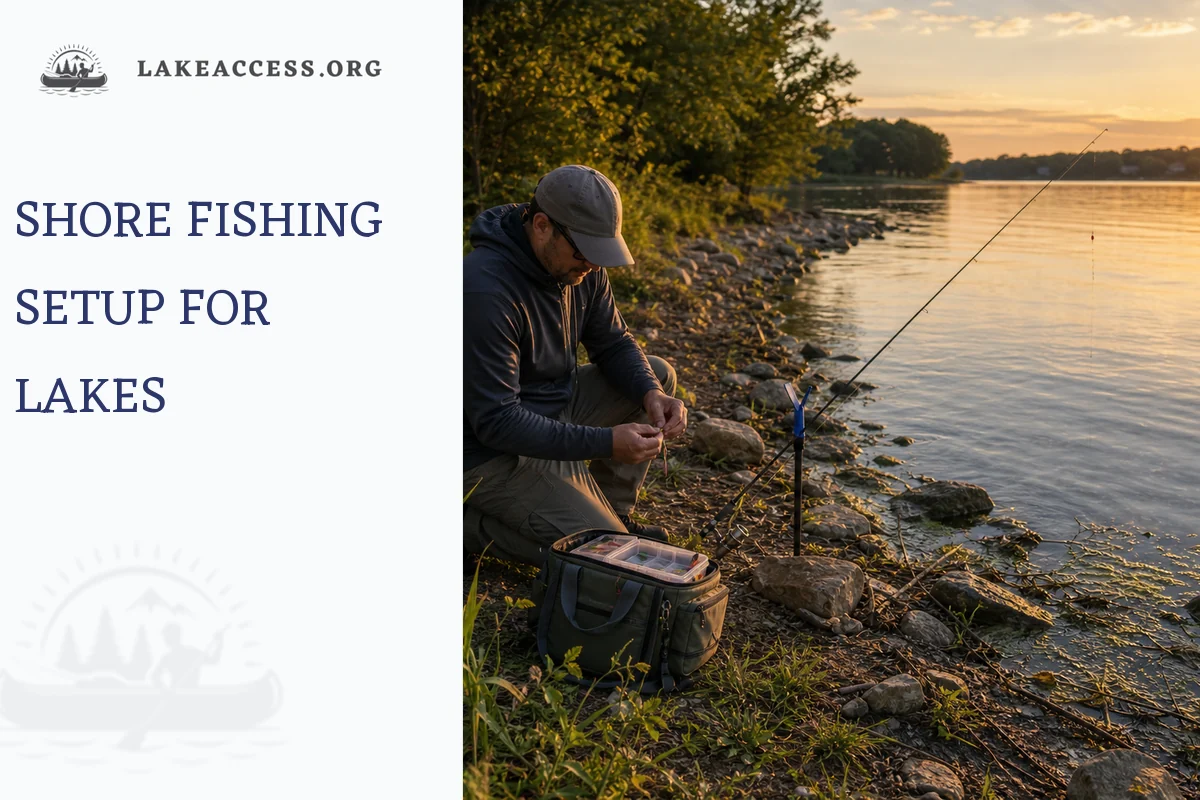
A good shore fishing setup for lakes does not need to be complicated. Start with one 6- to 7-foot medium spinning rod, fresh 6- to 10-pound line, a small tackle box, pliers, clippers, bobbers, hooks, split shot, a few jig heads, soft plastics, and one or two moving lures. Add your license, weather check, water-safe footwear, and a plan for where you can legally fish from shore.
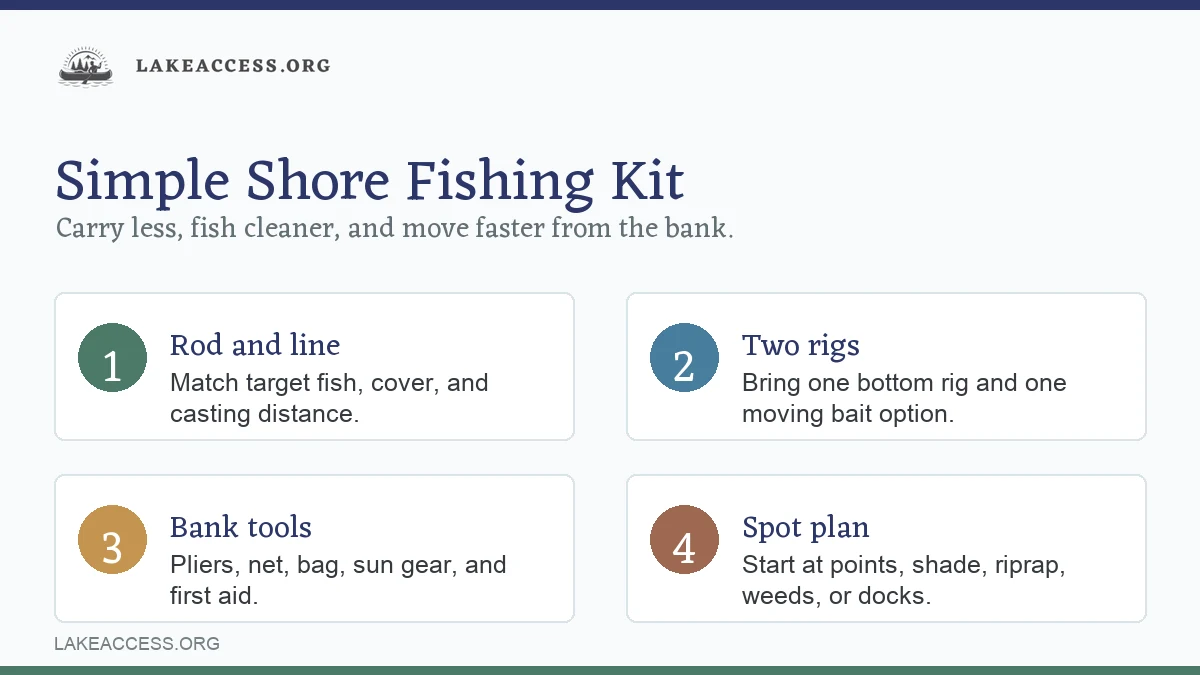
That setup is enough to catch panfish, bass, trout, catfish, and many mixed lake species while staying mobile on the bank.
Lake Shore Setup Selector
- New to the lake? Start with a bobber rig and live bait or a small soft plastic.
- Fishing deeper water from shore? Try a bottom rig or slip sinker rig.
- Seeing weeds, rocks, or docks? Cast a jig, small swimbait, spinner, or crankbait along the edge.
- Targeting catfish? Use a sturdier bottom rig and bait where legal.
- Weather turning? Stop fishing before lightning reaches the lake.
Best Basic Shore Fishing Setup
For most lake shore anglers, the easiest all-around setup is a spinning combo. The U.S. Fish & Wildlife Service recommends choosing a rod that is comfortable to hold, with spincast and spinning reels both common for beginners. A spinning combo gives you more room to grow while still being simple enough for a first trip.
| Setup piece | Simple choice | Why it works from shore |
|---|---|---|
| Rod | 6- to 7-foot medium or medium-light spinning rod | Casts light rigs, bobbers, small lures, and bait well |
| Reel | 2500 to 3000 size spinning reel | Handles panfish, bass, trout, and smaller catfish |
| Main line | 6- to 10-pound monofilament or fluorocarbon | Forgiving, affordable, and easy to tie |
| Hooks | Size 6 to 1/0 assorted bait hooks | Covers panfish, trout, bass, and smaller catfish |
| Weights | Split shot plus a few egg or casting sinkers | Lets you fish shallow, suspended, or near bottom |
| Floats | Small fixed bobbers and a few slip bobbers | Helps keep bait at the right depth |
| Lures | Jigs, small swimbaits, inline spinners, crankbaits | Covers moving fish and search casts |
| Tools | Pliers, clippers, tape measure, landing net | Makes handling fish safer and faster |
If you are buying only one outfit, avoid going too heavy. A stiff rod and heavy line can make small lake fish harder to hook and less fun to catch. If your lake has big catfish, pike, striped bass, or heavy cover, add a second heavier rod later. You do not need it for a basic first setup.
Related planning help: Fishing, Best Time of Day to Fish a Lake, and How to Find Public Lake Access Near You.
The Four Rigs Shore Anglers Actually Need
You can catch plenty of lake fish from shore with four rigs: a bobber rig, a bottom rig, a jig, and a moving lure. Learn these before buying specialized tackle.
| Rig | Best for | Basic setup | Shore tip |
|---|---|---|---|
| Bobber rig | Bluegill, crappie, trout, perch, beginner fishing | Hook, small split shot, bobber, bait | Adjust depth until bait is just above fish or cover |
| Slip bobber rig | Deeper panfish, trout, walleye near shore | Bobber stop, slip float, split shot, hook or jig | Useful when fish are deeper than a fixed bobber can handle |
| Bottom rig | Catfish, trout, carp, still-fishing bait | Sinker, swivel or stop, leader, hook | Keep line semi-tight and watch the rod tip |
| Jig or soft plastic | Bass, crappie, walleye, trout | Jig head plus grub, tube, worm, or minnow bait | Hop, swim, or drag it along rocks, weeds, and drop-offs |
| Moving lure | Bass, pike, trout, white bass, searching water | Spinner, spoon, crankbait, or swimbait | Cast fan-shaped lanes until you find active fish |
The Florida Fish and Wildlife Conservation Commission suggests a simple freshwater rig with a small hook, a bobber, and a split shot above the hook for first-time anglers. That is still one of the most reliable lake setups because it tells you what depth fish are using and keeps bait in the strike zone.
Take Me Fishing’s rig guidance is also useful once you want to branch out. The key is to match the rig to the water in front of you. A bobber rig is poor for 15 feet of water unless it is a slip bobber. A bottom rig is awkward in heavy weeds. A moving lure is great for covering water, but not always best when fish are inactive.
What to Pack in a Small Shore Tackle Box
Shore fishing rewards mobility. A backpack or sling bag is usually better than a large hard box because you can walk to the next point, dock, or pocket without hauling too much gear.
| Pack item | Minimum amount | Notes |
|---|---|---|
| Hooks | 10 to 20 assorted | Include small hooks for panfish and larger hooks for bass or catfish |
| Sinkers | Small pack of split shot, a few egg sinkers | Choose non-lead options where available or required |
| Bobbers | 2 fixed, 2 slip floats | Slip floats help from deeper banks and piers |
| Jig heads | 1/32, 1/16, 1/8, and 1/4 ounce | Match size to depth, wind, and bait size |
| Soft plastics | One small panfish bait, one worm, one swimbait | Natural colors plus one bright option are enough |
| Hard lures | One spinner, one shallow crankbait, one spoon | Good for fan casting and finding active fish |
| Tools | Pliers, clippers, small knife or scissors | Pliers help remove hooks safely |
| Safety | Sunscreen, water, first aid, headlamp if near dusk | Add a whistle or phone battery for remote banks |
| Cleanup | Trash bag or zip bag | Pack out line, bait containers, and litter |
Skipped gear that can wait: giant lure boxes, specialty rods, fish finders, castable sonar, and five kinds of line. Add them only when you know the lake, the species, and the problem you are trying to solve.
Where to Cast From Shore
Most bank anglers do not need longer casts as much as they need better targets. Wisconsin DNR guidance points anglers toward structure such as points, docks, vegetation, submerged trees, riprap, reefs, drop-offs, and inflowing or outflowing streams. From shore, your job is to find the places where those features come within casting range.
Good first casts include:
- The edge of weeds, not the thickest weeds
- The shaded side of a dock where fishing is allowed
- Riprap banks, bridge edges, and rocky points
- Small points that reach toward deeper water
- Creek mouths and culverts after conditions are safe
- Wind-blown banks when waves are manageable
- Open pockets in cattails, reeds, or shoreline grass
- The first visible depth change near a pier or public bank
Cast in a fan shape before moving. Make one cast left, one straight out, one right, then change depth or lure speed. If nothing happens after a few passes, move. Shore anglers win by covering reachable high-percentage water, not by standing in one dead spot all afternoon.
For timing, pair this with Best Time of Day to Fish a Lake. For species-specific tactics, see How to Fish for Trout and Catfish Fishing in Lakes.
Setup by Target Fish
The best shore fishing setup for lakes changes slightly by species. Keep the base rod and bag simple, then swap rigs.
| Target fish | Shore setup | Best bank water | Notes |
|---|---|---|---|
| Bluegill and sunfish | Small hook, tiny jig, bobber, worm or small soft plastic | Docks, weeds, shallow pockets, beds in season | Great first target because bites are easier to find |
| Crappie | Small jig or slip bobber with minnow where legal | Brush, dock shade, bridge pilings, deeper edges | Low light can help, but shade matters too |
| Largemouth bass | Wacky worm, Texas rig, jig, spinnerbait, shallow crankbait | Weeds, wood, docks, riprap, points | Fish edges and openings instead of throwing into the thickest cover |
| Trout | Small spinner, spoon, bait rig, or floating bait where legal | Cool inflows, points, deeper banks, stocked access areas | Check local bait rules, seasons, and harvest limits |
| Catfish | Bottom rig, circle hook, sturdy holder, legal bait | Flats near deeper water, creek mouths, evening banks | Use heavier line if snags or large fish are likely |
| Walleye | Slip bobber, jig, minnow-style bait, crankbait | Windy points, riprap, low-light shorelines | Often better near dusk, dawn, wind, or current |
Oregon Department of Fish & Wildlife’s gear guidance is helpful because it frames tackle around the species you want to catch. A trout setup and catfish setup are not the same, even if both can be used from shore.
Shore Fishing Safety Setup
Bank fishing feels simple, but lake edges can be slippery, steep, isolated, or exposed to weather. Build safety into the setup, not as an afterthought.
| Risk | Simple prevention |
|---|---|
| Lightning | Leave the bank before storms arrive; the National Weather Service warns that water is dangerous during thunderstorms |
| Slippery rocks or mud | Wear shoes with grip and avoid stepping below wet algae lines |
| Steep banks | Choose a landing spot before hooking fish |
| Night fishing | Bring a headlamp, backup light, and tell someone your plan |
| Heat and sun | Bring water, sun protection, and take shade breaks |
| Remote access | Keep phone charged and know your exit route |
| Hooks and fish handling | Carry pliers, clippers, and a small first aid kit |
If you fish from a pier, dam, steep wall, or cold-water bank where a fall would be serious, consider wearing a properly fitted life jacket. U.S. Coast Guard life jacket rules are written for boating, but the practical idea still matters near deep or cold water: flotation only helps when it is accessible and wearable.
Licenses, Regulations, and Fish You Plan to Eat
Before fishing, check your state fish and wildlife agency for the current license, seasons, size limits, bait rules, and lake-specific restrictions. NOAA Fisheries points recreational anglers to state fish and wildlife agencies for state fishing licenses and rules. That matters because one lake may have special limits that do not match the general statewide rule.
Check these before you keep fish:
- Do you need a fishing license at your age and location?
- Is the species open to harvest today?
- Is there a size limit, slot limit, or daily bag limit?
- Are live bait, treble hooks, night fishing, or multiple rods allowed?
- Does the lake have a fish consumption advisory?
The National Park Service explains that fish consumption advisories warn people when fish may be unsafe to eat because of contaminants or other health threats. Advisories vary by waterbody, species, fish size, and sensitive groups. If you plan to eat your catch, check the current state or local advisory first.
Keep the Lake Clean While You Fish
A good shore setup should include cleanup habits. Lost line, bait containers, and lead sinkers can harm wildlife and make access worse for everyone.
The U.S. Fish & Wildlife Service warns that small lead tackle can poison loons and other birds when ingested. Use non-lead sinkers and jigs where required, and consider switching even where it is optional. Also pack out old line. Birds, turtles, fish, and pets can become tangled in discarded monofilament.
Use the Clean, Drain, Dry habit after fishing, especially if you move between lakes. FWS notes that aquatic invasive species can hitchhike on fishing and boating gear. For a shore angler, that means:
- Remove plants, mud, and debris from shoes, nets, waders, and tackle
- Drain water from buckets or gear where allowed and appropriate
- Dry gear before using it in another lake
- Never dump bait, plants, fish, or aquarium animals into a waterbody
- Put unwanted bait and trash where local rules allow
This is not extra ceremony. It protects the next lake you want to fish.
A Simple First Trip Plan
Use this plan if you are trying a lake from shore for the first time:
- Pick a legal public access point with enough open bank to cast.
- Check license rules, fishing regulations, fish consumption advisories, and weather.
- Start near visible structure: weeds, docks, rocks, points, or deeper water.
- Fish a bobber rig for 15 minutes to test depth and small-fish activity.
- Fan cast a jig or small moving lure to cover water.
- Move every 20 to 30 minutes if you do not see bait, bites, follows, or good cover.
- Pack out everything you brought, including clipped line.
If access is the hard part, start with How to Find Public Lake Access Near You. If you are choosing between bank, boat, and launch options, the Boating and Guides hubs can help with the broader trip plan.
Shore Setup Mistakes to Avoid
The most common mistake is carrying too much gear and fishing too little water. A lighter setup helps you walk, test spots, and learn the lake faster.
Other easy mistakes:
- Using line too heavy for small fish and clear water
- Fishing a fixed bobber too shallow or too deep without adjusting
- Casting past fish that are holding close to shore cover
- Standing too close to the edge and spooking shallow fish
- Bringing only lures when local fish are keyed on bait, or only bait when active fish could be found faster with lures
- Ignoring wind, shade, and depth changes
- Forgetting current regulations because “it was allowed last year”
The Bottom Line
The best shore fishing setup for lakes is compact, legal, and flexible: one medium spinning combo, fresh line, a few hooks, bobbers, sinkers, jigs, soft plastics, pliers, clippers, and safety basics. Start with a bobber rig, a bottom rig, and one lure you can cast confidently. Then spend your energy on better bank spots, current regulations, safe weather, and clean fishing habits.
That simple setup will catch more fish than a heavy tackle box sitting beside the wrong piece of shoreline.
Sources
- U.S. Fish & Wildlife Service, A Guide to Fishing for the First Time — Used for beginner rod and reel guidance and basic fishing setup context.
- Florida Fish and Wildlife Conservation Commission, First Time Angler — Used for a simple freshwater bobber rig setup that catches common freshwater fish.
- Oregon Department of Fish & Wildlife, Gearing up for fishing — Used for high-trust species-based gear context for trout, panfish, bass, walleye, and other freshwater targets.
- Take Me Fishing, Beginner Fishing Gear Checklist — Used for practical beginner gear checklist guidance.
- Take Me Fishing, Fishing Rigs — Used for general rig categories and terminal tackle basics.
- Wisconsin DNR, Hook Your Catch With These Tips — Used for official guidance on structure, cover, water temperature, and where fish hold.
- NOAA Fisheries, Resources for Recreational Fishing — Used to support checking state fishing licenses and regulations before fishing.
- National Weather Service, Lightning and Fish — Used for official thunderstorm and water safety context.
- U.S. Fish & Wildlife Service, Lead Poisoning in Loons — Used for environmental guidance on avoiding lost lead tackle where safer alternatives are available.
- U.S. Fish & Wildlife Service, Clean, Drain, Dry — Used for invasive species prevention steps for fishing and boating gear.
- National Park Service, Fish Consumption Advisories — Used for advising anglers to check local fish consumption advisories before eating catch.