
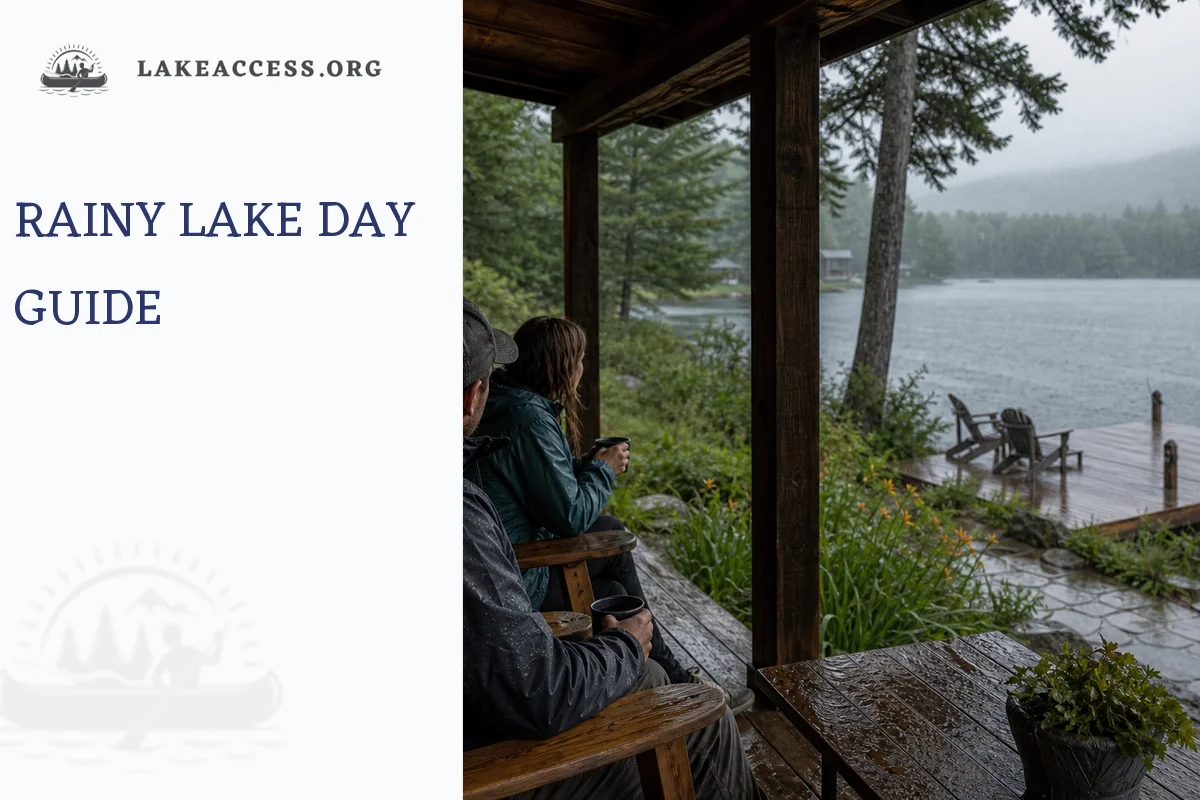
If it rains at the lake, the best plan depends on one question first: is there thunder or lightning? If yes, leave the water, docks, beaches, boats, open picnic shelters, and tents, then get into a substantial building or a hard-topped vehicle. Wait at least 30 minutes after the last thunder before returning outside. If it is only steady rain with no thunder, you can often still enjoy covered picnics, visitor centers, shoreline walks, photography, cabin games, light fishing, or scenic drives, as long as local conditions stay safe.
Rainy lake days are normal. The trick is separating harmless drizzle from unsafe weather, runoff, slippery access, cold exposure, and changing water conditions. For broader trip planning, keep the LakeAccess guides hub, lakes hub, and public lake access guide handy.
Quick decision table for a rainy lake day
| Condition | What to do | What to skip |
|---|---|---|
| Light rain, no thunder, mild temperature | Walk, photograph, fish from shore, picnic under a solid roof, visit a nature center | Swimming if visibility is poor or the beach is unmonitored |
| Thunder, lightning, darkening sky, or fast-building storm | Go to a substantial building or hard-topped vehicle | Water, docks, boats, beaches, tents, trees, open shelters |
| Heavy rain or recent flooding | Check official alerts and water-quality status; choose indoor or upland activities | Swimming, creek play, low trails, flooded roads, wading |
| Cold rain or wind | Shorten the outing, add dry layers, warm up indoors | Long paddles, exposed hikes, kids staying wet for hours |
| Rain after a long dry spell | Treat runoff, pipes, drains, and cloudy water cautiously | Swimming near drains, pipes, stormwater flow, or bad-smelling water |
| Rain during a boating plan | Check official forecast and warnings; delay if storms are possible | Launching “just to see” or staying out near thunder |
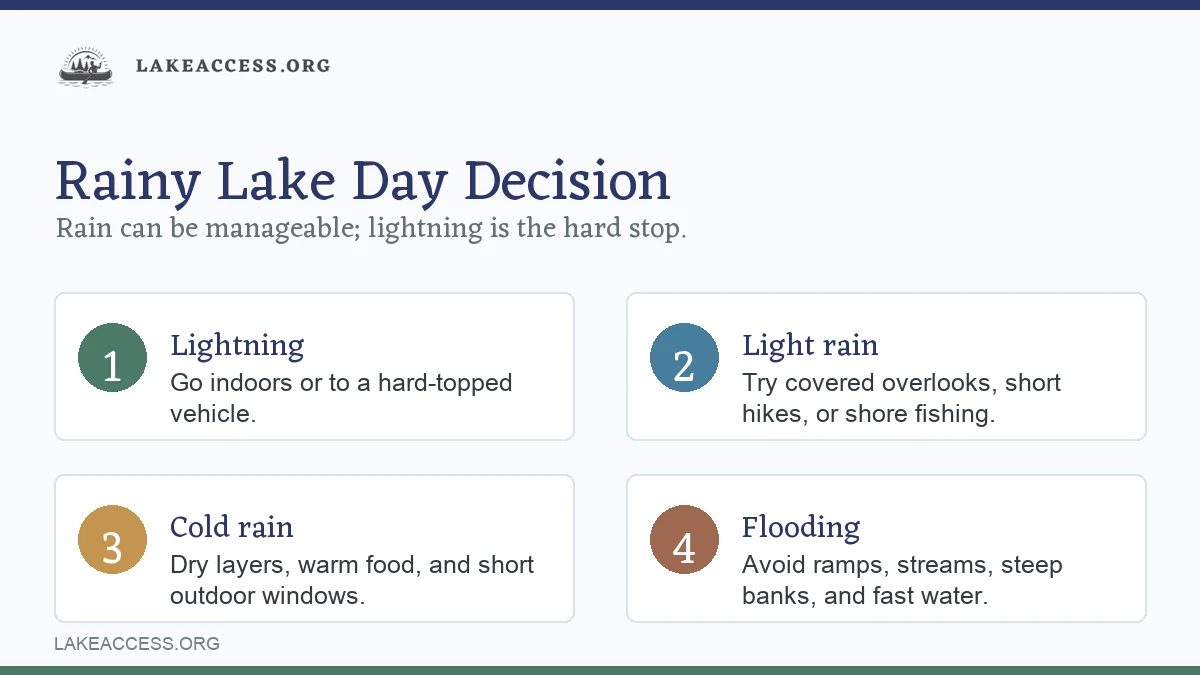
Rainy Lake Day: Stay, Wait, or Leave
- Hear thunder or see lightning? Leave the water, beach, dock, boat, and open shelter now.
- Find real shelter. Use a substantial building or hard-topped vehicle with windows closed.
- Wait it out. Stay sheltered for at least 30 minutes after the last thunder.
- Check current status. Look for beach advisories, park alerts, trail closures, ramp warnings, and marine forecasts.
- Pick the dry plan. Visitor center, covered meal, cabin games, scenic drive, short walk, or reschedule.
Best things to do at a lake when it rains
Rain without thunder can make a lake quieter, cooler, and surprisingly beautiful. Choose activities that keep you warm, visible, and close to real shelter.
| Rainy lake activity | Best for | Safety notes |
|---|---|---|
| Visit the park office or nature center | Families, first-time visitors, storm delays | Ask staff about current beach, trail, ramp, and road status |
| Covered picnic under a solid building roof | Groups, kids, casual day trips | Open-sided picnic shelters are not safe during lightning |
| Short shoreline walk | Light rain, photography, birdwatching | Avoid slippery rocks, flooded paths, and exposed points |
| Scenic drive around the lake | Heavy rain backup, low-energy days | Do not drive through flooded roads or closed gates |
| Cabin, RV, or lodge games | Camping trips, families, cold rain | Keep dry clothes available and monitor weather alerts |
| Light shore fishing | Anglers, mild drizzle | Stop immediately for thunder; avoid metal rods during storms |
| Read, map-plan, or scout access points | Trip planning | Use official park and agency pages for current rules |
| Local museum, cafe, outfitter, or town stop | All-day rain | Check hours before driving; save the lake for safer weather |
The best rainy activity is the one that does not require conditions to be perfect. A short walk from a visitor center is easier to abandon than a paddle across open water.
Lightning changes the whole plan
At a lake, lightning safety is not a small detail. The National Weather Service says there is no safe place outside when a thunderstorm is in the area. If you hear thunder, see lightning, or the sky looks threatening, stop the activity and move to safe shelter.
Good shelters include:
- A substantial building with wiring or plumbing
- A hard-topped metal vehicle with the windows closed
- A visitor center, lodge, restroom building, store, or similar solid structure
Do not use these as lightning shelters:
- Open-sided picnic shelters
- Tents
- Beach umbrellas
- Trees
- Docks, piers, swim platforms, or boat ramps
- Small sheds, dugouts, or lean-tos
- Boats without a safe cabin
NWS lake and beach guidance is especially clear: if the parking lot is close, go to the car rather than staying under a picnic shelter. Wait at least 30 minutes after the last thunder before going back to the beach, trail, dock, or campsite.
Can you swim in a lake while it rains?
Do not swim if there is thunder, lightning, poor visibility, high waves, strong wind, a closure, or any posted swim advisory. Even without thunder, rain can make swimming less safe by reducing visibility, chilling swimmers, and washing pollution into the water.
CDC advises checking whether a swim area is monitored, under advisory, or closed, especially after heavy rain. Heavy rain can carry human or animal waste into swim areas. CDC also recommends staying out when water looks cloudier than usual, is discolored, smells bad, has pipes draining nearby, or when you have diarrhea or an open cut that cannot be fully protected.
Use this swim decision:
| If you notice this | Swimming decision |
|---|---|
| Thunder or lightning | Stay out and shelter |
| Beach closed or advisory posted | Stay out |
| Water is cloudy, discolored, smelly, scummy, or foamy | Stay out and check official guidance |
| Heavy rain just passed | Wait and check local beach or health department status |
| Lifeguards closed the water | Stay out |
| Calm drizzle, open monitored beach, normal water, no thunder | Consider swimming only if conditions match your group’s ability |
For a deeper safety check, pair this article with How to Know if a Lake Is Safe to Swim In and Blue-Green Algae in Lakes.
What about boating, kayaking, and paddleboarding in the rain?
Rain alone is not always a no-go for experienced boaters, but thunderstorms are. NWS boating guidance warns that thunderstorms can develop quickly and bring gusty winds, shifting wind, lightning, waterspouts, torrential downpours, and dangerous wave conditions. NWS also recommends not venturing out if thunderstorms are a possibility.
Before launching, check:
- National Weather Service forecast, watches, and warnings
- Marine forecast on coastal waters and the Great Lakes
- Local lake wind forecast
- Park, marina, or ramp alerts
- Water level, debris, low-water, or flood notices
- Your route back to shelter
If you are already out and storms develop, head to port or safe shelter as quickly as possible. If you are on a small boat without a cabin and cannot reach safety, NWS advises staying as low as possible in the boat. That is a last resort, not a trip plan.
Rainy boating is also harder because docks get slick, visibility drops, bilges fill faster, and passengers get cold. New boaters should delay. If you are still learning launch flow, read the Boat Ramp Checklist for First-Time Boaters before trying a wet ramp day.
Is fishing good when it rains?
Light rain can be good for lake fishing, especially when it cools the surface, dims bright light, and reduces shoreline noise. Some fish may roam shallower during overcast or rainy periods. The useful rule is simple: fish in rain, not in lightning.
Good rainy fishing options:
- Shoreline casting near safe footing
- Covered dock fishing where allowed
- Bank fishing close to the car
- Short sessions during mild drizzle
- Watching for baitfish activity near shore
Skip fishing when:
- Thunder is audible
- Lightning is visible
- Wind makes casting or footing unsafe
- You would need to stand on slick rocks, metal docks, or exposed points
- Cold rain is soaking clothing faster than you can stay warm
- The access area is flooded, closed, or unstable
For timing ideas, see Best Time of Day to Fish a Lake. Still check your state fishing rules, local access hours, and storm forecast before you commit to the bank.
Rainy lake ideas for families with kids
Kids can still have a great lake day in the rain, but the plan should be shorter, warmer, and easier to abandon.
Try:
- Visitor center exhibits or ranger programs
- A covered lunch with hot drinks
- Nature journaling from a porch, car, or cabin
- A 20-minute raincoat walk on a safe trail
- Binocular birdwatching from a covered overlook
- Rock, leaf, and cloud sketching from shelter
- Board games, cards, puzzles, or books in the cabin
- A “scout the lake” drive to find beaches, ramps, and trailheads for tomorrow
Avoid:
- Letting kids play in stormwater runoff
- Creek or drainage ditch play after rain
- Standing under trees during storms
- Long wet hikes with no dry clothes
- Swimming in unknown water after heavy rain
- Dock running, wet rock hopping, and slippery boat ramps
CDC drowning guidance emphasizes close supervision around water and life jackets for children in and around natural water. Rainy weather does not reduce drowning risk. It can make supervision harder because visibility, footing, and attention are worse.
What to do if you are camping at the lake
Rainy camping is manageable. Thunderstorm camping needs a shelter plan before the storm arrives.
| Situation | Better move |
|---|---|
| Light rain, no thunder | Cook under allowed rain cover, keep bedding dry, use rain gear, shorten hikes |
| Thunder nearby | Leave tent and open shelter; go to a vehicle or substantial building |
| Water running through campsite | Move gear if safe; ask campground staff about flooding or relocation |
| Cold wet clothing | Change into dry layers, warm up, and stop exposed activities |
| Forecast calls for severe storms | Consider leaving early or changing campsites before roads and trails worsen |
A tent is not lightning protection. Neither is a tarp, screen room, or open pavilion. If storms are possible, know the nearest real shelter before dark: restroom building, camp store, ranger station, lodge, or vehicle.
Watch for runoff, mud, and water-quality problems after heavy rain
Rain changes the lake edge. Heavy rain can wash waste, fertilizer, soil, oil, and debris into the water. It can also make trails, docks, ramps, and roads unsafe.
After heavy rain, be cautious around:
- Storm drains and pipes flowing into the lake
- Creek mouths and inflow areas
- Muddy, cloudy, or smelly water
- Floating trash, logs, or dead fish
- Slippery algae-coated ramps and docks
- Flooded trails and low bridges
- Fast-moving outlet channels
- Beach closures and health advisories
EPA notes that state, Tribal, territorial, and local governments decide current beach closures, and EPA’s national beach systems may not show current same-day status everywhere. For a real swimming decision, check the local health department, park page, beach sign, or managing agency.
What if you already paid for a lake day?
Rain is annoying when you have reservations, rentals, parking passes, or a long drive behind you. Still, do not let sunk cost turn into an unsafe decision.
Use this order:
- Check the official weather forecast and alerts.
- Check the lake, park, campground, marina, or beach status page.
- Ask staff about refunds, rain checks, rescheduling, or indoor alternatives.
- Move water activities to the safest available window.
- Use the rainy plan for the rest of the day.
For rented boats, paddleboards, kayaks, or guided trips, follow the outfitter’s weather policy. If thunder is nearby, do not pressure staff to launch. A canceled rental is better than being trapped on open water during a storm.
Rainy lake packing list
| Pack this | Why it helps |
|---|---|
| Lightweight rain jacket | Keeps drizzle from ending the day early |
| Dry socks and warm layer | Cold wet feet make kids and adults miserable fast |
| Waterproof phone pouch | Keeps alerts, maps, and reservation info usable |
| Portable charger | Weather checks drain batteries |
| Towels and dry bag | Separates wet clothes from food, books, and electronics |
| Flashlight or headlamp | Dark skies and power outages happen faster in storms |
| Simple games or cards | Turns shelter time into part of the trip |
| Extra snacks and water | Avoids leaving shelter just because everyone is hungry |
Do not let gear create false confidence. A rain jacket does not make lightning safe, and a covered boat does not automatically make a thunderstorm safe.
Related LakeAccess links
- Guides
- Lakes
- How to Find Public Lake Access Near You
- How to Know if a Lake Is Safe to Swim In
- Blue-Green Algae in Lakes
- Boat Ramp Checklist for First-Time Boaters
- Best Time of Day to Fish a Lake
- How Do Lakes Have Rip Currents?
The simple rainy lake rule
Light rain can be part of the lake experience. Thunder, lightning, flooding, unsafe water, and cold exposure are different. When storms are nearby, leave the water and get to real shelter. When it is only drizzle, keep the day simple: stay close to shelter, choose low-risk activities, check official status, and save the big swim, paddle, or boat trip for safer weather.
Sources
- National Weather Service, Lightning Safety and Outdoor Sports Activities — Used for thunder and lightning stop rules, safe shelter guidance, and waiting at least 30 minutes after the last thunder.
- National Weather Service, When a Safe Building or Vehicle is Nearby — Used for lake, beach, picnic shelter, tent, water, and hard-topped vehicle lightning safety.
- National Weather Service, Safe Boating and Thunderstorms — Used for boating-specific thunderstorm hazards and advice to avoid going out when thunderstorms are possible.
- National Weather Service, Marine Weather Services — Used for official marine forecast and warning checks, especially on coastal waters and the Great Lakes.
- CDC, Preventing Drowning — Used for life jacket, supervision, buddy system, alcohol, forecast, and natural-water hazard guidance.
- CDC, How to Safely Visit Oceans, Lakes, and Rivers — Used for heavy-rain runoff, water-quality advisories, cloudy or smelly water, pipes, diarrhea, and open-wound cautions.
- EPA, Find Information about a Particular U.S. Beach — Used for beach monitoring, advisory lookup, and the reminder that state, Tribal, territorial, and local governments decide current beach closures.