
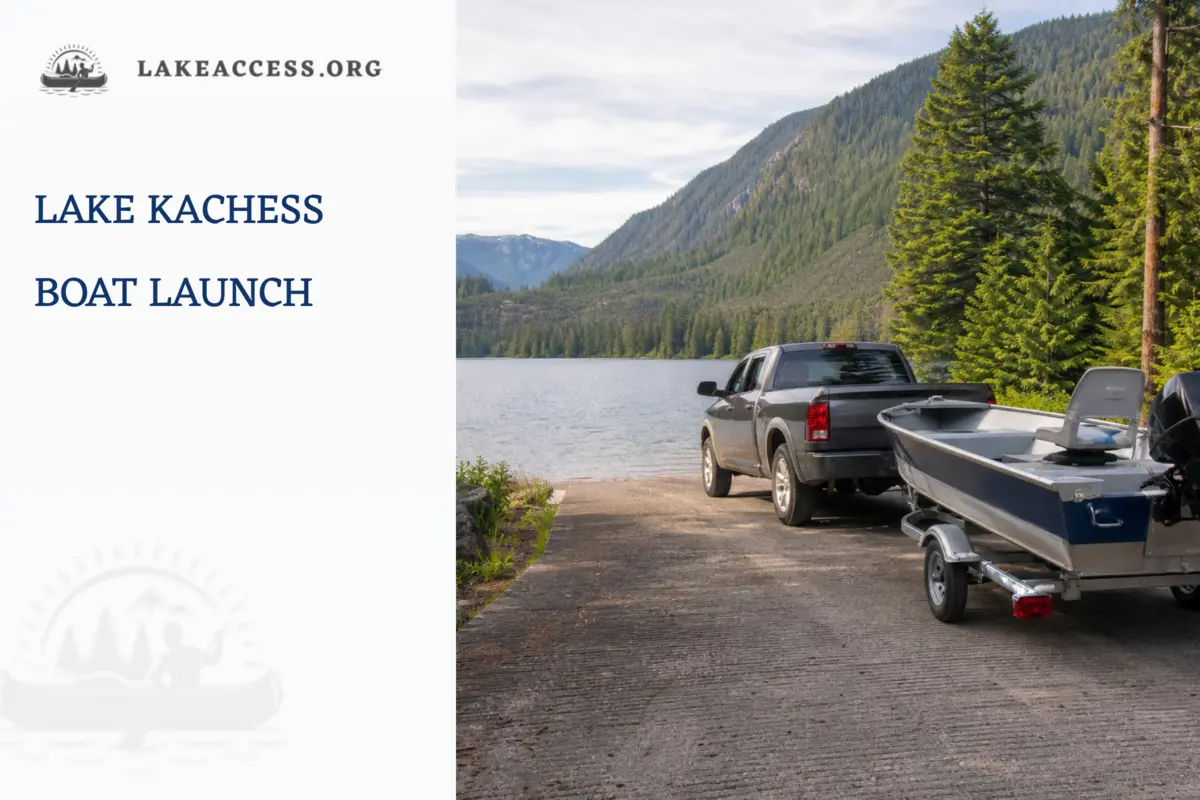
Quick answer: The official Kachess campground listing describes one motorized boat launch, one non-motorized launch, a swimming area, and picnic areas. That makes the campground the clearest published day-use starting point, but it does not guarantee that every ramp or parking area will work on the day you arrive. Lake Kachess is an irrigation reservoir, and the Washington Department of Fish and Wildlife (WDFW) specifically warns that late-summer boat launching can become unavailable because of drawdown. Check the official listing, current forest alerts, and the reservoir source before you tow.
What this guide can and cannot confirm
This is a planning guide, not a live launch-status feed. Recreation.gov is the official reservation and facility listing for Kachess, while the Forest Service and managing agencies can issue status changes. A photo, review, or old social post cannot tell you whether a particular ramp is usable today. Treat the lake level, ramp surface, wind, visibility, and onsite signs as the final authority.
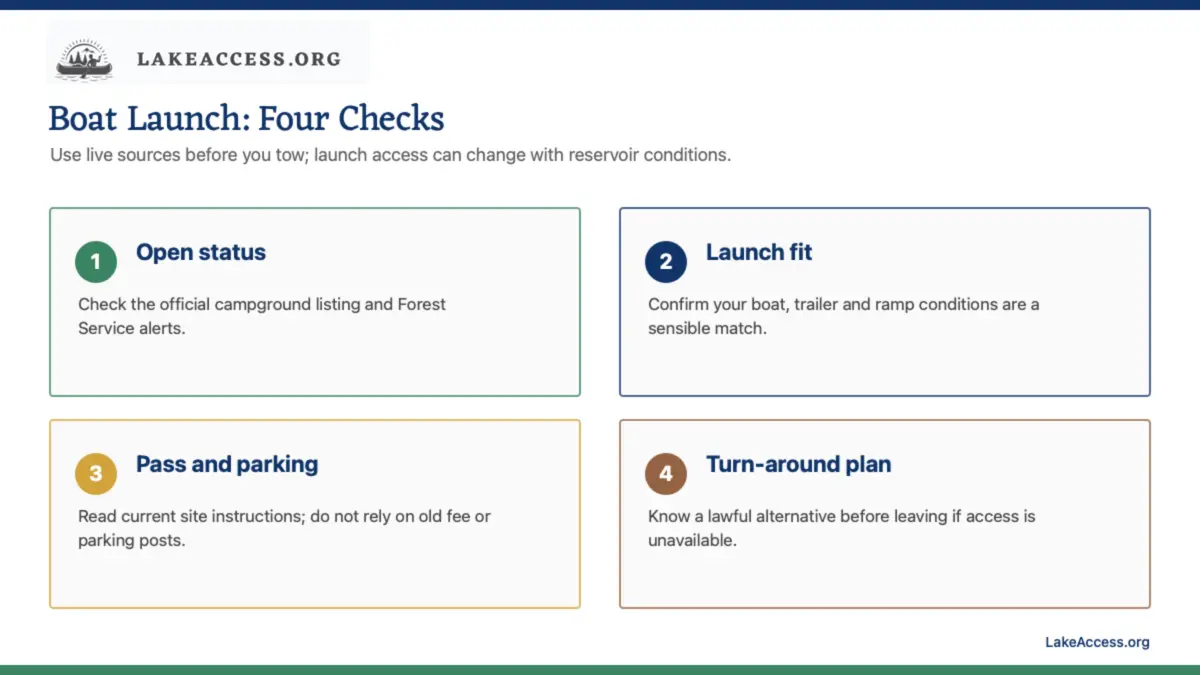
| Planning question | Best source to check | Why it matters |
|---|---|---|
| Is the developed facility operating? | Recreation.gov and Forest Service alerts | Facilities, services, and closures can change. |
| Can my launch plan work today? | Onsite conditions plus reservoir information | Reservoir drawdown can change the usable shoreline and ramp reach. |
| What do I need to pay or display? | Current facility listing and posted instructions | Passes, day-use fees, and parking rules are volatile. |
| What if it is unavailable? | Preselected lawful alternative | A turn-around plan avoids unsafe or unauthorized improvisation. |
Start with the official Kachess facility listing
The official Kachess Recreation.gov listing places the campground in Okanogan-Wenatchee National Forest and lists boat launches, a swimming area, picnic areas, drinking water, vault toilets, and no electric hookups. It gives directions from Seattle on I-90 to Exit 62 and then Kachess Lake Road; it also gives directions from Cle Elum. Use the current listing for routing and facility information rather than copying a route from an older blog post.
For a day launch, separate two questions that are often blurred together: does the site list a launch? and is that launch workable for my trailer and the day’s reservoir level? The first can be answered from the facility page. The second requires a current check. WDFW notes that Lake Kachess has a good boat-launching area in ordinary conditions but that no late-summer boat launching facility may be available when drawdown is excessive.
Choose the right kind of launch plan
The campground listing distinguishes one motorized and one non-motorized launch. That is useful, but it is not a size rating, a promise of parking, or permission to use another shoreline. Match the plan to your boat, trailer, driver experience, and conditions. A paddler should still check wind and launch access; a motorboat operator should still check that the ramp, turnaround, parking arrangement, and water depth are appropriate on arrival.
Do not turn a shoreline, trail edge, or informal pullout into a launch because a paved ramp is crowded or unavailable. The forest road system, developed facility rules, and posted directions control where you may park and launch. A responsible backup plan is an alternative activity, a different lawful access point confirmed by its manager, or a decision to return another day.
Current conditions: a short pre-departure routine
- Open the Kachess facility page and read the current notices, not just the amenities list.
- Check the Okanogan-Wenatchee National Forest for fire, road, or recreation alerts that could affect the approach.
- Review the Bureau of Reclamation Kachess Dam page and the USGS Kachess Lake monitoring page as condition references. Do not convert a historic chart into a ramp guarantee.
- Read the National Weather Service forecast for the Easton-area grid. Wind, storms, and rapidly changing mountain weather affect both launch and return decisions.
- Pack a way to leave without launching: food, water, a charged phone, trailer tools appropriate to your vehicle, and a conservative turnaround point.
Day-use, fees, and passes
Fees and passes must be verified on the day. The official pages have shown different fee structures across seasons and facilities, so this article intentionally does not repeat a dollar amount. Check the live Recreation.gov listing and the signs at the facility. If a pass is required, obtain the correct one before occupying a space; if an onsite sign conflicts with an older web page, follow the onsite instruction and seek confirmation from the managing agency.
That same caution applies to hours, parking capacity, water availability, and whether a launch is managed on a first-come basis. These are operational facts, not evergreen SEO copy.
Launch safety that travels well
Use a pre-launch workflow. Prepare the boat and gear away from the ramp when the facility layout allows; keep the ramp lane clear; use a spotter only where that person can stand clear of moving vehicles and trailers; and do not rush because others are waiting. Wear a properly fitted life jacket on the water and carry the required safety equipment for your vessel. Mountain reservoirs can feel calm at the ramp and turn uncomfortable later, so keep the return trip in the decision.
Lake Kachess is a working reservoir as well as a recreation destination. Exposed shoreline, changed water distance, and late-season drawdown are reasons to reduce assumptions, not to take extra risks. If the ramp does not look suitable for your setup, leave it alone.
Useful LakeAccess planning links
- Lake Kachess camping guide for the campground context.
- Boat ramp checklist for first-time boaters for a general launch routine.
- How to find public lake access near you for a source-first access method.
Arrival and setup sequence
A smooth launch begins before the ramp. Review the current facility page while you still have reliable service, then arrive with documents, safety gear, and the boat organized as far as practical. At the facility, pause in a lawful area and read the access board. Only then decide whether to continue. This order protects the people waiting behind you and gives you an easy off-ramp if the conditions are not a match.
Before entering a ramp lane, confirm the drain plug, fuel plan, battery, lights, line, life jackets, and required safety equipment. Secure loose items. Agree on a simple signal with a helper, but do not put that helper in the path of a vehicle, trailer, or boat. If you are new to backing a trailer, practice somewhere away from a busy launch. A public ramp is not the place to learn while other users are forced to work around you.
When returning, use the same restraint. Give the ramp lane to the next user as soon as the boat is stable and the trailer can be moved to a lawful staging area. Clean up line, food scraps, and fuel-related waste before you leave. Do not assume the water edge makes every flat gravel area a suitable place for a trailer or vehicle.
How drawdown changes a launch decision
The Bureau of Reclamation describes Kachess as a storage reservoir for south-central Washington irrigation. Its recreation analysis explains that lower late-season elevations can make in-water recreation less desirable or unavailable, and that the paved and gravel launches depend on water being within a usable range. This does not create a magic cutoff number that an article can publish. A level reading can be informative while still failing to capture ramp slope, submerged hazards, traction, congestion, or the relationship between your trailer and the waterline.
Use the available sources to make a conservative decision, then verify at the site. If the shore is unusually far away, a ramp has exposed or questionable sections, the turnaround does not work for your vehicle, or conditions have changed from the official description, do not improvise. Enjoy a shore-based activity, return at a different time, or seek an alternative only after confirming that it is a lawful, suitable access point.
Small craft and paddlecraft still need a launch plan
A kayak, canoe, or other hand-carried craft can reduce trailer complexity, but it does not remove the need to inspect access. Carry the craft rather than dragging it across sensitive shoreline, keep clear of the motorized lane, and look at wind direction before committing. A small craft has less margin for chop, cold water, and a long return into a headwind. A personal flotation device belongs on the person, not under a seat.
Choose a short out-and-back route that keeps the developed access visible when conditions are uncertain. Tell someone on shore when you expect to return. Avoid turning a casual paddle into a crossing because the launch looks calm at the moment. The relevant question is whether the entire return remains within the skills, gear, and weather window of the group.
What not to rely on
Do not rely on an old fee screenshot, a crowd-sourced “open” comment, a satellite image, or another visitor’s vehicle as proof that your boat can launch. Do not treat a campground reservation as a guarantee that day-use launch access works. Do not park on a forest road shoulder because the developed lot is full. These shortcuts can create unsafe traffic, block emergency access, and damage the place that makes the trip possible.
The best launch guide ends with permission to change the plan. A day with no launch can still include a lawful picnic, a walk, or a return trip with better information. That is better than forcing a high-consequence maneuver at a changing reservoir.
Common boat-launch questions
Can I assume the ramp is open because the campground is open?
No. A campground amenity list and a usable launch are related but different facts. Check the current listing, notices, reservoir context, and the ramp itself. A facility can be open while a particular launch plan is unsuitable for a certain trailer, water level, weather condition, or parking situation.
Can I find the water level and decide from home?
A level trend is useful context, but it is not an operational inspection. It cannot show traction, debris, congestion, submerged hazards, or how your specific trailer will sit on the ramp. Use live information to decide whether the trip is worth attempting, then make the final decision at the facility.
Is a non-motorized launch automatically safer?
It may reduce trailer movement, but wind, cold water, distance from shore, and the group’s experience still matter. Carry a properly fitted life jacket, choose a conservative route, and leave room for other users. A quiet-looking launch does not guarantee a quiet return.
What is the best backup when the launch will not work?
Use a lawful, lower-consequence alternative: a picnic, a short walk, fishing from confirmed shore access, or a return trip after a better conditions check. Do not create a new ramp, block a road, or take a risky maneuver just to preserve the original itinerary.
Respect other ramp users
Launch areas concentrate vehicles, trailers, pedestrians, paddlers, and people who may be unfamiliar with the layout. Go slowly, communicate briefly, and assume someone may make an unexpected move. Keep children and pets out of maneuvering areas. If the ramp is crowded, waiting calmly is safer than trying to pass, unload early in a travel lane, or use an unofficial edge.
Courtesy also protects your own trip. A deliberate setup gives you time to notice a loose strap, a low tire, an unfamiliar ramp surface, or a weather change before it becomes a problem on the water. The goal is not the fastest launch; it is a clean departure and a safe return.
When the layout or the queue makes that impossible, wait or leave. A few extra minutes on shore are cheaper than a rushed ramp mistake.
Good preparation protects both the launch and the people sharing it.
Sources
- Recreation.gov: Kachess, Okanogan-Wenatchee National Forest (checked July 10, 2026).
- Washington Department of Fish and Wildlife: Kachess Lake (checked July 10, 2026).
- US Forest Service Cle Elum Ranger District recreation information (checked July 10, 2026).
- Bureau of Reclamation: Kachess Dam (checked July 10, 2026).
- USGS Water Data: Kachess Lake Near Easton (checked July 10, 2026).
- National Weather Service forecast point near Lake Kachess (checked July 10, 2026).